

Hawaii Marine Life Guide
Pufferfishes
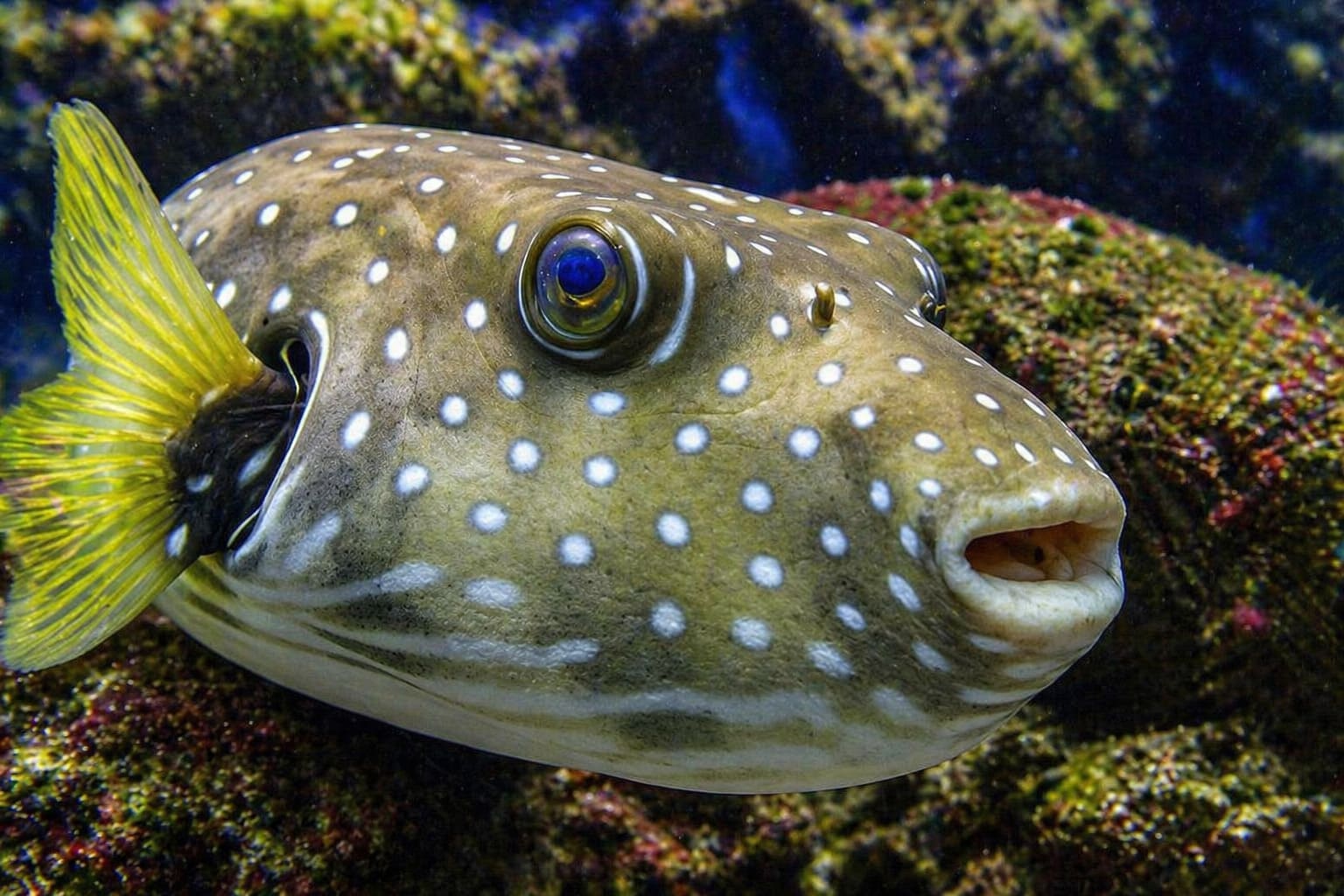
Pufferfishes are defensive reef fish that inflate into a balloon shape when threatened. In Hawaii, they are called makimaki and are known for bristled skin, strong jaws, sharp beaks and toxic bodies.
Pufferfishes Overview
Pufferfishes are closely related to porcupinefishes, but they have their own distinct look and defenses. When threatened, they take in water and expand into a rounded balloon shape. This sudden size change makes them much harder for predators to swallow. Visitors can browse the broader Hawaii fish guide for more reef fish and marine animal profiles.
In Hawaii, pufferfishes are known as makimaki. Twelve species live in Hawaiian waters, and three of them are endemic. They range from a few inches long to about 3 feet (90 cm). For more ocean background, visitors can also explore the broader Hawaii ocean life section.


Quick Facts About Pufferfishes
- Family: Tetraodontidae
- Hawaiian name: Makimaki
- Hawaii species: Twelve species
- Endemic Hawaii species: Three species
- Body feature: Scaleless body with bristled skin
- Defense behavior: Inflates by taking in water
- Poison: Contains tetrodotoxin, a powerful neurotoxin
- Feeding time: Mainly active at night
How Pufferfishes Defend Themselves
Pufferfishes use inflation as their main defense. First, the fish takes in water. Then the body swells into a larger, rounder shape. As a result, a predator may find the fish too large or awkward to swallow.
This defense works best when the fish stays in the water. For that reason, people should never try to make a pufferfish inflate for a photo. Stressing the fish can harm it and may also create risk for the person handling it. Other reef fish with unusual defense strategies include boxfishes, filefishes and scorpionfishes.
Pufferfishes vs. Porcupinefishes
Pufferfishes and porcupinefishes both inflate when threatened, and both can be toxic. However, their skin differs. Pufferfishes have bristles, while porcupinefishes have sharp external spines that stand up when they swell.
Therefore, a fish with long obvious spines is more likely a porcupinefish. A smoother fish with bristled skin and a rounded body is more likely a pufferfish.
Poison and Safety
Pufferfishes contain tetrodotoxin, a powerful neurotoxin produced by bacteria within their bodies. This toxin can cause paralysis and death if ingested. Because there is no simple home remedy, people should never eat or handle pufferfishes unless trained and legally allowed to do so.
Snorkelers and divers should also avoid touching them. Even if the fish looks calm, it is still a wild animal with strong jaws, a sharp beak and toxic tissues. Visitors planning ocean time can also review Hawaii beach safety tips, Hawaii snorkeling and the broader Hawaii ocean life guide.
Feeding and Behavior
Pufferfishes have strong jaws and sharp beaks. These tools help them bite hard-shelled prey such as crustaceans and mollusks. Many species feed mainly at night, when they search reef areas for food.
- They use strong jaws to crush prey.
- They may feed on crustaceans and mollusks.
- They are often more active after dark.
- They move slowly but defend themselves effectively.
Because they feed on small hard-shelled animals, they share reef and bottom habitats with animals such as crabs, sea cucumbers, rays and goatfishes.
Viewing Notes
Pufferfishes are best watched quietly from a distance. Do not touch, chase, corner or remove them from the water. Also, avoid encouraging inflation, since the fish inflates only when it feels threatened.
With their balloon-like defense, bristled skin and Hawaiian name makimaki, pufferfishes are some of the most distinctive and well-defended fish in Hawaiian waters. Visitors interested in reef habitats can also read about the Hawaiian coral reef, Hawaii beach sand composition and marine debris in the Hawaiian Islands.