


Lanai Weather Guide
Lanai Weather
Plan your trip with Lanai weather patterns, Lanai City temperatures, rainfall trends, ocean conditions, dry coastal areas and cooler upland climate notes.
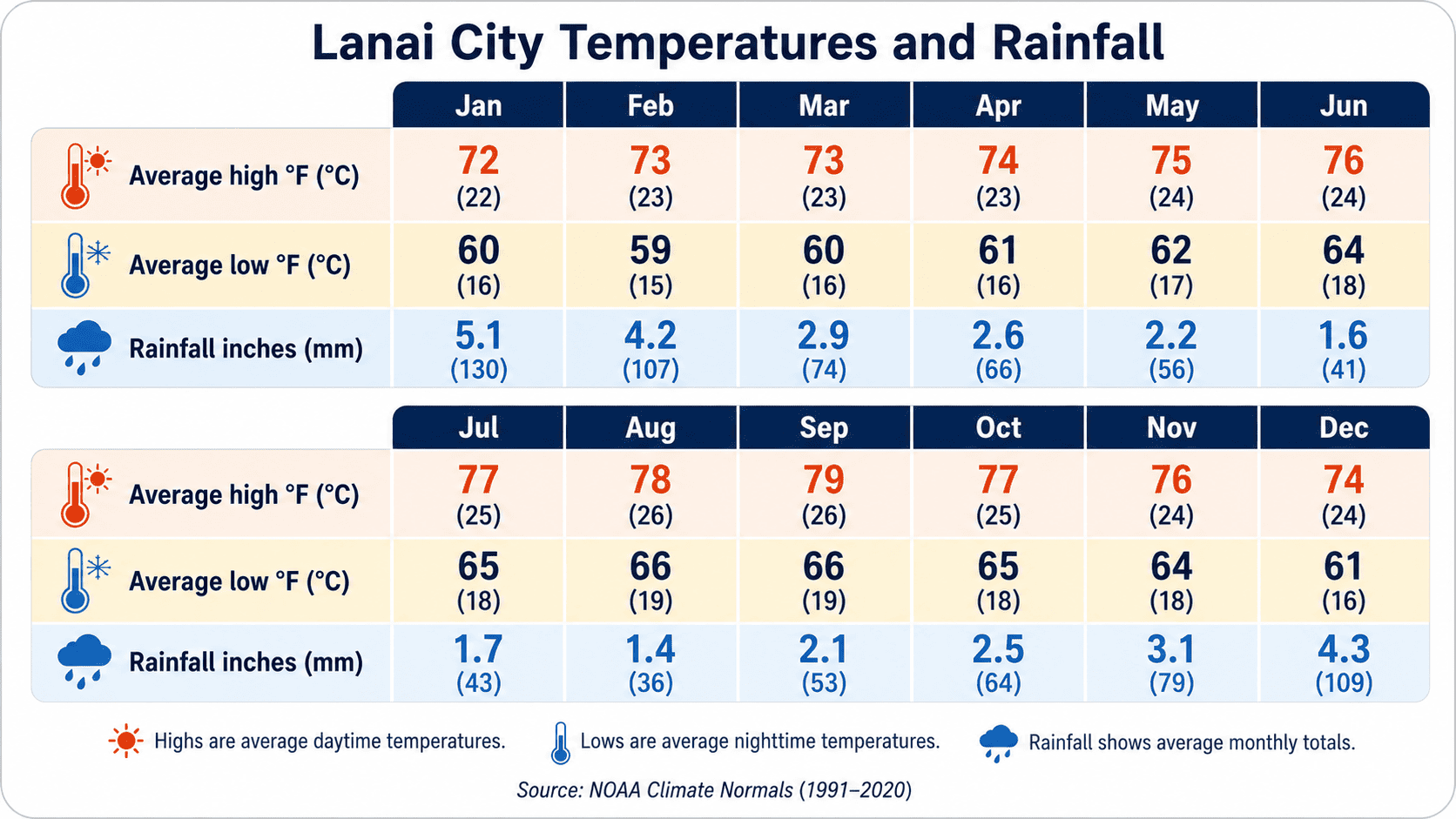
Lanai weather is generally dry, sunny and comfortable, especially along the coast. The island sits in the rain shadow of the West Maui Mountains on neighboring Maui, so many moisture-laden trade wind clouds drop their rain before they reach Lanai.
The Hawaiian Islands are shaped by trade winds that often blow from the northeast. As these winds carry moisture toward the islands, clouds rise over mountain slopes and release rain. Because Lanai lies leeward of Maui's taller mountains, much of the island receives less rainfall than windward areas on other islands.
Dry Coastal Weather and Cooler Uplands
Lanai is one of Hawaii's drier islands. The island's highest point, Lanaihale, rises about 3,370 feet and receives more rainfall than the surrounding lowlands. Much of the rest of Lanai is drier, with open landscapes, sunny coastal areas and a quieter, more arid feel than the wetter windward sides of larger islands.
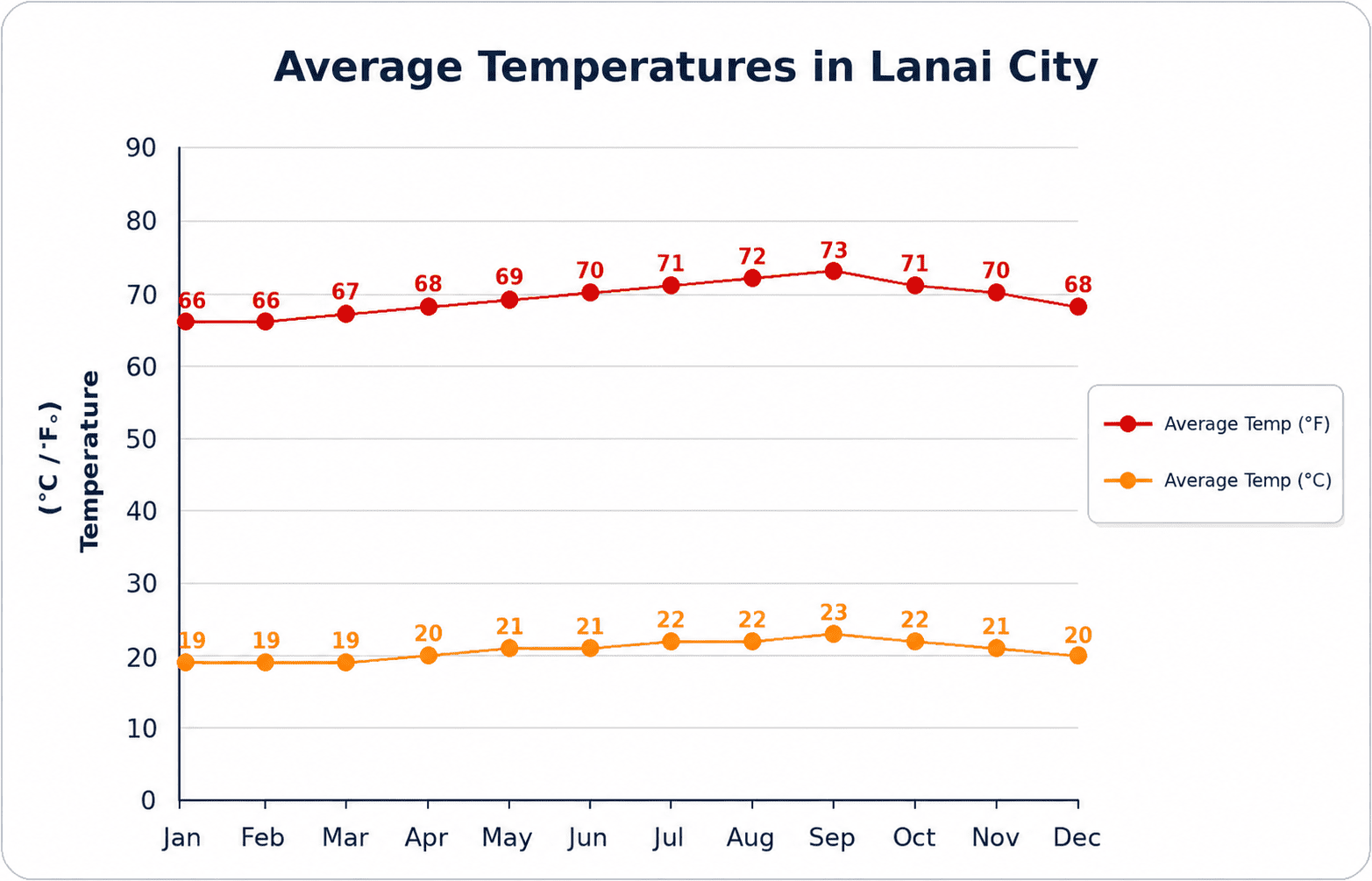
Lanai City sits near the center of the island at about 1,644 feet above sea level. Because of this elevation, it feels cooler and less humid than the coast. Winter evenings can feel crisp in town, especially compared with the warmer air near the ocean.
Visitors usually stay either in Lanai City or near the south shore around Hulopoe Bay. Lanai City has an upland feel with pine trees, cooler air and a quiet small-town setting. The Hulopoe Bay area feels warmer and more tropical, with ocean breezes, palm trees and easy beach access.
Lanai's average ocean temperature is around 75°F (24°C) in February and about 82°F (28°C) in September, so coastal waters stay comfortable for swimming most of the year.
Volcanic Smog on Lanai
Vog, or volcanic smog, is much more common on the Big Island than on Lanai. Occasionally, when Kona winds blow from the south, volcanic haze can drift toward other islands, including Lanai.
On voggy days, the air may look hazy, especially when looking toward distant coastlines or neighboring islands. Most visitors are not strongly affected, but people with asthma or respiratory sensitivities may prefer to limit strenuous outdoor activity and spend more time indoors until the air clears.
For most trips, Lanai weather is easy to plan around. Pack light clothing for the coast, bring a layer for cooler Lanai City evenings, and expect a drier island atmosphere than many other parts of Hawaii.

Frequently Asked Questions
Is Lanai a dry island?
Yes. Lanai sits in the rain shadow of Maui's mountains, so much of the island is drier than windward areas on larger Hawaiian islands.
Is Lanai City cooler than the coast?
Yes. Lanai City sits at a higher elevation near the center of the island, so it feels cooler and less humid than coastal areas such as Hulopoe Bay.
Where is the warmest weather on Lanai?
The coastal areas, especially near Hulopoe Bay on the south shore, usually feel warmer and more tropical than upland Lanai City.
Is Lanai's ocean warm enough for swimming?
Yes. Lanai's ocean temperature averages about 75°F in winter and about 82°F in late summer, so the water stays comfortable most of the year.
Does vog affect Lanai?
Lanai can occasionally see vog when Kona winds carry volcanic haze from the Big Island, but it is not a daily issue for most visitors.