

Oahu Weather Guide
Oahu Weather
Plan your trip with Oahu weather patterns, Waikiki temperatures, rainfall trends, ocean conditions and regional tips for the island's sunny and windward coasts.
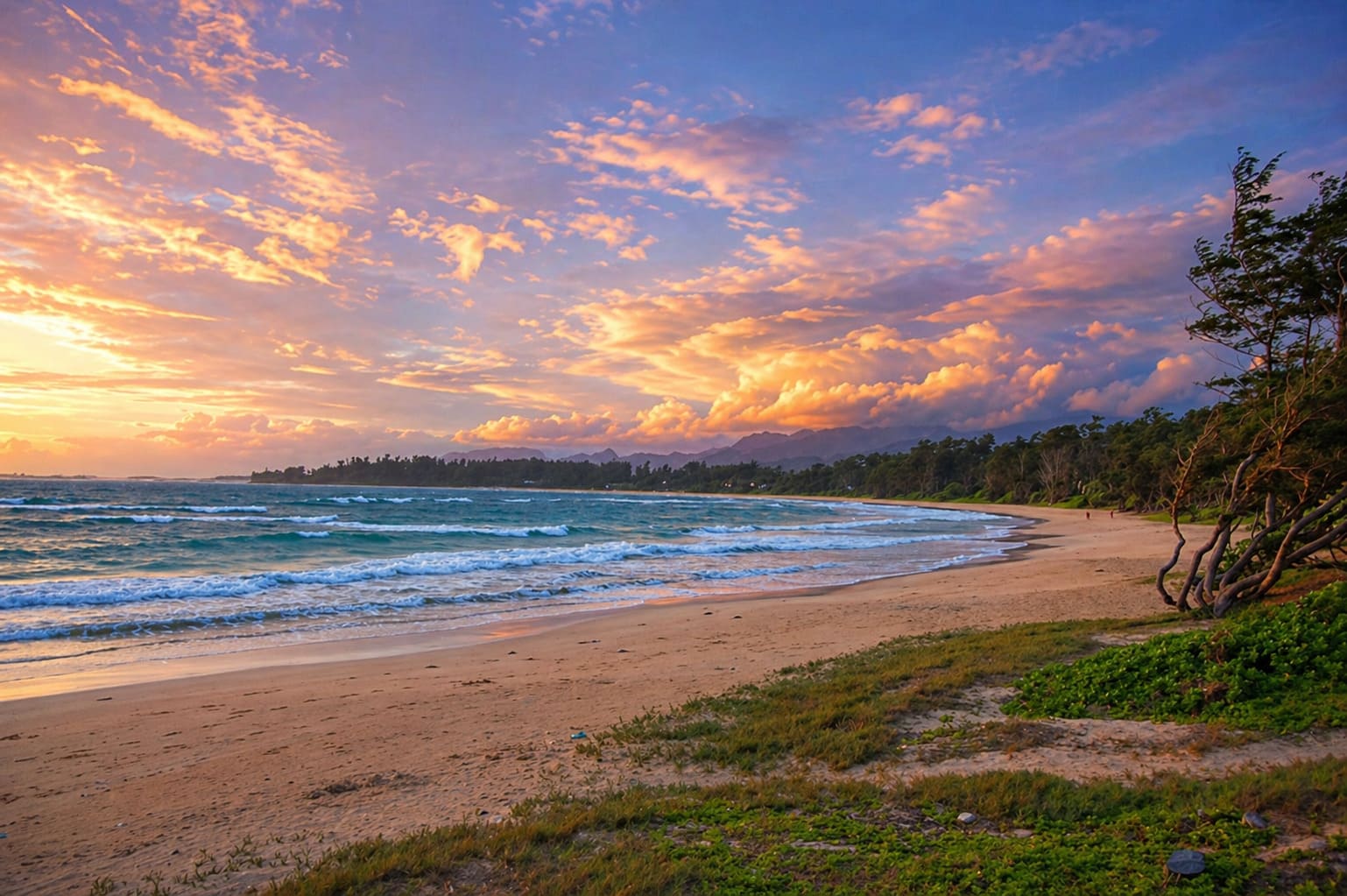
Just like on the other main Hawaiian Islands, the weather on Oahu's south and west shore is usually drier and sunnier than on the island's east shore. That's because the predominant tradewinds are blowing from the northeast about 90% of the time and these winds bring moisture with them. As these moisture-laden clouds approach the islands, they get stuck on the mountains, where the moisture comes down as rain. The weather on Oahu's windward east shore is therefore usually a lot wetter than on the leeward west shore. But thanks to the rain, the windward coast is green and lush while the leeward coast is dry and has no rainforests.
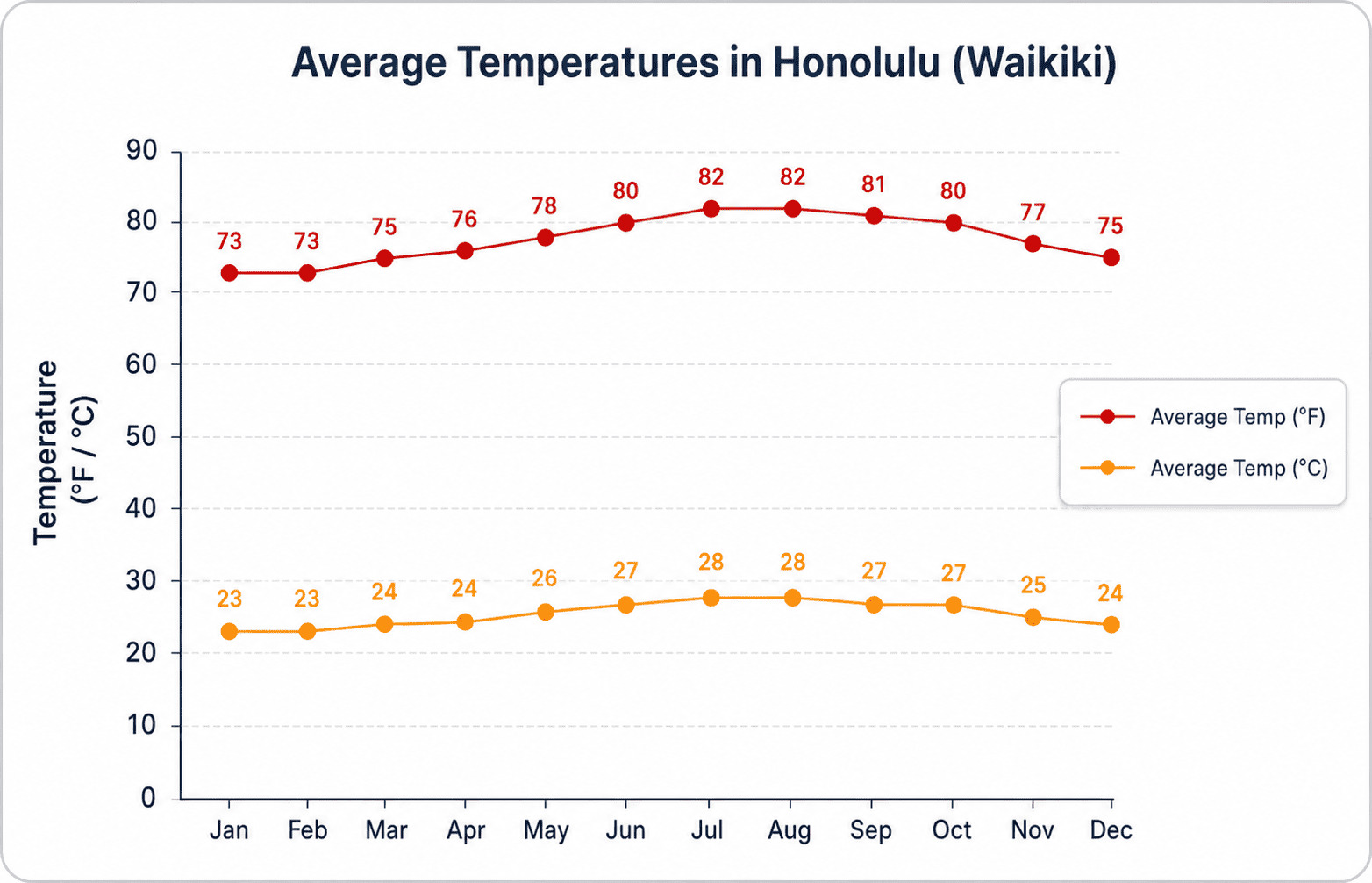
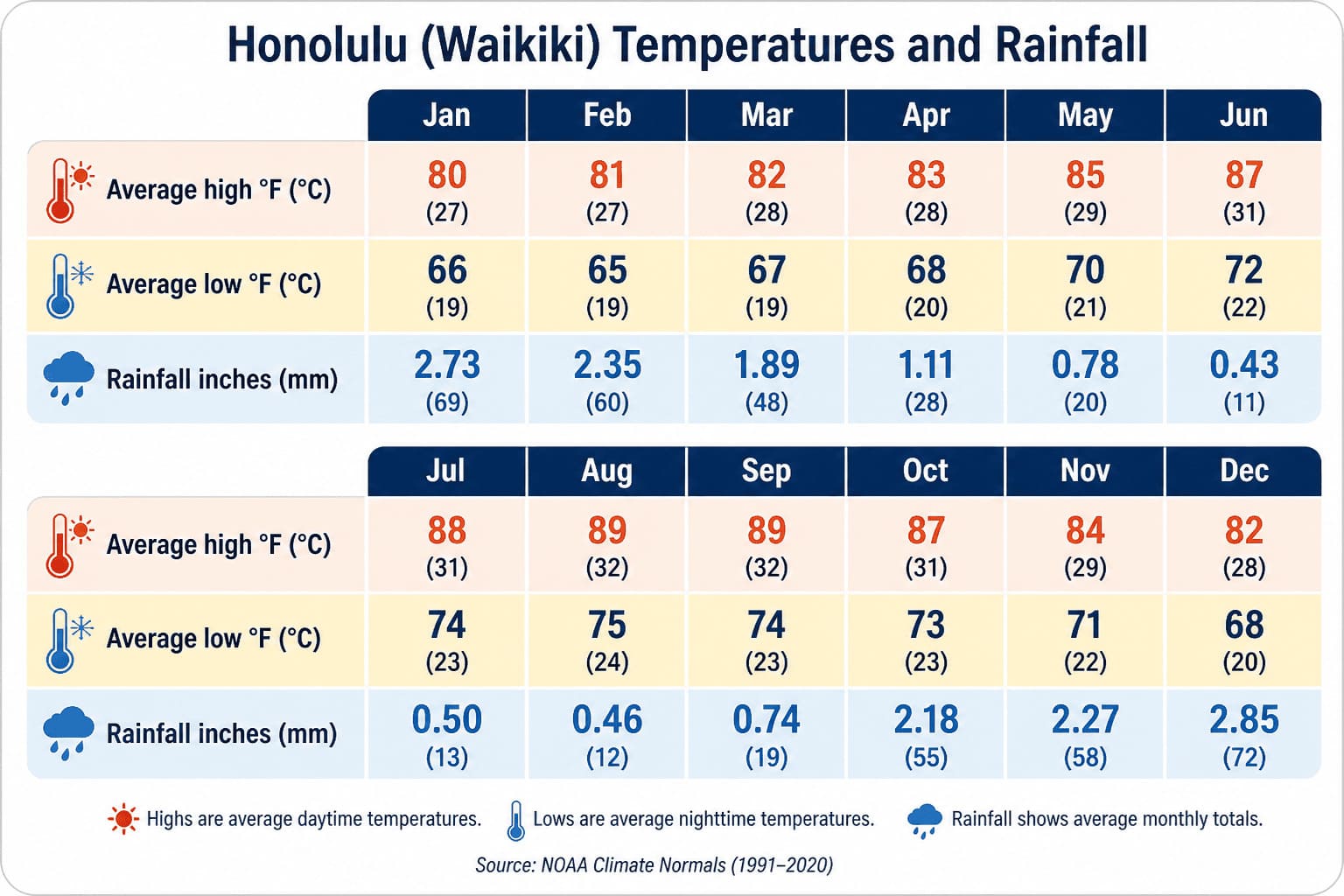
Waikiki, a Honolulu neighborhood, is where most visitors to Oahu are headed since this is where most of the accommodation options, hotels and resorts are located. Waikiki is on Oahu's sunny south shore. It is sheltered from most rain clouds by the Koolau Mountain Range. These mountains are visible from Waikiki. On most days of the year one can see grey or dark clouds hanging over the tops of the mountains. But not to worry, the clouds usually stay right there and with them the rain. And when it does rain on Oahu's south shore, it is usually short-lived. Here is an overview of Honolulu's year-round temperatures.
Oahu's average ocean temperature is around 75°F (24°C) in February and 80°F (27°C) in September.
Volcanic Smog on Oahu
Vog, or volcanic smog, is much more common on Hawaii's Big Island than on Oahu since the Big Island is the only Hawaiian island that still has active volcanoes. Occasionally when the winds are blowing from the south, known as Kona winds, the vog from the Big Island's volcanoes affects the air quality of the other Hawaiian islands, including Oahu.
On those days you will notice a haze in the air, especially when looking into the distance. While most people can tolerate vog and won't notice any difference in how they are feeling, for those with asthma or other breathing problems vog is much more of an issue and is best avoided by staying indoors.


Frequently Asked Questions
Which part of Oahu has the best weather?
The south and west shores usually have the sunniest and driest weather. Waikiki, Ala Moana, Ko Olina and the leeward coast often see more sunshine than the windward side.
Does it rain a lot on Oahu?
Rain depends on where you are. The windward east side and mountain areas receive more frequent showers, while Honolulu, Waikiki and the leeward coast usually stay drier.
What is the average temperature in Honolulu?
Honolulu stays warm year-round. Average daytime highs generally range from the low 80s in winter to the upper 80s in late summer, with comfortable nighttime temperatures.
Is the ocean warm enough for swimming year-round on Oahu?
Yes. Oahu's ocean temperature averages about 75°F in winter and about 80°F in late summer and early fall, so the water stays warm enough for swimming throughout the year.
What is vog, and does it affect Oahu?
Vog is volcanic smog from the Big Island. It only affects Oahu occasionally when wind patterns shift, but it can create haze and may bother people with asthma or respiratory sensitivities.