

Molokai Weather Guide
Molokai Weather
Plan your trip with Molokai weather patterns, Kaunakakai temperatures, rainfall trends, ocean conditions, sunny south shore areas and north shore rain notes.
Molokai weather is generally warm and pleasant, with the south and west shores usually sunnier and drier than the island's north shore. Trade winds, mountain slopes and Molokai's dramatic sea cliffs all help shape the island's rainfall patterns.
The predominant trade winds often blow from the northeast, especially during the summer months. As moisture-laden clouds approach Molokai, they meet the island's tall north shore cliffs and higher terrain. This lifts the clouds and causes more rain to fall on the windward north side.
Sunny South Shore and Wetter North Shore
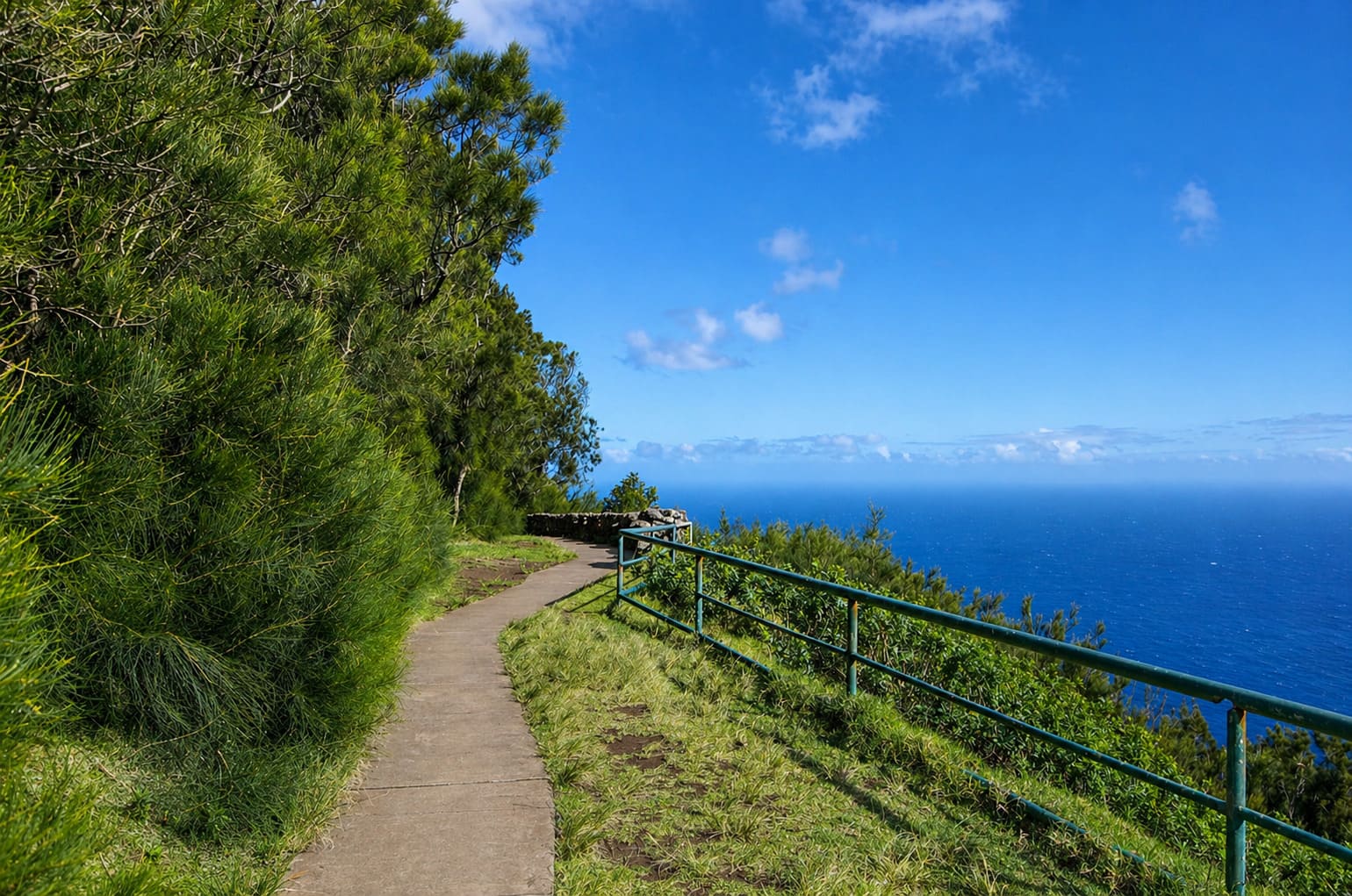
The north shore receives more rain, which helps create its lush valleys, waterfalls and green sea-cliff scenery. However, much of Molokai's north shore is remote and undeveloped, so most visitors spend more time on the south and west sides of the island.
Kaunakakai, Molokai's main town, sits on the south shore. This side of the island usually has drier weather, calmer conditions and easier access to visitor services. Many accommodations and day-to-day travel routes are located on or near the south shore.
Molokai's average ocean temperature is around 75°F (24°C) in February and about 82°F (28°C) in September, so the water stays warm enough for swimming throughout the year.
Volcanic Smog on Molokai
Vog, or volcanic smog, is much more common on the Big Island than on Molokai. Occasionally, when Kona winds blow from the south, volcanic haze can drift toward other islands, including Molokai.
On voggy days, the air may look hazy, especially when looking toward distant coastlines or neighboring islands. Most visitors are not strongly affected, but people with asthma or respiratory sensitivities may prefer to limit strenuous outdoor activity and spend more time indoors until the air clears.
For most trips, Molokai weather is easy to plan around. Expect warm coastal temperatures, bring sun protection for the drier south and west shores, and allow extra flexibility if you plan to explore areas closer to the wetter north shore.


Frequently Asked Questions
Which side of Molokai has the sunniest weather?
The south and west shores usually have the sunniest and driest weather. Kaunakakai and nearby south shore areas are generally drier than the north shore.
Why is Molokai's north shore wetter?
Moist trade winds reach Molokai from the northeast and rise along the tall north shore cliffs, which causes more rain to fall on that side of the island.
What is the average temperature in Kaunakakai?
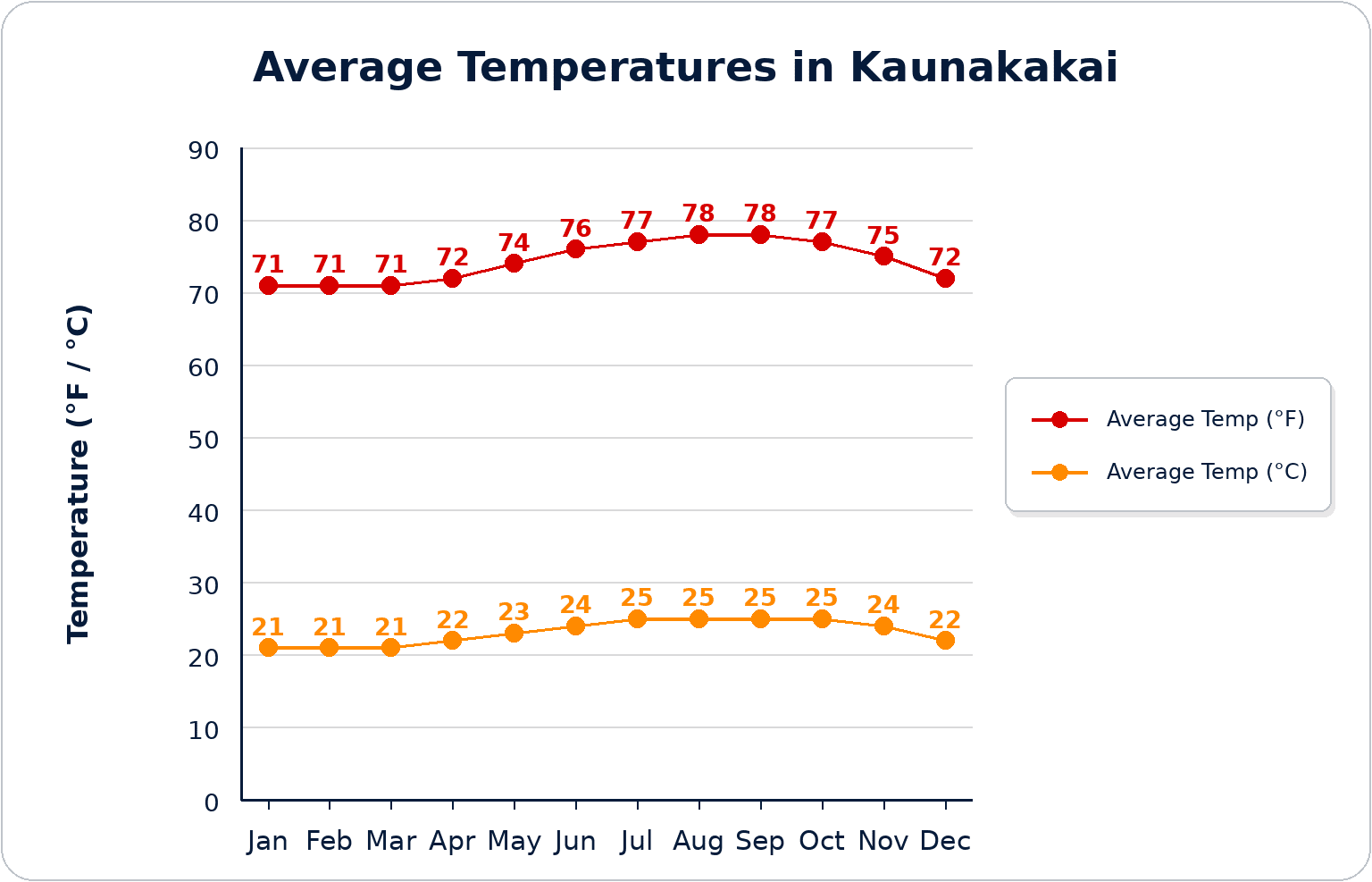
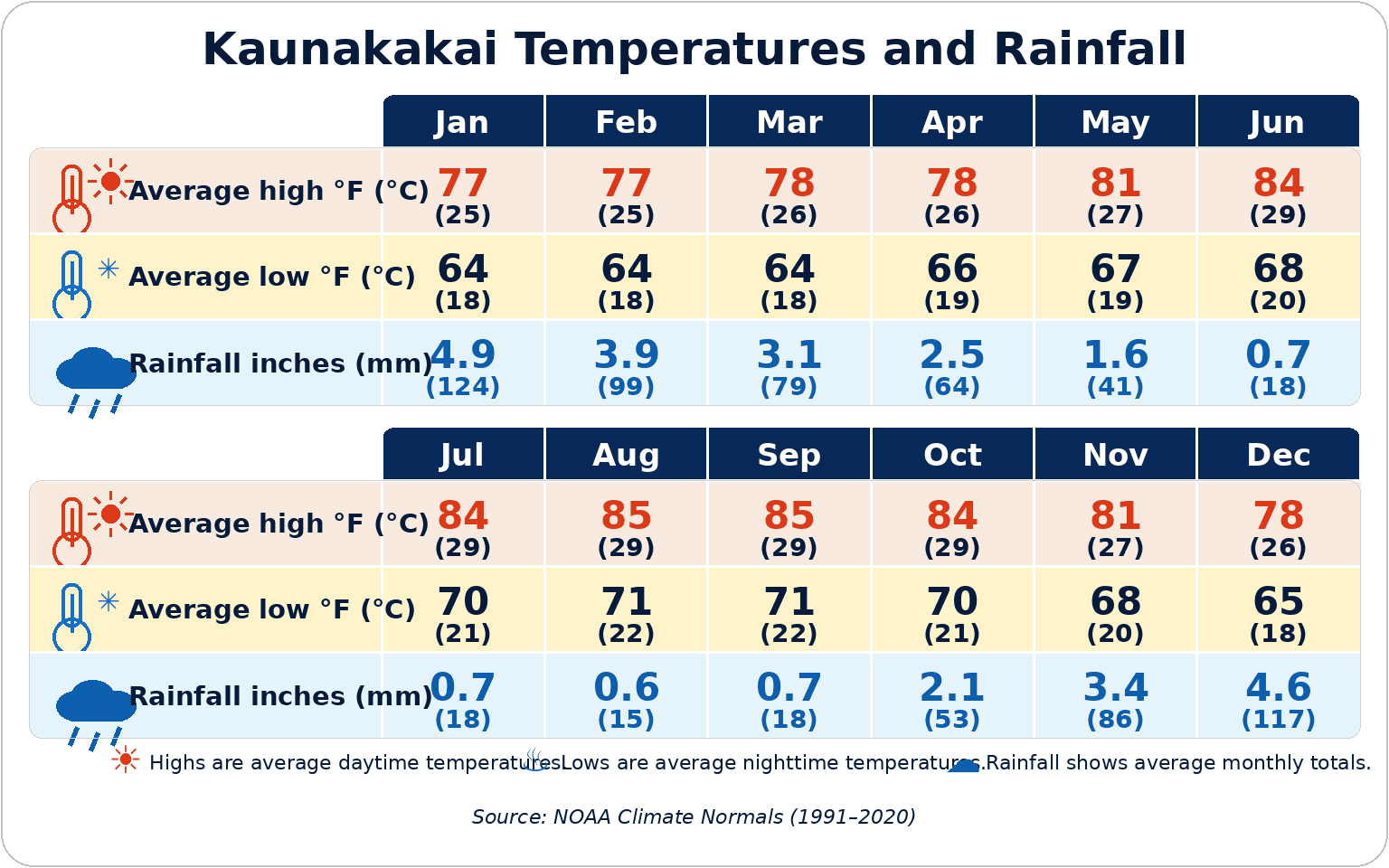
Kaunakakai stays warm throughout the year, with average daytime highs generally in the upper 70s to mid 80s and mild nights near the coast.
Is Molokai's ocean warm year-round?
Yes. Molokai's ocean temperature averages about 75°F in winter and about 82°F in late summer, so the water usually stays comfortable for swimming.
Does vog affect Molokai?
Molokai may occasionally experience vog when Kona winds carry volcanic haze from the Big Island, but most days are not affected.