

Hawaii Reef Fish Guide
Scorpionfishes
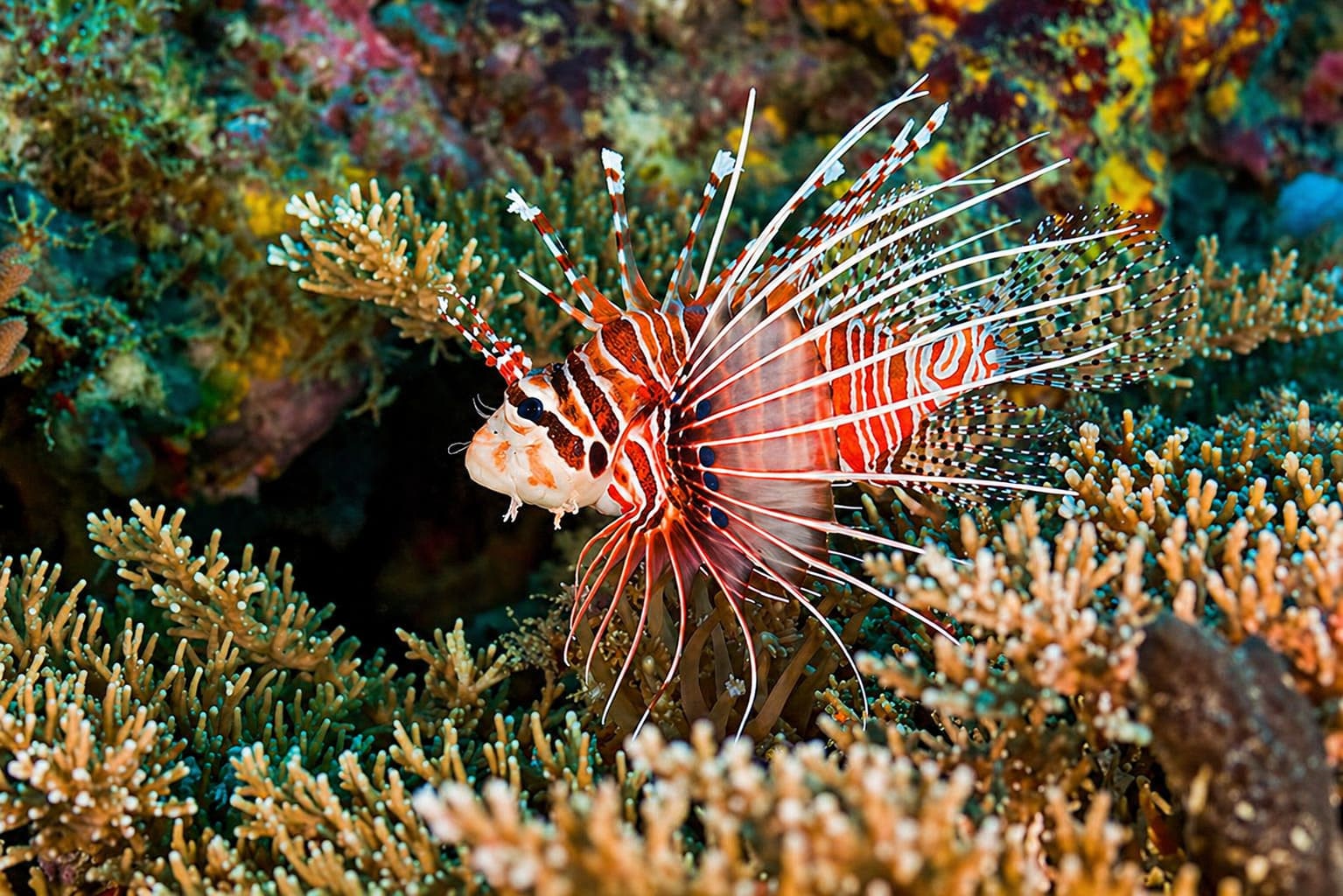
Scorpionfishes are camouflaged reef predators that often sit motionless among rocks and coral. In Hawaii, they are called nohu, and many species have venomous spines that can cause a painful sting if touched or stepped on.
Scorpionfishes Overview
Scorpionfishes are reef predators that rely on patience and camouflage. They do not move around much. Instead, they rest on the reef and blend into rocks, coral and rubble until prey comes close. Because of this, snorkelers and divers can easily overlook them. Visitors can browse the broader Hawaii fish guide for more reef fish and marine animal profiles.
In the Hawaiian language, scorpionfish are called nohu. Hawaiian waters have 28 species of scorpionfishes, and 10 of them are endemic. Many species have venomous spines, so reef visitors should never touch or step on fish, rocks or coral without looking carefully. For more ocean background, visitors can also explore the broader Hawaii ocean life section.


Quick Facts About Scorpionfishes
- Family: Scorpaenidae
- Hawaiian name: Nohu
- Hawaii species: 28 species
- Endemic Hawaii species: 10 species
- Body style: Camouflaged, textured and often rock-like
- Defense: Some species have venomous spines
- Behavior: Sedentary ambush predator
- Activity pattern: Many hunt at night
- Diet: Small fish, crustaceans and other reef animals
Camouflage and Hunting
Scorpionfishes are masters of disguise. Their colors and rough body texture help them match reef surfaces. As a result, they can sit almost invisible on the bottom while waiting for prey.
At night, many scorpionfishes become more active hunters. They ambush small fish and crustaceans with a sudden strike. During the day, they often stay still and depend on camouflage for protection. Other reef predators and ambush hunters include lizardfishes, hawkfishes, groupers and trumpetfishes and cornetfishes.
Why They Can Be Hard to See
A scorpionfish may look like part of the reef. Its body can match algae, rock, coral rubble or sand. Therefore, even experienced snorkelers and divers may miss one until it moves.
- Look carefully before placing hands or feet near rocks.
- Watch for fish-shaped outlines on the reef bottom.
- Notice textured skin that blends with coral or rubble.
- Keep distance from any fish resting motionless on the reef.
Venomous Spines and Sting Safety
Some scorpionfishes have venomous spines that can cause intense pain. A sting may also cause swelling, cramps, nausea or other symptoms. Because the fish blend into the reef, accidental contact can happen when someone touches rocks, steps in shallow reef areas or reaches into crevices.
A common first-aid step for a scorpionfish sting is hot-water immersion. Soak the affected area in hot water, as hot as the person can safely tolerate without burning the skin, for at least 30 minutes. Heat can help reduce the effect of the venom. After that, the person should get medical care, especially if pain is severe, spines may remain in the wound, or symptoms spread. Visitors planning ocean time can also review Hawaii beach safety tips and Hawaii snorkeling.
Where to See Scorpionfishes in Hawaii
Scorpionfishes live around reefs, rocky bottoms, rubble zones and other places with good cover. Divers may see them resting on the bottom or tucked near reef structure. However, because they stay still and blend in well, they reward slow and careful observation.
Night divers may have a better chance of seeing active hunting behavior. Even then, caution matters because the fish can remain difficult to spot. Visitors interested in guided reef activities can compare Oahu snorkeling tours, Maui snorkeling tours, Kauai snorkeling tours and Big Island snorkeling tours.
Snorkeling and Diving Notes
To stay safe, avoid touching coral, rocks or reef animals. Wear appropriate footwear only where permitted, and never stand on coral. In addition, keep hands out of holes and crevices, since many hidden animals use those spaces for shelter.
With their strong camouflage, venomous defenses and Hawaiian name nohu, scorpionfishes are fascinating but best observed from a respectful distance. Visitors interested in reef habitats can also read about the Hawaiian coral reef, Hawaii beach sand composition and marine debris in the Hawaiian Islands.