

Hawaii Ocean Safety Guide
Hawaii Ocean and Safety
Hawaii's ocean can shift from calm to powerful fast. Before you swim, snorkel, surf or paddle, know the signs, currents, reefs, waves and sea life that deserve your attention.
Related topics
Explore Hawaii Ocean and Safety
Browse more topics in this Hawaii Ocean and Safety guide.
Hawaii Beach Sand CompositionHawaii Ocean ChannelsHawaii Underwater WorldHawaiian FishJellyfish Arrival CalendarSharks in HawaiiThe Hawaiian Green Sea Turtle "Honu"
Stay safe in Hawaii's ocean
The beaches and the azure blue waters are one of the main reasons why many people travel to Hawaii. Here you can really find it all - from white to black sand beaches that invite for sunbathing and swimming to magnificent reefs with an abundance of marine life, rocky and wild shorelines and some of the greatest waves to surf in the world. As inviting as the ocean may be, there are rules to keep in mind to stay safe and have fun in the big blue.
Ocean currents
Visitors often underestimate the power of the currents and the waves in Hawaii. Never turn your back to the ocean is rule number one. There can be surprising sneaker waves and you never know when they come up. If you are close to the water, always keep an eye on it!
Never swim or kayak alone. There can be currents that are not visible from the shore and you might find yourself in big trouble if you get into one of those.
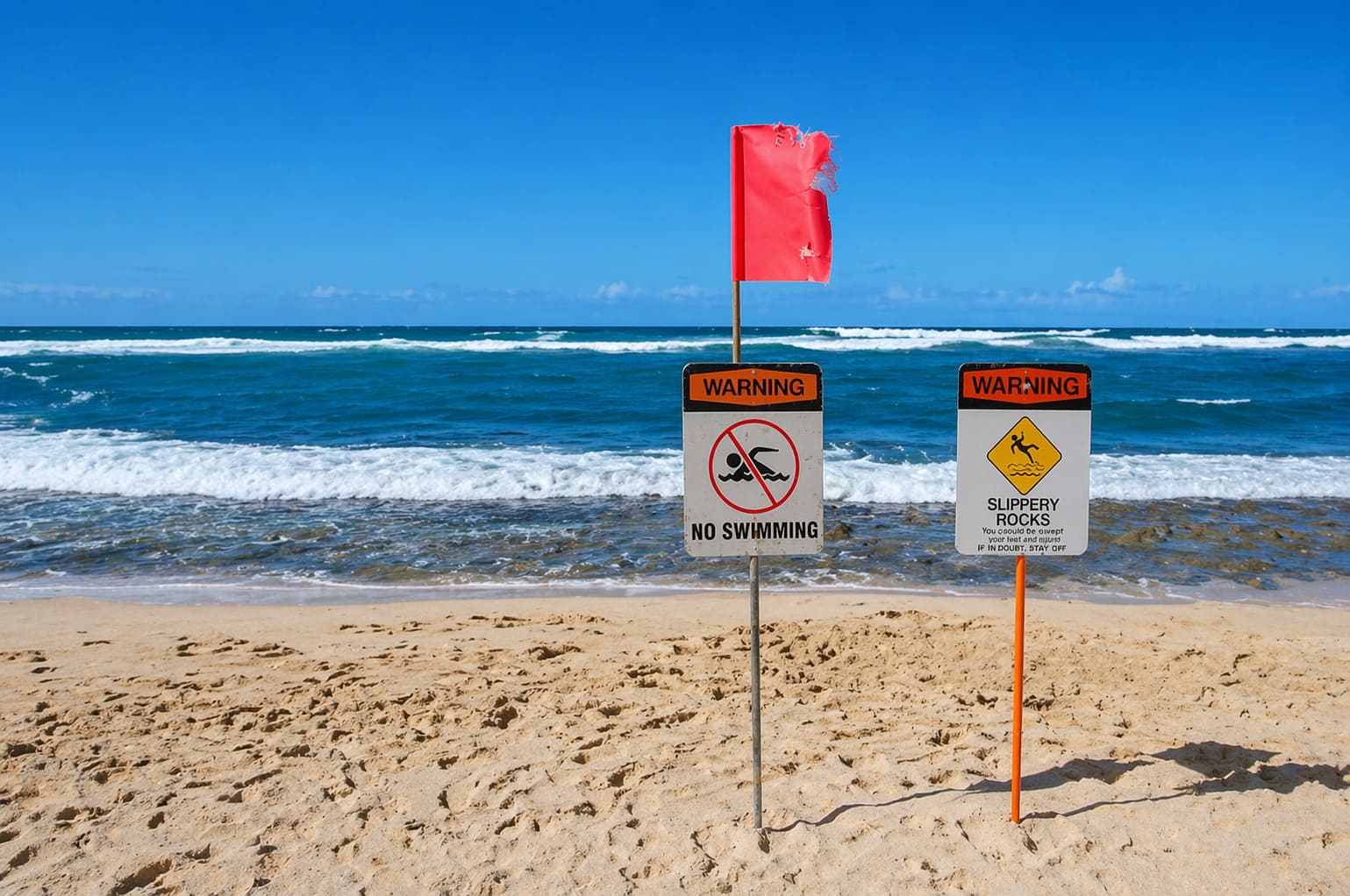
If you are in doubt, ask a lifeguard about the current ocean conditions. They are there to keep an eye out for you, but even they have their limits. If there are no lifeguards on a beach, stay out of the water and keep these additional beach safety tips in mind.
Watch Out! Some sea creatures can be dangerous.
Watch out for the following critters:
Jellyfish
These clear, tentacled creatures can cause an irritating sting. The box jellyfish is commonly found near shore, but they are predictable creatures. Every month, about 9-12 days after a full moon, they drift close to shore. Signs will usually be posted in areas with heavy jellyfish activity. If you get stung, leave the water, avoid scratching or rubbing the area, remove visible tentacles carefully and follow lifeguard or medical guidance. Hot water can help reduce pain, and vinegar is often used for many Indo-Pacific jellyfish stings. If you experience an allergic reaction, breathing difficulty, chest pain, weakness or other serious symptoms, call 911 immediately.
Portuguese Man-of-War
Similar to jellyfish, these creatures can cause a painful sting. Their translucent bodies may be tinted with pink, blue or violet. They often get flushed onto the sand by waves, so if you see one of them on a beach, there may be more. Watch your step and stay out of the ocean.
Sharks
Once you enter the water, your place in the food chain changes and not to your favor. But, not to worry, it does not happen often that a swimmer, diver or surfer gets hurt or even killed by a shark in Hawaii. Just keep some common sense rules in mind when you are playing in the ocean.
Most shark attacks occur when the predators of the ocean confuse human beings with the regular items on their menu. On a surfboard you might remind them of a seal. That's why most attacks have been on surfers, but even those are extremely small in number compared to the thousands of surfers out in the ocean every day. Try to surf in groups and avoid the evening and early morning hours and pay close attention to what is happening around you. Other shark attacks have happened in murky waters. Sharks don't see very well and might want to check out what is moving.
Also avoid swimming and diving close to a harbor or to a busy shipping route as well as in the mouths of rivers. When snorkeling, avoid being in the middle of a school of fish and watch the movements of the marine animals around you. If you see fast and erratic behavior, you should get back to the beach quickly.
Don't rely on the dolphins to protect you. They usually take off too when they feel a shark approaching and are not the most confrontational. Always stay close to your boat and stay aware when hanging out with Flipper and friends.
Moray Eels
Eels are usually harmless unless they feel threatened. They live in caves in the reefs. When you see an opening in the corals and rocks, don't put your hand in it. When you see an eel swimming close to you, just stay calm and do not approach it. Let it go its way and it will most likely not touch you if you don't try to touch it. In case you get bitten, resist the urge to forcefully jerk your hand back. Instead, wait for the eel to let go by itself. This is easier said than done, but since morays have backward-pointing teeth, it can be difficult and even more painful to forcefully pull one's hand or finger out of their mouth.
Sea Urchins
Their shape speaks for itself. The needles and the poison inside them can be extremely painful once under your skin. They inhabit the reefs, sometimes very obvious, sometimes hidden in small nooks and crannies. Don't touch them and watch your step when in the water.
Coral
The edges of the coral can be very sharp and cut your skin before you even feel it. Watch where you place your feet and be careful when surfing and boogie boarding over a reef in shallow water. If you cut yourself on a sharp reef, disinfect the area carefully to prevent an infection.
Some Hawaiian beaches, mainly on Oahu, have special yellow signs that are located at beach access paths. They are called Emergency Response Location signs. It is a good idea to write down the number that's on this sign before heading to the beach. In case of an emergency, call 911 and give them this number. This is much easier than trying to explain where exactly you are located, as some beaches are long or you may not know the name or area of the beach.


Frequently Asked Questions
Is it safe to swim in the ocean in Hawaii?
Yes, but ocean conditions can change quickly. Swim at lifeguarded beaches whenever possible, check warning signs, ask lifeguards about current conditions and stay out of the water if waves, currents or visibility look unsafe.
What is the most important ocean safety rule in Hawaii?
Never turn your back on the ocean. Sudden waves can knock people down, pull them into the water or push them against rocks, coral or steep shorelines.
What should I do if I get caught in a rip current?
Stay calm, conserve energy and do not swim straight against the current. Float if needed, then swim parallel to shore until you are out of the current before angling back toward land.
Are jellyfish common in Hawaii?
Jellyfish and Portuguese man-of-war can appear near shore, especially during certain wind, current and moon-cycle patterns. If warning signs are posted or jellyfish are on the beach, stay out of the water.
What should I do if I see a shark in Hawaii?
Leave the water calmly and quickly without splashing or panicking. Alert others nearby and notify a lifeguard if one is present. Avoid swimming in murky water, near river mouths, near fishing activity or at dawn, dusk and night.
How can visitors protect Hawaii's marine life?
Give turtles, monk seals, dolphins and whales plenty of space. Do not touch, feed, chase or crowd wildlife, avoid stepping on coral and use reef-conscious sun protection when entering the ocean.