
Hawaii Reef Fish Guide
Trumpetfishes and Cornetfishes
Trumpetfishes and cornetfishes are long, tube-mouthed reef predators that hunt by stealth and suction. In Hawaii, both are called nunu or nuhu, and they are often seen gliding near reefs while stalking small fish.
Trumpetfishes and Cornetfishes Overview
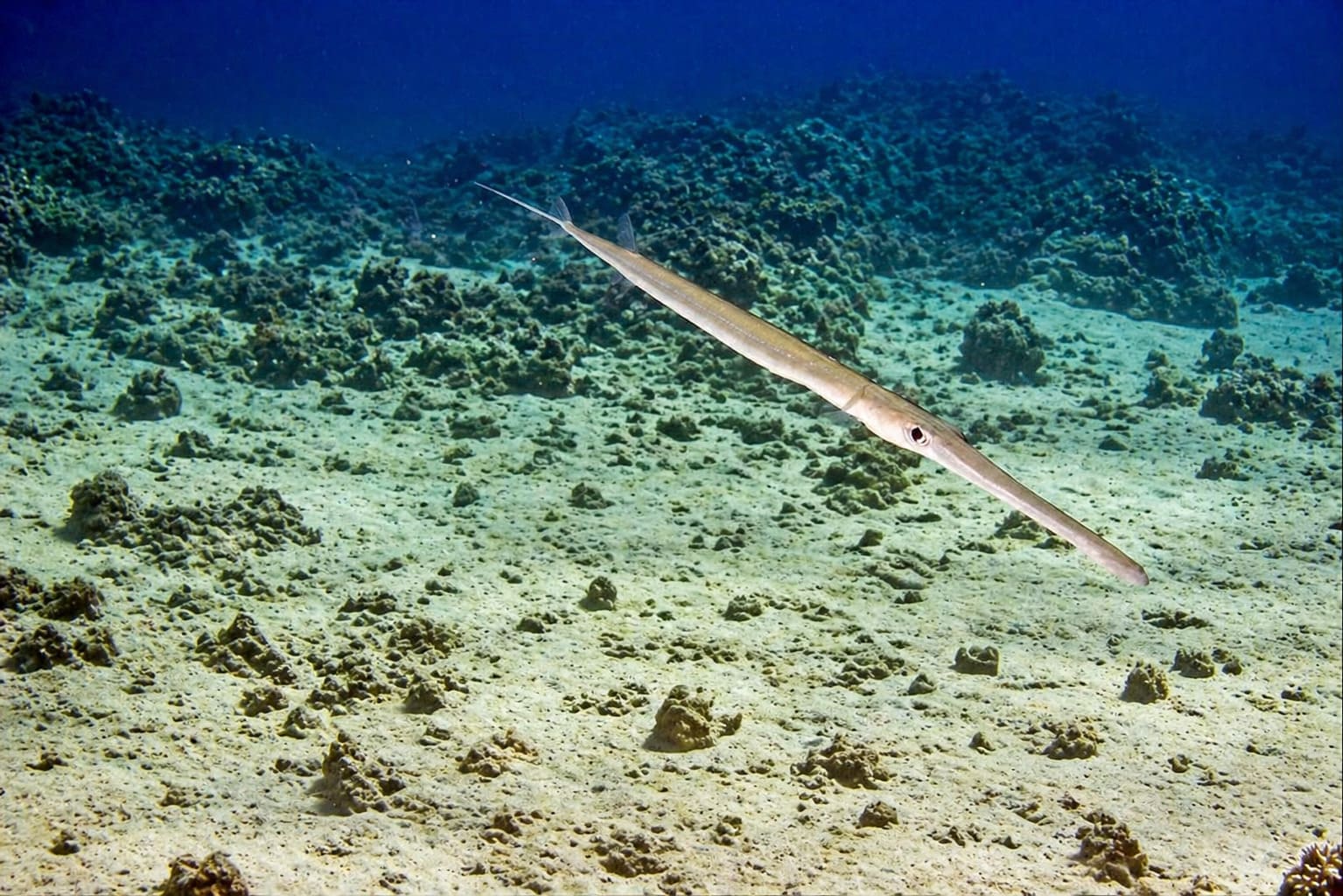
Trumpetfishes and cornetfishes are slender reef predators with long bodies and tube-shaped mouths. They are among the more common fish predators on Hawaii's reefs. Both use stealth, patience and a sudden suction strike to catch smaller fish. Visitors can browse the broader Hawaii fish guide for more reef fish and marine animal profiles.
In the Hawaiian language, both trumpetfishes and cornetfishes are called nunu or nuhu. Their long shape and tubular snout make them easy to recognize once you know what to look for. For more ocean background, visitors can also explore the broader Hawaii ocean life section.


Quick Facts About These Reef Predators
- Families: Aulostomidae and Fistulariidae
- Hawaiian names: Nunu or nuhu
- Body shape: Long, narrow and tube-like
- Mouth: Tubular and expandable
- Habitat: Coral reefs, reef edges and rocky reef areas
- Feeding style: Stealth hunting and suction feeding
- Activity pattern: Daytime hunters, especially early morning and late afternoon
- Main prey: Small fish
Trumpetfish vs. Cornetfish
Trumpetfishes and cornetfishes look similar at first because both have long bodies and tubular mouths. However, their swimming styles differ. Trumpetfishes have stiff, straight bodies and barely bend as they swim. Cornetfishes flex more while moving through the water.
This difference can help snorkelers and divers tell them apart. If the fish looks rigid and straight, it may be a trumpetfish. If the body bends more while swimming, it may be a cornetfish. Other long or slender reef fish to compare include needlefishes, eels and lizardfishes.
How They Hunt
These fish hunt by getting close to smaller fish before striking. They may follow prey, hover near reef structure or blend into long coral shapes and sea life. Once close enough, they open their tubular mouths quickly and suck the prey inside.
Their mouths can expand wider than expected. As a result, they can swallow fish that are nearly as wide as their own bodies. Other reef predators and ambush hunters include groupers, hawkfishes, scorpionfishes and barracudas.
Where to See Them in Hawaii
Trumpetfishes and cornetfishes can be seen on coral reefs throughout Hawaii. They often move slowly near reef edges, coral heads and rocky areas where small fish gather. Sometimes they hover vertically, which helps them blend with reef shapes.
They are most active during the day, especially in the early morning and late afternoon. During these times, they may hunt more actively along reef corridors and around fish schools. Visitors planning reef time can also review Hawaii snorkeling, Hawaii beach safety tips and guided options such as Oahu snorkeling tours, Maui snorkeling tours, Kauai snorkeling tours and Big Island snorkeling tours.
Identification Notes
- Look for a very long, thin fish with a tube-like snout.
- Watch for slow stalking behavior near smaller fish.
- Notice whether the body stays stiff or flexes while swimming.
- Check reef edges, coral heads and rocky areas.
- Look for sudden suction strikes when prey comes close.
Snorkeling and Diving Tips
Move slowly when watching these predators. If you stay calm, you may see them stalk prey or hover near coral in a nearly motionless pose. Also, avoid chasing them, since they may leave the area before you can observe their natural hunting behavior.
With their long bodies, tube-shaped mouths and Hawaiian names nunu and nuhu, trumpetfishes and cornetfishes are some of Hawaii's most distinctive reef hunters. Visitors interested in reef habitats can also read about the Hawaiian coral reef, Hawaii beach sand composition and marine debris in the Hawaiian Islands.