

Hawaii Reef Fish Guide
Barracudas
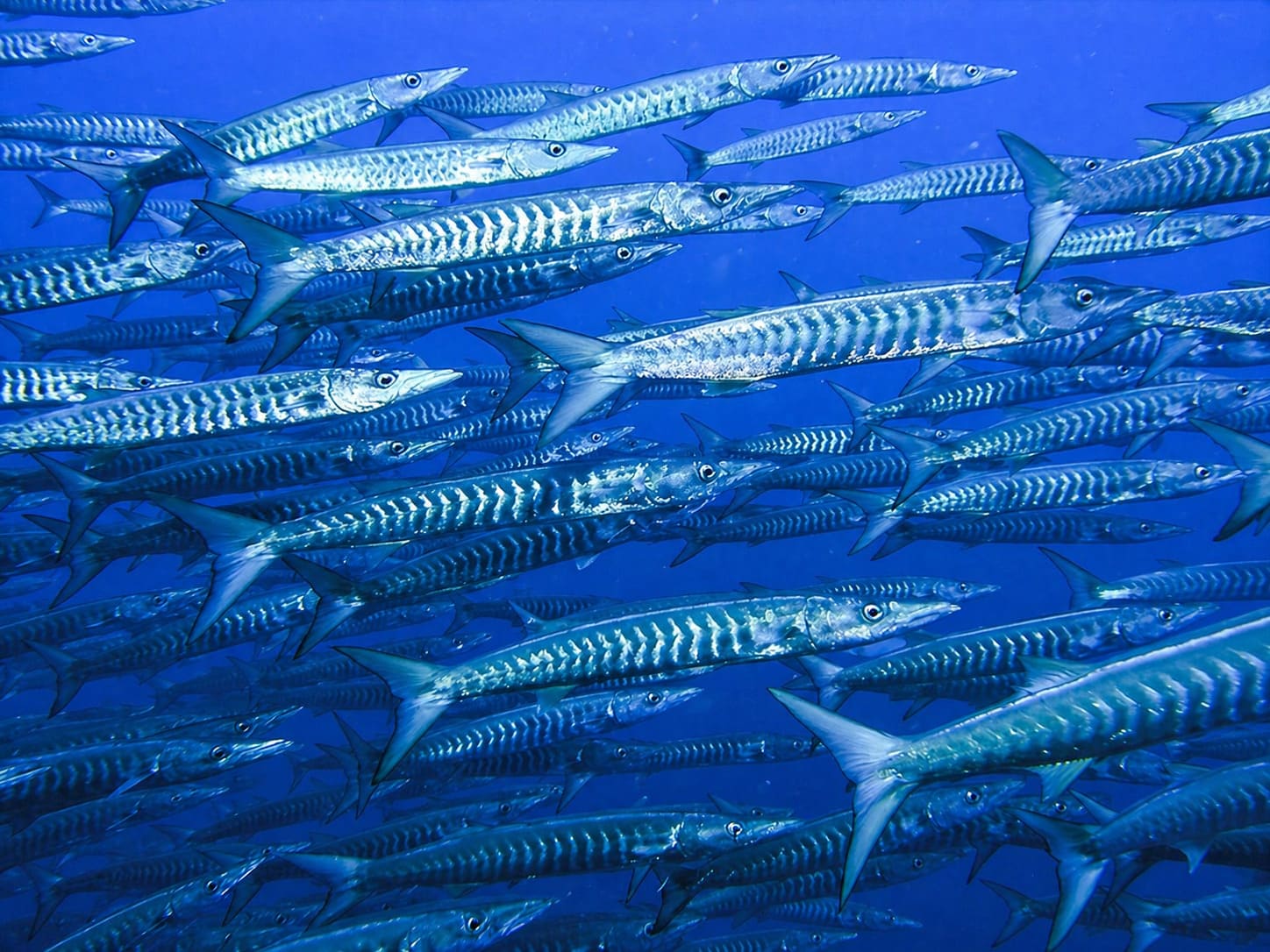
Barracudas are long, fast reef predators with sharp teeth and a watchful hunting style. In Hawaii, the Great Barracuda is called kaku and is usually seen alone or in small groups near reefs, rocky shorelines and shallow coastal waters.
Barracudas Overview
Barracudas are sleek predatory fish found in tropical and subtropical oceans around the world. They have long bodies covered with small, smooth scales, and their pointed jaws hold rows of sharp teeth. Their shape helps them move quickly through the water and strike prey with speed. Visitors can browse the broader Hawaii fish guide for more reef fish and marine animal profiles.
Some species, including the Great Barracuda, can grow up to about 6 feet (1.8 m) long. In Hawaiian waters, barracudas are usually smaller, often closer to half that size. In the Hawaiian language, the Great Barracuda is called kaku.


Quick Facts About Barracudas
- Family: Sphyraenidae
- Hawaiian name for Great Barracuda: Kaku
- Habitat: Reefs, rocky shorelines, lagoons and shallow coastal waters
- Body shape: Long, narrow and streamlined
- Teeth: Sharp and prominent
- Maximum size: Great Barracudas can reach about 6 feet (1.8 m) in some regions
- Hawaii size: Often smaller, commonly around 3 feet (0.9 m)
- Hunting style: Waits, watches and strikes quickly
How Barracudas Hunt
Barracudas often wait nearly motionless in the water. They watch for smaller fish, then strike suddenly when prey comes close. Their speed and sharp teeth make them effective ambush predators.
Some barracudas swim alone, while others may appear in groups. Snorkelers and divers may see them hovering near reef edges, channels, rocky points or sandy areas close to reef structure. Other Hawaii predators and fast-moving fish include jacks, groupers, lizardfishes and trumpetfishes and cornetfishes.
Where to See Barracudas in Hawaii
In Hawaii, barracudas may appear around reefs, harbors, rocky coastlines and shallow shoreline waters. They often hold still in clear water, which can make them noticeable even before they move.
They are not usually aggressive toward people. Most encounters involve the fish watching from a distance or slowly moving away. As with all wildlife, it is best to keep space and avoid provoking or feeding them. Visitors planning ocean time can also review Hawaii snorkeling, Hawaii beach safety tips and the broader Hawaii ocean life guide.
Are Barracudas Dangerous?
Barracudas have a fearsome look because of their teeth and predatory shape. Attacks on people are very rare in Hawaii. Two recorded incidents occurred in the 1960s, both involving Maui fishermen. Both men survived but needed surgery for their wounds.
To reduce risk, avoid wearing shiny jewelry in the water, do not handle speared or bleeding fish near swimmers, and never try to feed or touch barracudas. Responsible ocean habits also help protect nearby reef life, including sea turtles, rays and other marine animals.
Identification Notes
- Look for a long, silver-gray fish with a pointed head.
- Notice the large mouth and sharp teeth.
- Watch for a still, hovering posture near reefs or shorelines.
- Large individuals may appear alone, while smaller ones can be seen in groups.
Reef Predator Role
Barracudas help maintain balance in reef and coastal ecosystems by feeding on smaller fish. As predators, they are part of the natural food web and often patrol areas where reef fish gather.
With their sleek bodies, sudden bursts of speed and Hawaiian name kaku, barracudas are among the most memorable predators a snorkeler or diver may see in Hawaii. Visitors interested in reef habitats can also read about the Hawaiian coral reef, marine debris in the Hawaiian Islands and Hawaii sharks.