
Hawaii Reef Fish Guide
Jacks
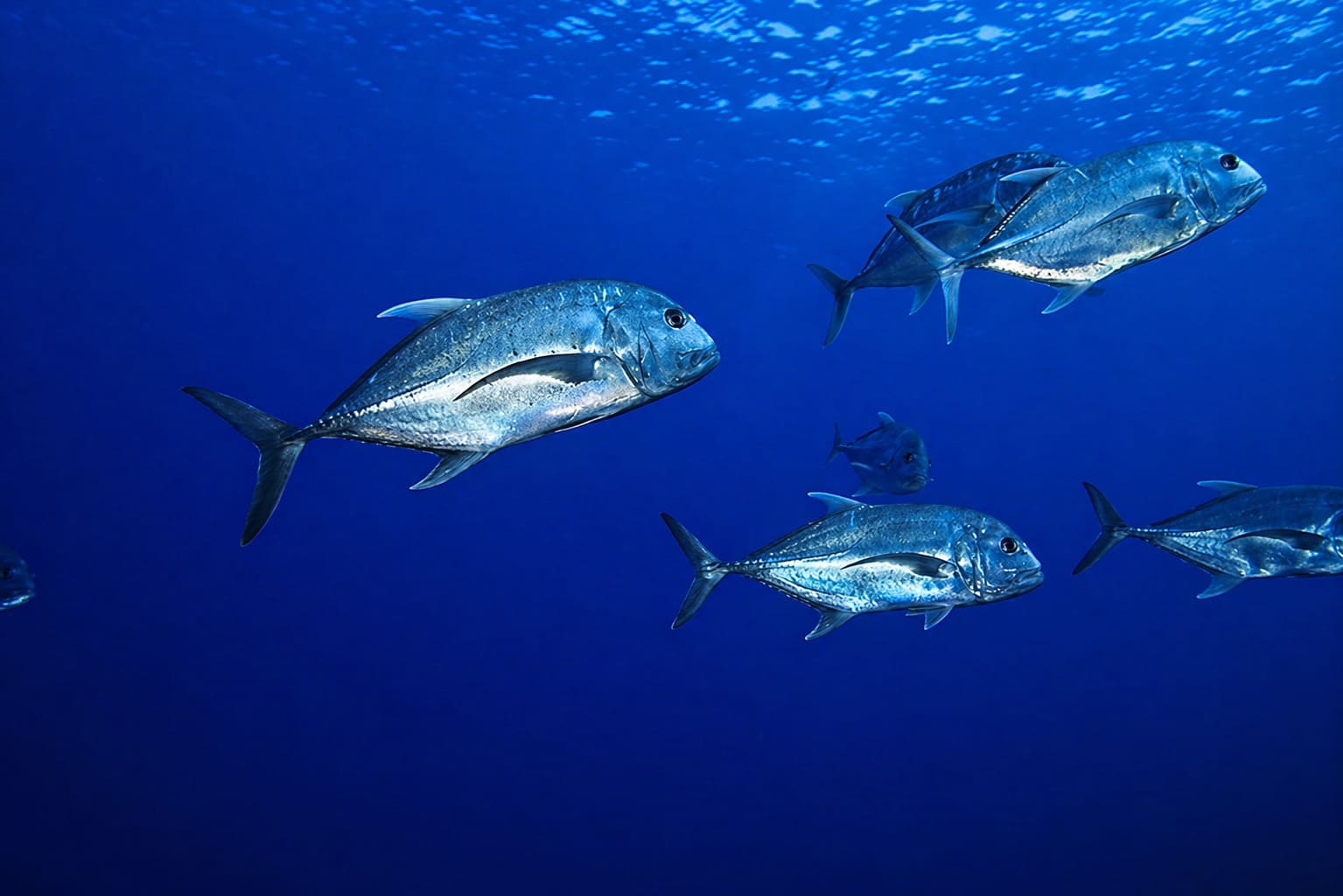
Jacks are fast, powerful open-water fish often seen near reef edges and drop-offs in Hawaii. Known as ulua when adult and papio when young, they are admired for their speed, strength and hard-fighting nature.
Jacks Overview
Jacks are strong, fast-swimming fish in the family Carangidae. This group includes trevallies, leatherbacks, rainbow runners, pompanos, scads and several other related fish. In Hawaii, they often patrol open water near reef edges, channels and drop-offs. Visitors can browse the broader Hawaii fish guide for more reef fish and marine animal profiles.
Adult jacks are known in Hawaiian as ulua, while juveniles are called papio. In old Hawaii, people admired ulua for their vigor, strength and power. Today, anglers still prize them because they fight hard and move with impressive speed. For more cultural background, visitors can also explore the Hawaiian language and Hawaiian culture sections.


Quick Facts About Jacks
- Family: Carangidae
- Hawaiian name for adults: Ulua
- Hawaiian name for juveniles: Papio
- Related fish: Trevallies, scads, pompanos, rainbow runners and leatherbacks
- Common habitat: Reef edges, channels, drop-offs and open water near reefs
- Body color: Silvery sides and belly with greenish or bluish back
- Feeding style: Fast pursuit predator
- Known for: Strength, speed and fighting ability
Where Jacks Live in Hawaii
Jacks often stay near the open-water edge of reefs. They may cruise along drop-offs, channels and reef slopes where smaller fish gather. However, they can also move into shallower water, especially while hunting.
Because they travel widely, a snorkeler or diver may see one pass quickly through the area rather than linger in one spot. Larger individuals often appear more solitary, while smaller fish may form groups. Visitors planning reef time can also review Hawaii snorkeling, Hawaii beach safety tips and the broader Hawaii ocean life guide.
How Jacks Hunt
Jacks rely on speed and power. They chase fish through open water, then make sudden turns to confuse and overtake prey. Their streamlined bodies and strong tails help them accelerate quickly.
Most jacks feed on other fish. Some also take crustaceans or other marine animals, depending on species, size and habitat. As a result, they play an important predator role around Hawaii's reefs and offshore waters. Other reef predators to compare include barracudas, groupers, lizardfishes and sharks.
Color and Camouflage
Many jacks have silvery sides and undersides with darker greenish or bluish backs. This coloring helps them blend into open water. From below, the bright belly matches the surface light. From above, the darker back blends with deeper water.
This type of camouflage makes them harder for prey and predators to spot. It also helps explain why a large fish may appear suddenly from the blue and disappear just as quickly.
Ulua and Papio in Hawaii
In Hawaii, the names ulua and papio are widely recognized. Adult jacks, especially large trevallies, are called ulua. Younger jacks are called papio. These names are common in fishing, local food traditions and ocean life discussions.
Ulua have long been associated with strength. Their fighting ability, size and power made them respected fish in Hawaiian culture and continue to make them important to local anglers. Visitors interested in food and island traditions can also read about Hawaiian food and dining in Hawaii.
Viewing and Fishing Notes
Divers and snorkelers may see jacks cruising near reef edges or moving through schools of smaller fish. Watch open water as well as the reef itself, because these fish often patrol the boundary between reef habitat and deeper blue water.
With their speed, silvery coloring and Hawaiian names ulua and papio, jacks are among Hawaii's most powerful and respected reef-edge predators. Visitors interested in reef habitats can also read about the Hawaiian coral reef, Hawaii beach sand composition and marine debris in the Hawaiian Islands.