

Hawaii Food & Dining
Dining in Hawaii
Dining in Hawaii brings together fresh seafood, tropical fruits, local farms, plate lunches, luau feasts and multicultural flavors from across the Pacific.
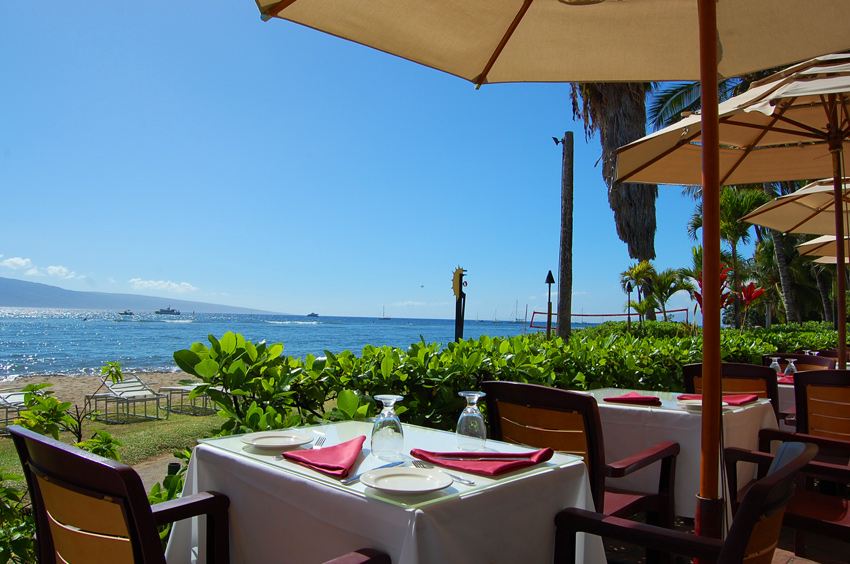
Oceanfront dining at sunset on Maui
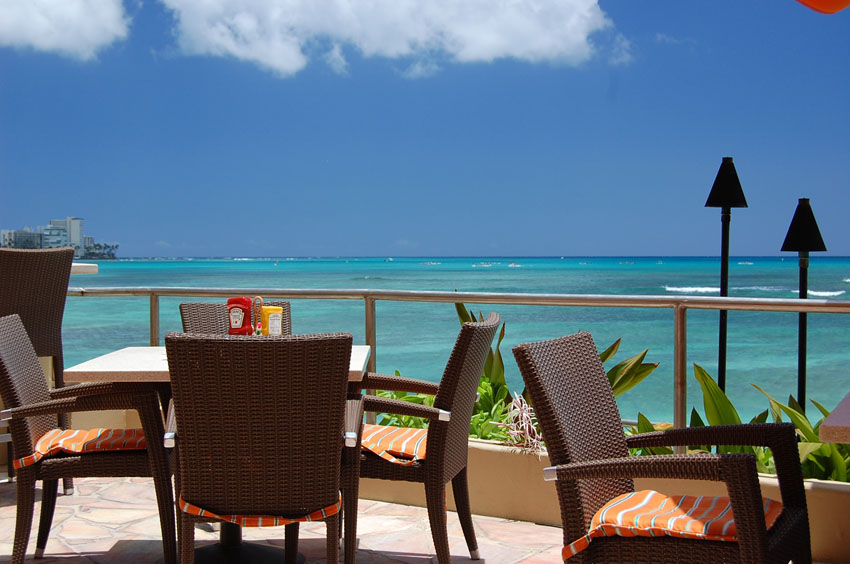
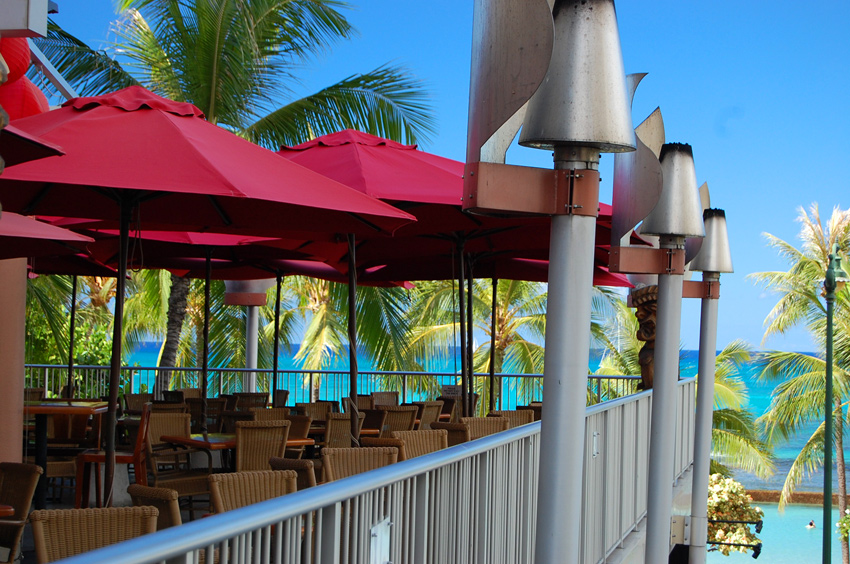
Oceanfront dining tables on Oahu
Maui bachfront dining
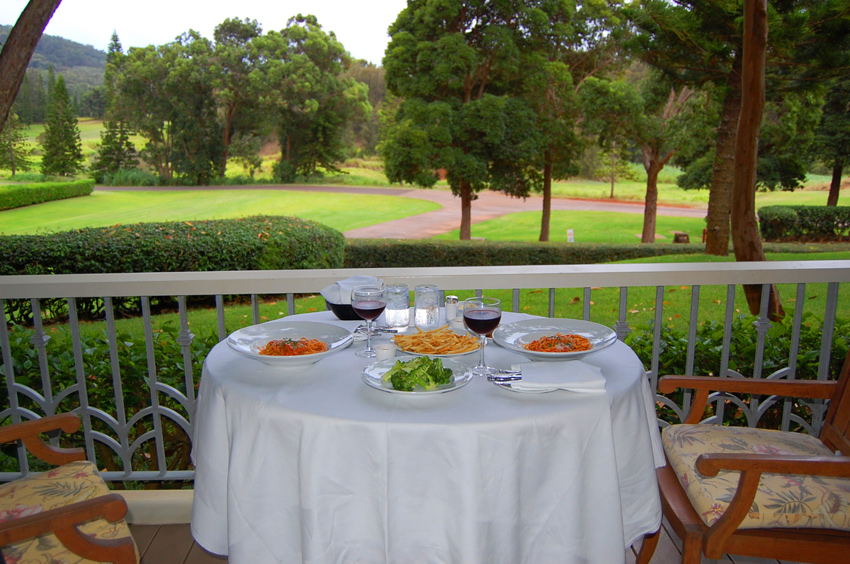
Private dining on Lanai
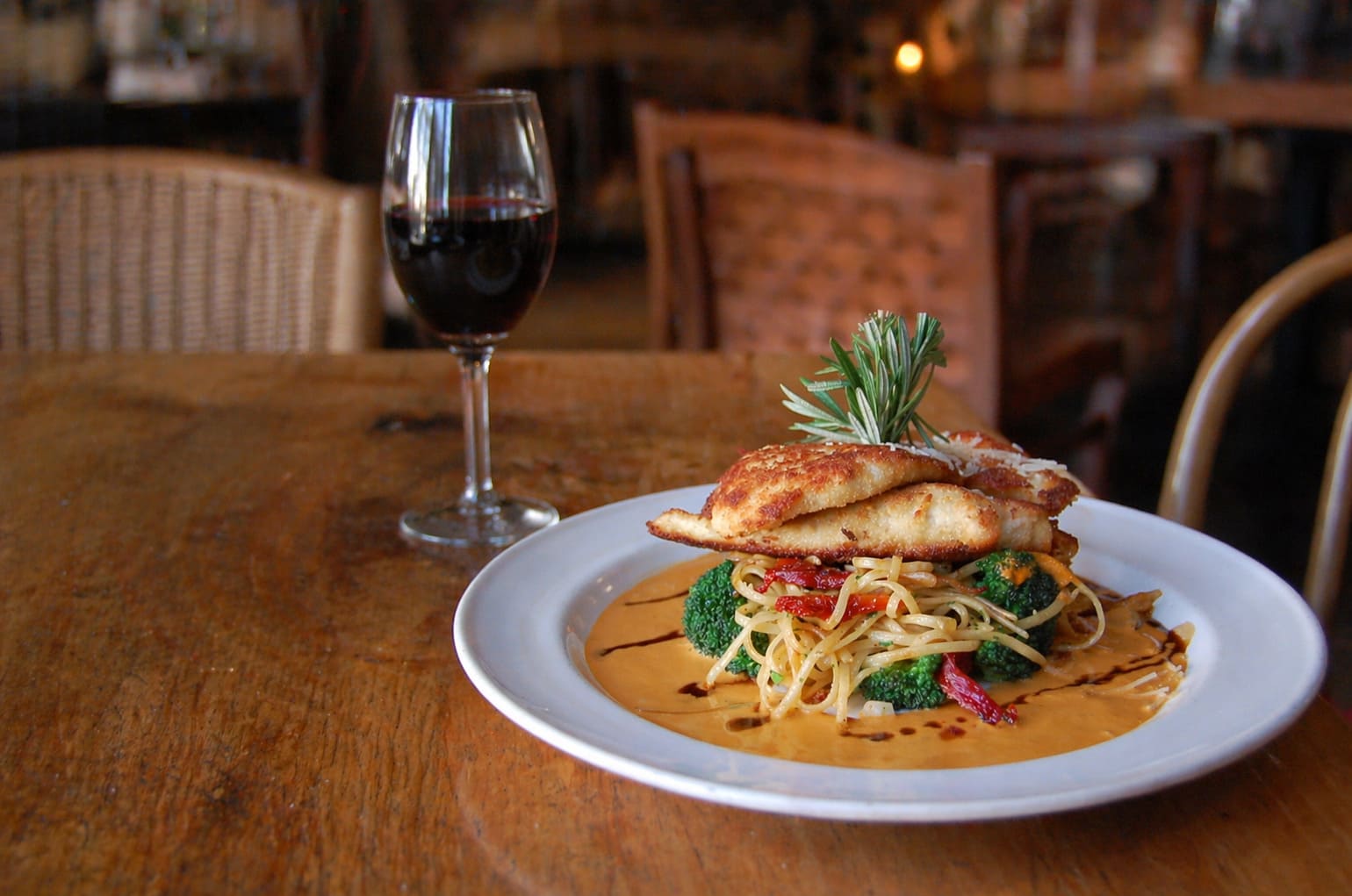
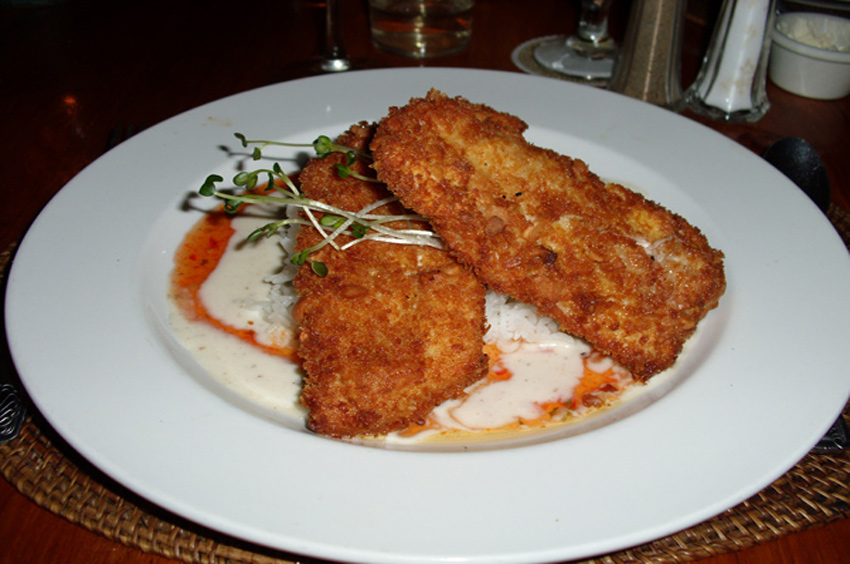
Macadamia Nut Crusted Mahi Mahi
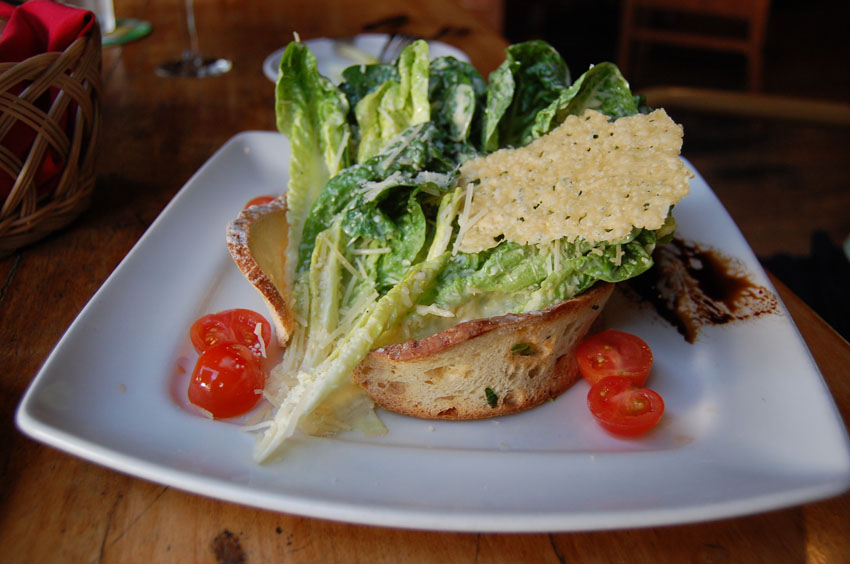
Caesar Volcano Salad
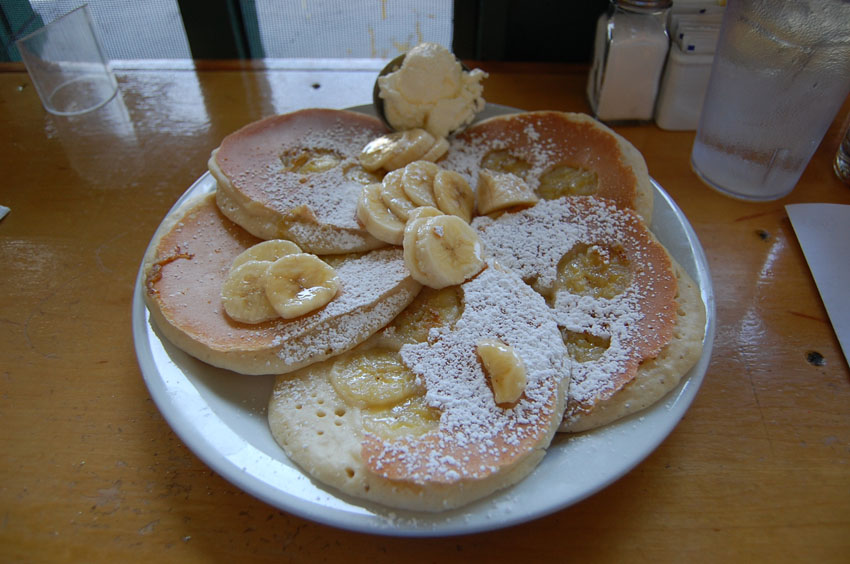
Banana Panecakes for breakfast
In the past, there hasn't been much to talk about the Hawaiian cuisine. Dining in Hawaii usually meant eating dishes with ingredients that were imported from elsewhere and not locally grown. However, within the last two decades, Hawaii has experienced a culinary revolution and the birth of a new cuisine. In 1992, twelve Hawaii chefs came together and formed an organization they named Hawaii Regional Cuisine. The goal of this culinary movement was to link local agriculture with Hawaii's restaurant industry – to blend Hawaii's diverse flavors with the cuisine of the world.
Many island chefs today take advantage of using fresh ingredients grown in the Islands: cattle raised on the Islands’ upland pastures, fish caught fresh in Hawaiian waters and fruits and vegetables grown from rich, volcanic soil.
Four of the chefs who established the Hawaii Regional Cuisine movement have restaurants on Oahu: Sam Choy (Sam Choy's Breakfast, Lunch & Crab), George Mavrothalassitis (Chef Mavro), Alan Wong (Alan Wong's Restaurant) and Roy Yamaguchi (Roy's Waikiki Beach, Roy's Hawaii Kai, Roy's Ko Olina).
Three of the original chefs have restaurants on Maui: Mark Ellman (Mala Ocean Tavern), Beverly Gannon (Hali'imaile General Store, Joe's, Gannon's) and Peter Merriman (Hula Grill, Merriman's Kapalua).
Two of the original chefs have restaurants on the Big Island of Hawaii: Peter Merriman (Merriman's Waimea, Merriman's Market Cafe) and Roy Yamaguchi (Roy's Waikoloa Bar & Grill).
And two of the original chefs have restaurants on Kauai: Peter Merriman (Merriman's Fish House Poipu) and Roy Yamaguchi (Roy's Poipu Bar & Grill).
There are many other fine restaurants throughout Hawaii that feature the unique flavors of Hawaii Regional Cuisine.
Besides these fine dining establishments featuring Hawaiian fusion cuisine, there are also plenty of opportunities in the Islands to try casual local food, the food islanders eat on a daily basis that reflects Hawaii's diverse community. One of the most popular dishes is the simple plate lunch, which consists two scoops of rice topped with a fried egg, a hamburger patty and gravy. Variations of the dish include macaroni salad, fried fish, kalua pig, chicken or teriyaki beef or Japanese style konkatsu. Plate lunches are available at many casual restaurants as well as beachside or roadside stands.
Some of the best island foods can be found in small, family-run neighborhood restaurants that are mostly inexpensive and serve generous portions. You'll find these places everywhere. Some can be in a small place in the middle of Waikiki or in a small town on the other side of the island. Others are no more than food trucks on the side of the road.
Dining in Hawaii can be quite adventurous. There are dozens of types of delicious fish with alien names, from the ahi and opakapaka, to mahi mahi and ulua. As for island agriculture, vegetables thrive in Hawaii's lava -rich soil. And a real treat are Hawaii-grown fruits, such as sweet and flavorful mangos, papayas, lychee, lilikoi (passion fruit), star fruit, guava, pineapple and banana. There is also plenty of island-raised meat. The Big Island of Hawaii is home to the one of the largest cattle ranches in the United States with about 26,000 head of cattle. There are other cattle ranches in Hawaii, including Kualoa Ranch, Maui Cattle Company, Haleakala Ranch and Molokai Ranch.
A great place to try local food is at a luau, a Hawaiian feast that celebrates life, companionship and great food. When you arrive, you're likely to be greeted with a flower or shell lei and escorted to your seat. At some luaus, guests are invited to participate in a variety of activities, such as lei making, spear throwing and hula dancing. You know the feast is about to start when you witness the unearthing of the roast pig from the imu, an underground oven.
The roast pig is the centerpiece of the all-you-can-eat luau buffet, but you'll also find other traditional island foods, such as lomi lomi salmon, haupia, taro rolls and poi (a paste made from taro). As for the poi, it's best eaten in combination with something else because poi itself is basically just a sticky, starchy paste that people unaccustomed to its taste often don't like. But be sure to take a sample so that you can say you at least tried it. After dinner, all luaus have some sort of Polynesian show featuring Polynesian and Hawaiian music and dances, including hula.
Because of Hawaii's large Asian population, oriental flavors probably have the greatest influence. The wealth of Asian restaurants in the Islands speaks for itself. But overall, Hawaii has become a culinary mecca with foods from all over the world.


Photo gallery
Dining in Hawaii Photo Gallery
Browse our Dining in Hawaii photo gallery for a taste of oceanfront restaurants, island dishes, fresh seafood, tropical breakfasts and scenic open-air meals.
Frequently Asked Questions
What is Hawaii Regional Cuisine?
Hawaii Regional Cuisine is a culinary movement that began in 1991 with 12 local chefs who promoted island-grown ingredients, fresh seafood and Hawaii's multicultural flavors.
What local foods should visitors try in Hawaii?
Popular local foods include plate lunch, poke, loco moco, spam musubi, saimin, kalua pig, laulau, malasadas, shave ice, garlic shrimp and chicken katsu.
What is a plate lunch in Hawaii?
A plate lunch usually includes rice, macaroni salad and a main dish such as teriyaki beef, chicken katsu, kalua pig, fried fish, hamburger steak or garlic chicken.
What seafood is popular in Hawaii?
Common seafood choices include ahi, mahi mahi, ono, opakapaka, poke, sashimi, shrimp and other locally caught fish depending on the island and season.
What fruits grow in Hawaii?
Hawaii grows tropical fruits such as mango, papaya, pineapple, banana, lychee, guava, star fruit and lilikoi, also known as passion fruit.
What food is served at a Hawaiian luau?
Luau foods often include kalua pig, poi, lomi lomi salmon, chicken long rice, haupia, taro rolls, rice, salads, tropical fruit and desserts.
Is dining out expensive in Hawaii?
Dining out can be expensive, especially in resort areas. Local restaurants, farmers markets, food trucks and plate lunch spots often offer more affordable options.
What cultures influence Hawaii's food scene?
Hawaii's food reflects Hawaiian, Japanese, Chinese, Korean, Filipino, Portuguese, American and other Pacific Island influences.