

Hawaii Marine Life Guide
Rays
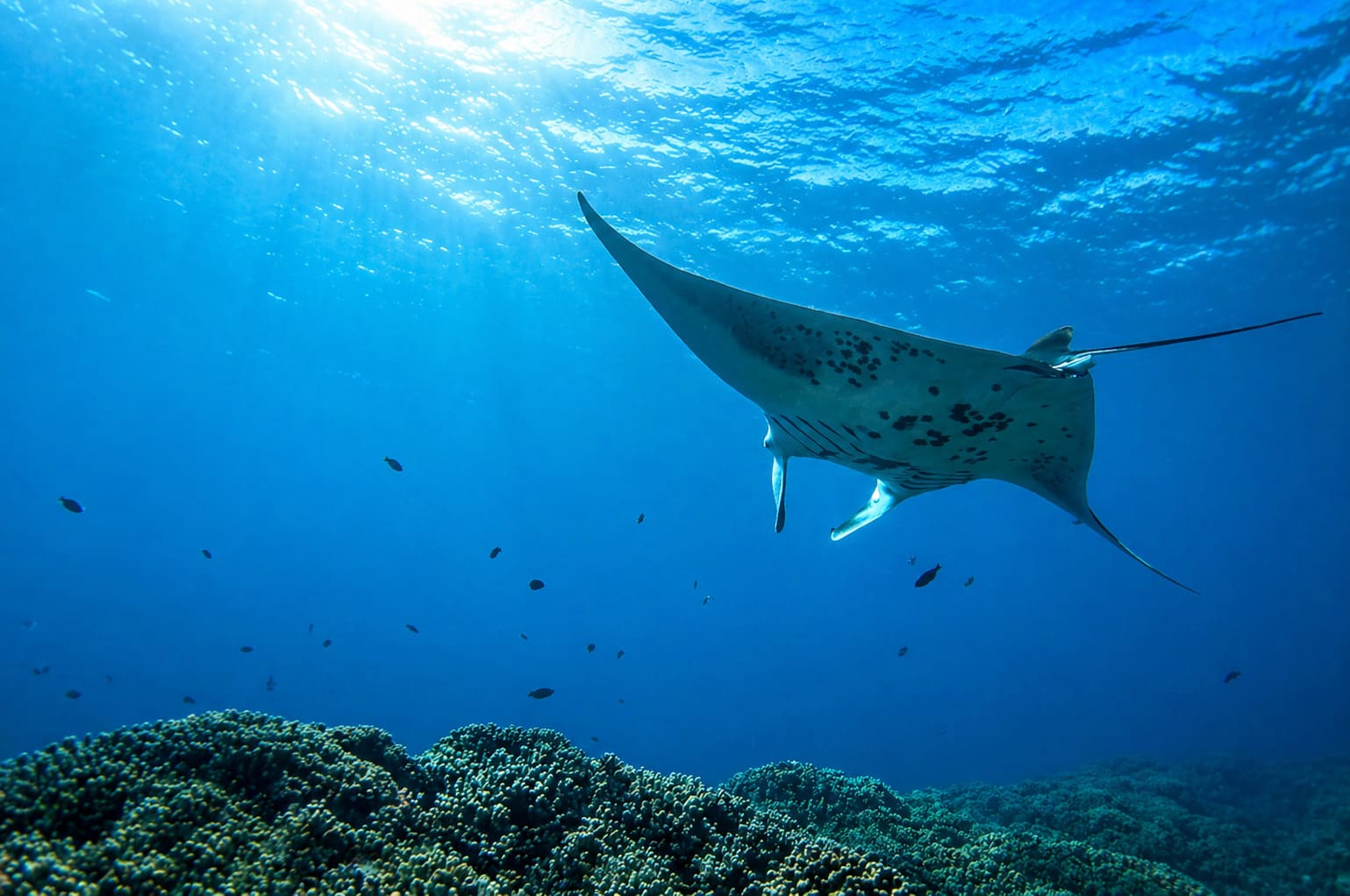
Rays are graceful relatives of sharks with flat bodies, cartilage skeletons and wide pectoral fins that help them glide through Hawaiian waters. In Hawaii, rays are known as lupe, meaning “kite,” and hihimanu, meaning “magnificent.”
Rays Overview
Rays may look very different from sharks, but they are closely related to them. Both belong to a group of fishes with skeletons made of cartilage instead of bone. These graceful animals also lack swim bladders, so their body structure and movement differ from many bony fish. Visitors can browse the broader Hawaii fish guide for more reef fish and marine animal profiles.
Most species are carnivores, and many live close to the bottom. However, manta rays, eagle rays, devil rays and cownose rays often swim through open water. In Hawaii, they are known as lupe, meaning “kite,” and hihimanu, meaning “magnificent.” For more ocean background, visitors can also explore the broader Hawaii ocean life section.


Quick Facts About Rays
- Families listed: Dasyatidae, Mobulidae and Myliobatidae
- Hawaiian names: Lupe and hihimanu
- Meaning of lupe: “Kite”
- Meaning of hihimanu: “Magnificent”
- Related animals: Sharks
- Skeleton: Made of cartilage
- Swimming style: Uses broad pectoral fins to glide or flap through the water
- Diet: Crustaceans, mollusks, small fish or plankton, depending on species
How These Animals Swim
These fish swim with their large pectoral fins. Some species ripple the fins like waves, while others flap them in a motion that looks almost like flying underwater. This movement gives them their graceful, gliding appearance.
Manta rays are especially known for their smooth swimming style. They may glide, bank, turn and sometimes loop through the water while feeding on plankton. Visitors interested in related ocean animals can also read about Hawaii sharks, dolphins and sea turtles.
Body Shape and Anatomy
Most bottom-dwelling species have flat bodies with the mouth on the underside. This helps them feed on animals hidden in sand or mud. Their gill slits also sit underneath the body, below the pectoral fins.
Mantas differ from many bottom dwellers because they feed in open water. They use their wide mouths and specialized feeding structures to filter plankton from the water.
Where to See Them in Hawaii
These animals can appear in several Hawaiian marine habitats. Some rest or feed near sandy bottoms and reef edges. Others cruise through open water or along reef slopes. Mantas are especially famous on the Big Island, where night-viewing experiences near the Kona Coast are popular.
Spotted eagle rays may also be seen near reefs, sandy channels and coastal areas. Because they move with quiet grace, they often create memorable encounters for snorkelers and divers. Visitors planning reef time can also review Hawaii snorkeling, Hawaii beach safety tips and guided options such as Big Island manta ray snorkel tours, Oahu snorkeling tours, Maui snorkeling tours and Kauai snorkeling tours.
Feeding Habits
Different species feed in different ways. Bottom-dwelling types may search sand for crustaceans, mollusks and small fish. Meanwhile, mantas filter tiny plankton from the water column.
- Some feed on the ocean floor.
- Some crush shellfish and crustaceans.
- Mantas filter plankton from open water.
- Many species use smell and touch to locate food.
Other bottom-dwelling or sand-associated marine animals include crabs, sea cucumbers, goatfishes and bonefishes.
Safety and Viewing Notes
Rays should always be viewed calmly and respectfully. Do not chase, touch or block their path. If you see one resting on the bottom, give it space and avoid stepping near it.
With their shark relatives, kite-like movement and Hawaiian names lupe and hihimanu, these graceful marine animals are among the most memorable sights in Hawaii's ocean world. Visitors interested in reef and shoreline habitats can also read about the Hawaiian coral reef, Hawaii beach sand composition and marine debris in the Hawaiian Islands.