

Hawaii Marine Life Guide
Crabs
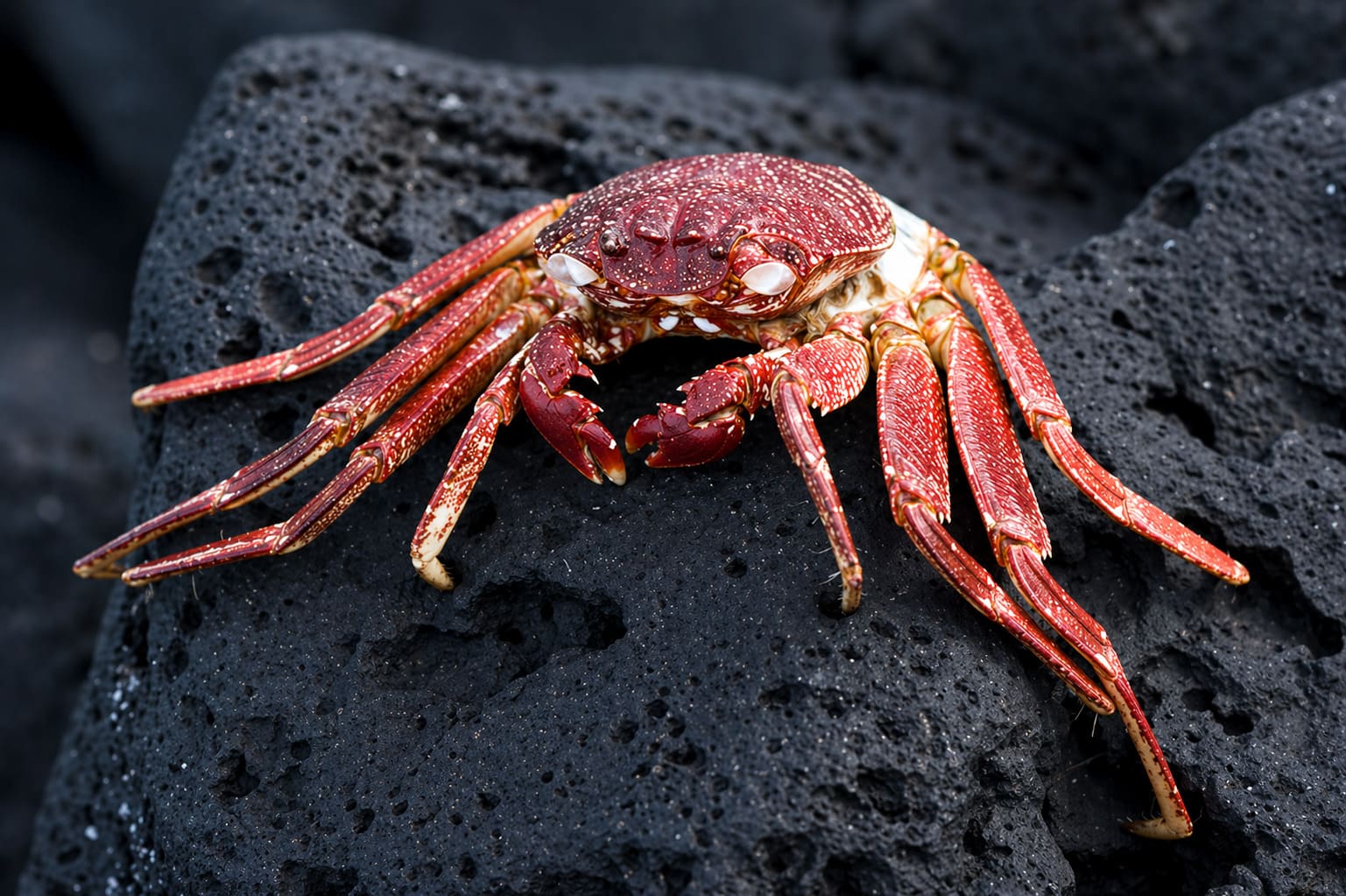
Crabs are common coastal and reef animals in Hawaii, with nearly 200 species found in island waters. These decapod crustaceans use claws, shells and quick movements to feed, communicate, defend hiding spaces and survive in tide pools, reefs and sandy areas.
Coastal Crustaceans in Hawaii
Nearly 200 crab species live in Hawaiian waters, from tiny tide pool dwellers to larger reef and deeper-water varieties. These animals are common along rocky shores, sandy beaches, reef flats and shallow coastal areas. Their hard shells, quick movements and claw behavior make them some of the most interesting creatures to watch near the shoreline. Visitors can browse the broader Hawaii fish guide for more marine animal profiles.
These animals belong to a group called decapod crustaceans. “Decapod” means ten-footed, which refers to the ten legs shared by this group and its close relatives. True members of this group usually have a very short tail or a small abdomen tucked beneath the body. Similar animals, such as hermit crabs, have a different body structure and are not true crabs.

Quick Marine Life Facts
- Group: Decapod crustaceans
- Hawaii species: Nearly 200 species
- Body feature: Hard outer shell and ten legs
- True crab trait: Short tail or abdomen tucked under the body
- Habitats: Tide pools, reefs, rocky shores, sandy areas and deeper waters
- Movement: Many walk sideways, though not all do
- Diet: Algae, bacteria, fungi, worms, small animals and other crustaceans
- Communication: Claw waving, drumming and body signals
True Forms and Similar Shore Animals
A true crab has a compact body shape with the abdomen hidden under the thorax. This gives it the broad, armored look most people recognize. A hermit crab, on the other hand, has a softer abdomen and uses an empty shell for protection.
This difference helps explain why not every animal with “crab” in its name belongs to the same group. Even so, many related shoreline animals share similar habitats and may appear in the same tide pools or reef areas. For more ocean background, visitors can also explore the broader Hawaii ocean life section.
Movement and Claw Signals
Many species walk sideways because their legs attach in a way that favors side-to-side movement. This helps them move quickly over rocks, sand and reef surfaces. However, some species can move forward or use a more flexible walking pattern.
Claws also play an important role. These animals may wave, drum or tap with their pincers to send signals. For example, a claw movement can warn rivals, defend a shelter or attract a mate. Males may also fight over females, burrows or hiding holes.
- Some wave claws to signal other individuals.
- Some drum or tap with their pincers.
- Males may fight over mates or shelters.
- Many defend burrows, crevices or small hiding spaces.
Food and Shoreline Role
Most are omnivores, which means they eat both plant and animal material. Algae makes up an important part of the diet, but they also feed on bacteria, fungi, worms, small animals and other crustaceans when available.
Because they eat many types of food, they help clean and recycle material in tide pools and reef habitats. As a result, they play a useful role in the shoreline food web and also provide food for fish, birds and other predators. Related bottom-dwelling or reef-associated animals include sea cucumbers, rays, goatfishes and bonefishes.
Where to Look in the Islands
Tide pools, rocky shores and shallow reef edges are good places to observe them in Hawaii. Some hide under ledges or inside crevices, while others move across open rock or sand. Small species may appear only after you stand still and watch the same area for a few minutes.
When exploring tide pools, move slowly and avoid lifting rocks. Many small animals rely on those shelters. A careful approach protects the habitat and gives you a better chance to see natural behavior. Visitors planning shoreline time can also review Hawaii beach safety tips, Hawaii snorkeling and beach guides such as Hawaii beaches, Oahu beaches, Maui beaches, Kauai beaches and Big Island beaches.
Viewing Tips
These shoreline animals can pinch strongly, so it is best not to handle them. Watch from a respectful distance and let them move, feed or signal naturally. In addition, avoid stepping in tide pools or damaging algae-covered rocks where small marine life lives.
With their armor-like shells, sideways movement and busy claw signals, Hawaii's crabs and related decapods add life and motion to the Islands' tide pools and reefs. Visitors interested in reef and shoreline habitats can also read about the Hawaiian coral reef, Hawaii beach sand composition and marine debris in the Hawaiian Islands.