

Hawaii Marine Life Guide
Eels
Eels are secretive reef and sand-dwelling fish in Hawaii, often seen peeking from crevices or hiding below the ocean floor. Known in Hawaiian as puhi, they include moray eels, conger eels, snake eels and garden eels.
Eels Overview
Eels look snake-like, but they are fish. In Hawaii, divers and snorkelers may see morays, congers, snake eels and garden eels. Many hide in reef crevices, rocky holes or sand, so they can be easy to miss unless you look carefully. Visitors can browse the broader Hawaii fish guide for more reef fish and marine animal profiles.
The collective Hawaiian name is puhi. Some species served as food, while others held deeper cultural meaning. In some families, certain species were regarded as 'aumakua, or physical forms of ancestral family guardians. For more background, visitors can also explore the Hawaiian language and Hawaiian culture sections.


Quick Facts About Puhi in Hawaii
- Hawaiian name: Puhi
- Main Hawaii groups: Morays, congers, snake eels and garden eels
- Families listed: Congridae, Muraenidae and Ophichthidae
- Common habitats: Reef crevices, rocky holes, sandy bottoms and deeper waters
- Activity pattern: Many species are nocturnal
- Main foods: Small fish, crustaceans and other small marine animals
- Cultural note: Some were considered 'aumakua, or family guardians
Morays on Hawaii Reefs
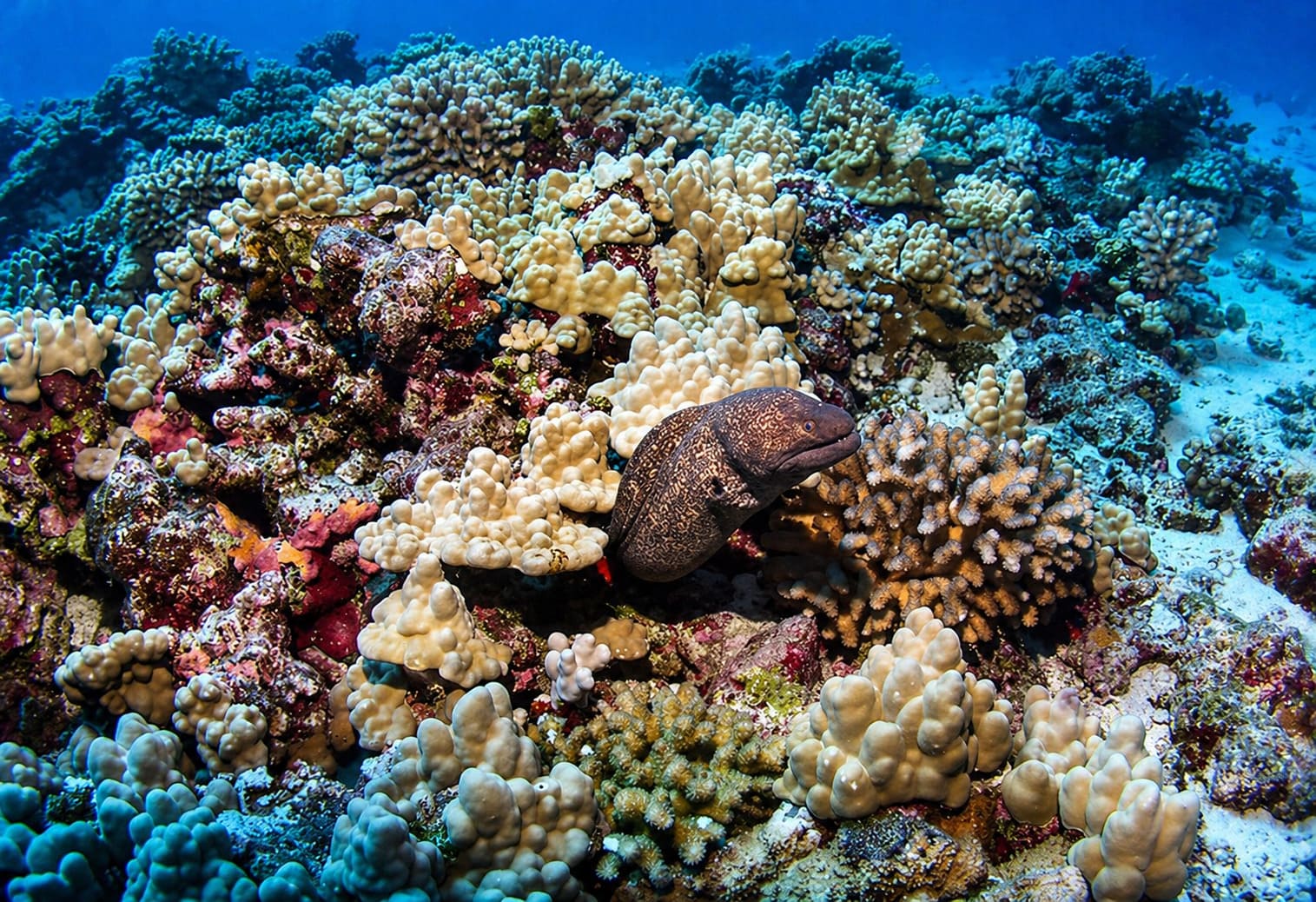
Morays are the type most snorkelers and divers are likely to notice in Hawaii. They often sit with part of the body hidden inside a reef crevice while the head looks out between rocks. Because their colors can blend with the reef, they may look like part of the rock at first.
Morays often keep their mouths partly open, which can look intimidating. However, this behavior helps them move water over their gills. Even so, keep your hands away from holes, and never try to touch or feed them. Visitors planning reef time can also review Hawaii snorkeling, Hawaii beach safety tips and the broader Hawaii ocean life guide.
Congers and Deeper Water
About 12 conger species live in Hawaii. Most stay in deeper waters, so snorkelers do not see them as often as morays. They usually hide during the day and become active at night.
Congers have small teeth and feed mainly on small fish. Since they live a more hidden lifestyle, divers usually need the right conditions and careful observation to spot them. Other nighttime or shelter-loving reef fish include bigeyes, squirrelfishes and soldierfishes and scorpionfishes.
Snake Species and Garden Species
Snake eels are slim and truly live up to their name. They have pointed tails and long dorsal fins. About 17 species can be found in Hawaii, many in sandy or bottom habitats where their shape helps them burrow or hide.
Hawaii also has the Hawaiian Garden Eel. Unlike many hidden reef species, garden forms are active during the day. They live in sandy areas and may be seen with part of the body rising from the sand while the rest remains hidden in a burrow. Other bottom-associated animals include bonefishes, goatfishes, rays, crabs and sea cucumbers.
Feeding and Night Activity
Many puhi hunt at night. After spending the day hidden in reef cracks, holes or sand, they move out to search for prey. Morays often feed on small fish and crustaceans, while congers also take small fish.
- Many species hide during the day.
- Most morays and congers feed mainly at night.
- Common prey includes small fish and crustaceans.
- Garden forms feed in open sandy areas during the day.
Safety and Viewing Tips
These fish are not usually aggressive toward people, but they can bite if threatened, cornered or handled. Therefore, snorkelers and divers should never reach into reef holes or try to touch one. Feeding them can also create dangerous behavior and should be avoided.
The safest way to watch puhi is to stay calm, keep distance and let the animal remain in its shelter. With patience, you may see a moray watching from a reef crevice or a garden species rising gently from the sand. Visitors interested in reef habitats can also read about the Hawaiian coral reef, Hawaii beach sand composition and marine debris in the Hawaiian Islands.
With their hidden lifestyles, Hawaiian name puhi and strong cultural meaning, these fascinating fish are memorable parts of Hawaii's reefs and sandy seafloor habitats.