

Hawaii Reef Fish Guide
Squirrelfishes and Soldierfishes
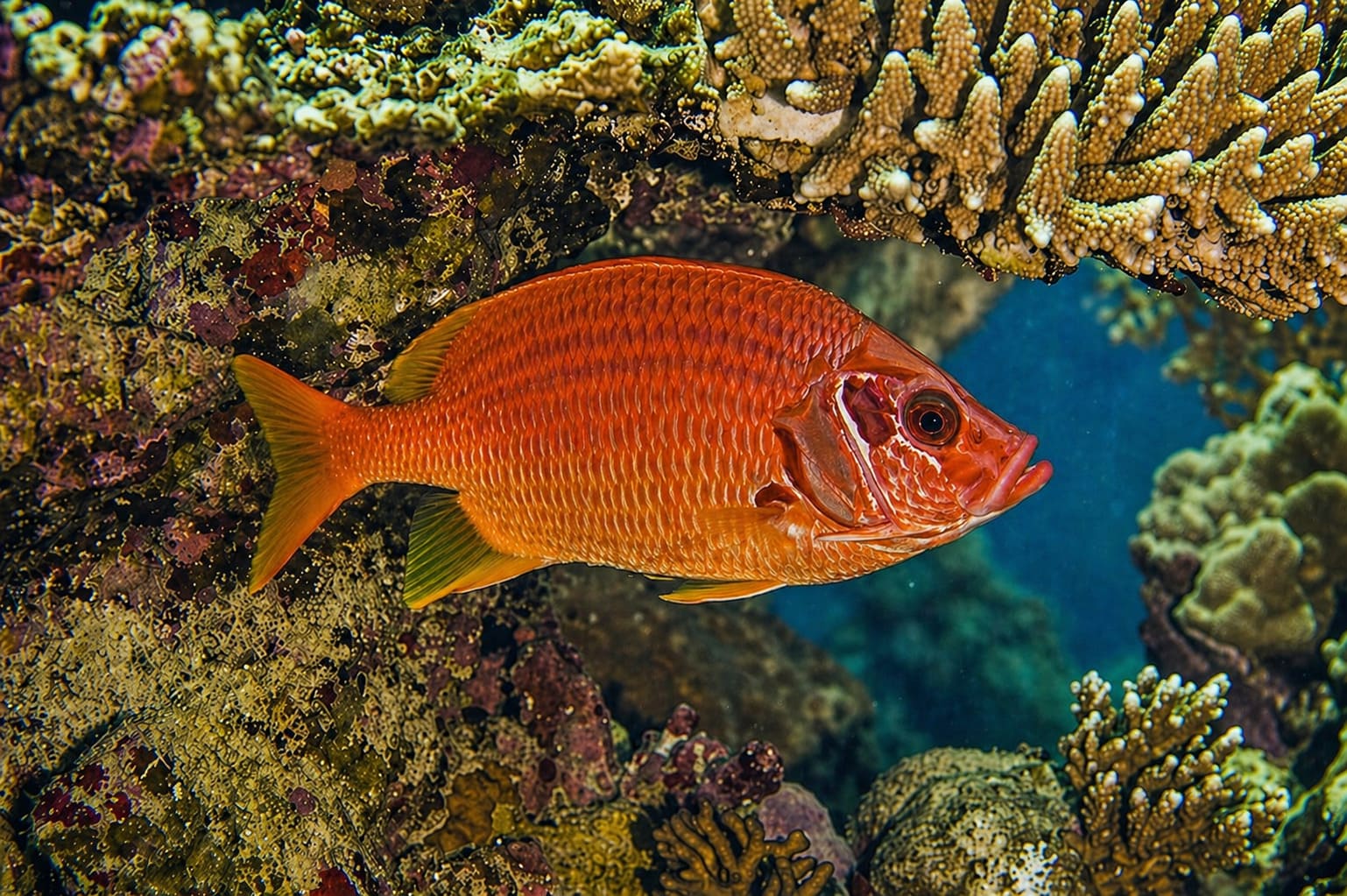
Squirrelfishes and soldierfishes are red, big-eyed reef fish that hide by day and hunt at night. In Hawaii, squirrelfishes are called 'ala'ihi, while soldierfishes are called 'u'u, and both groups are known for spiny bodies and nighttime activity.
Squirrelfishes and Soldierfishes Overview
Squirrelfishes and soldierfishes are reef fish in the family Holocentridae. Most are red, with large black eyes and forked tail fins. Their big eyes help them hunt at night, while their red color appears less noticeable in darker reef spaces. Visitors can browse the broader Hawaii fish guide for more reef fish and marine animal profiles.
About 19 species in this family live in Hawaiian waters. Some occur on shallow reefs, while others live in deeper water. The name Holocentridae means “all spiny,” which fits these fish well because many have sharp spines and a rugged reef-ready body shape. For more ocean background, visitors can also explore the broader Hawaii ocean life section.


Quick Facts About This Fish Family
- Family: Holocentridae
- Common groups: Squirrelfishes and soldierfishes
- Hawaii species: About 19 species
- Squirrelfish Hawaiian name: 'Ala'ihi
- Soldierfish Hawaiian name: 'U'u
- Typical color: Red or reddish
- Key features: Large eyes, forked tail and spiny body parts
- Activity pattern: Mostly nocturnal
Squirrelfishes in Hawaii
Squirrelfishes usually have horizontal silver-colored stripes. They also have one or more backward-pointing spines on the gill covers. These spines help distinguish them from soldierfishes.
When approached or disturbed, squirrelfishes may make clicking sounds while swimming nervously around the reef. In Hawaii, they are known as 'ala'ihi. Visitors interested in Hawaiian names and meanings can also browse the Hawaiian language section.
Soldierfishes in Hawaii
Soldierfishes usually have deeper bodies and more rounded snouts. They do not have the same horizontal stripes as many squirrelfishes. In addition, most do not have the backward-pointing gill-cover spines common in squirrelfishes.
When disturbed, soldierfishes can make grunting sounds. Their Hawaiian name is 'u'u.
Daytime Hiding and Night Hunting
These fish often shelter during the day under ledges, inside caves or in reef crevices. Their large eyes help them see in low light, so they become more active after dark.
At night, they leave hiding places to hunt. They feed on small reef animals, such as crustaceans and other invertebrates. Therefore, night divers may see more natural movement from these fish than daytime snorkelers do. Other nighttime or shelter-loving reef fish include bigeyes, eels, scorpionfishes and hawkfishes.
How to Tell the Groups Apart
- Squirrelfishes: Often striped, with backward-pointing spines on the gill covers.
- Soldierfishes: Usually deeper-bodied, rounder-snouted and not striped.
- Both groups: Often red, large-eyed and active at night.
- Sounds: Squirrelfishes may click, while soldierfishes may grunt when disturbed.
Where to See Them in Hawaii
Snorkelers and divers may see squirrelfishes and soldierfishes tucked under reef ledges or inside shadowed crevices during the day. If you look carefully into dark reef spaces without disturbing the animals, their red bodies and large eyes may become visible.
At night, these fish become more active and may move away from shelter to feed. However, divers should use lights responsibly and avoid harassing fish in their hiding places. Visitors planning reef time can also review Hawaii snorkeling, Hawaii beach safety tips and guided options such as Oahu snorkeling tours, Maui snorkeling tours, Kauai snorkeling tours and Big Island snorkeling tours.
Viewing Notes
These reef fish are best observed calmly from a respectful distance. Avoid reaching into caves or crevices, since many reef animals use those spaces for shelter. In addition, keep fins away from coral and never chase fish out of hiding.
With their red color, large eyes, clicking or grunting sounds and Hawaiian names 'ala'ihi and 'u'u, squirrelfishes and soldierfishes add nighttime energy and character to Hawaii's reefs. Visitors interested in reef habitats can also read about the Hawaiian coral reef, Hawaii beach sand composition and marine debris in the Hawaiian Islands.