

Hawaii Reef Fish Guide
Bigeyes
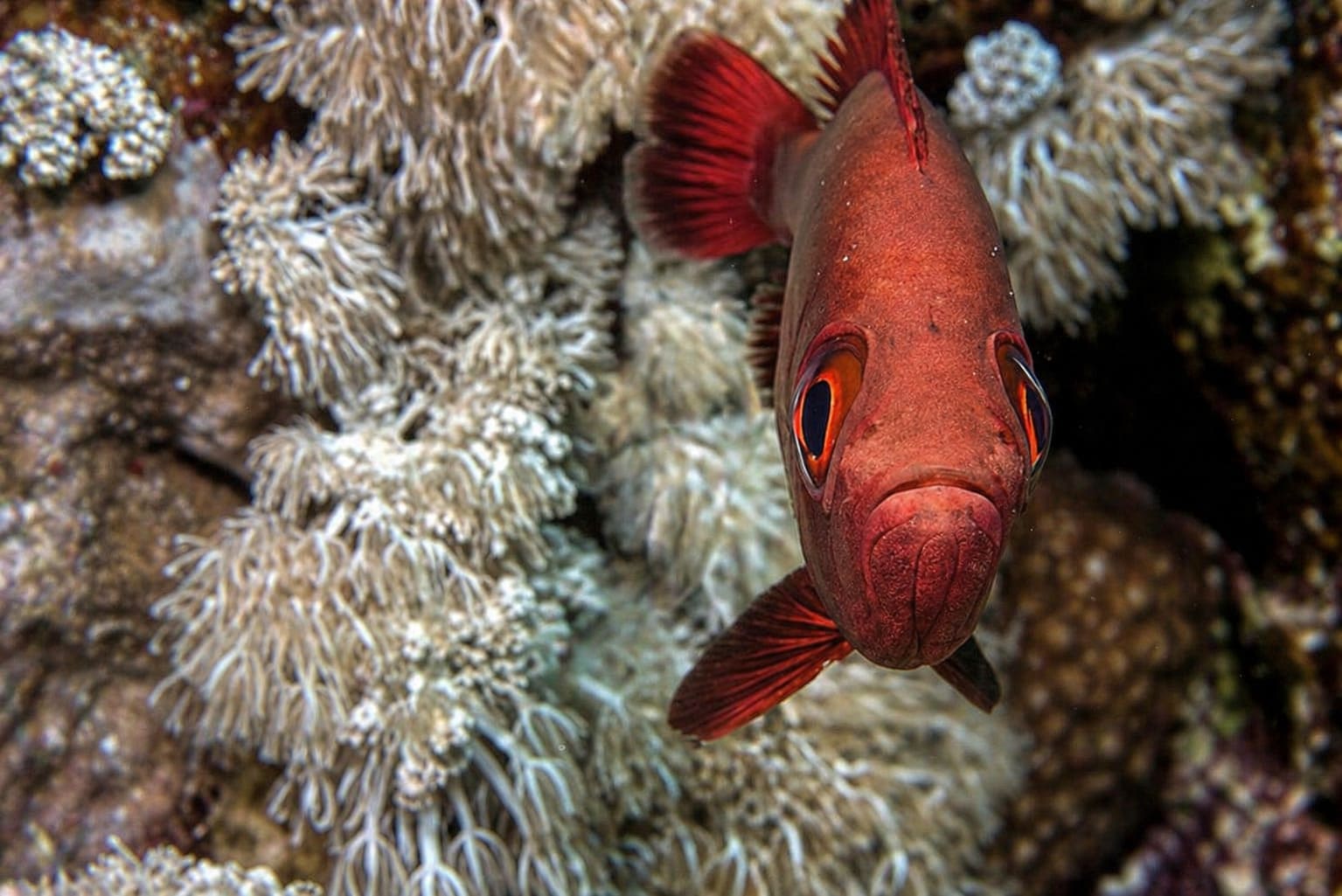
Bigeyes are red, nocturnal reef fish known for their oversized reflective eyes and nighttime feeding habits. In Hawaii, they are called 'aweoweo, meaning “glowing red,” and are often associated with caves, ledges and deeper reef shadows.
Bigeyes Overview
Bigeyes are reef fish in the family Priacanthidae. There are about 18 species worldwide, and several occur in Hawaiian waters. The Hawaiian Bigeye and Common Bigeye live in nearshore waters, while two other species live farther offshore in deeper water. Visitors can browse the broader Hawaii fish guide for more reef fish and marine animal profiles.
Their name comes from their large eyes, which help them see in dim light. Bigeyes are usually bright red, with narrow bodies and fine scales. In the Hawaiian language, bigeyes are called 'aweoweo, meaning “glowing red.”


Quick Facts About Bigeyes
- Family: Priacanthidae
- Hawaiian name: 'Aweoweo
- Meaning of Hawaiian name: “Glowing red”
- Worldwide species: About 18 species
- Hawaii nearshore species: Hawaiian Bigeye and Common Bigeye
- Body color: Usually bright red
- Key feature: Large, reflective eyes
- Activity pattern: Mostly nocturnal
- Diet: Small planktonic animals
Why Bigeyes Have Large Eyes
Bigeyes are adapted for low-light hunting. Their oversized eyes help them see in dark reef caves, under ledges and at night. The eyes are also highly reflective, which makes them shine when a diver's light hits them.
Night divers may notice a bright, laser-like reflection from a bigeye's eyes. This glow is one of the most memorable signs of the fish after dark. Other reef fish with strong nighttime or shelter-based habits include eels, squirrelfishes and soldierfishes and scorpionfishes.
Daytime and Nighttime Behavior
During the day, bigeyes usually hide in caves, crevices and under rocky ledges. Their red color can appear less noticeable in deeper or darker water, helping them stay hidden from predators.
At night, they move out from shelter to feed. They hunt small planktonic animals in the water column and use their large eyes to locate food in dim light.
- They hide in caves and under ledges during the day.
- They become active at night.
- They feed on small planktonic animals.
- Their reflective eyes help them see in dark water.
Where to See Bigeyes in Hawaii
Bigeyes may be seen around reef caves, ledges and shadowed reef areas. They are easier to observe during night dives or in dim reef shelters. Large nearshore schools are not common, but individual fish or small groups may appear in suitable habitat.
The Hawaiian Bigeye and Common Bigeye are the species most associated with nearshore Hawaiian waters. Other bigeye species occur farther offshore in deeper water. Visitors planning ocean time can also review Hawaii snorkeling, Hawaii beach safety tips and the broader Hawaii ocean life guide.
Cultural Meaning of 'Aweoweo
The Hawaiian name 'aweoweo means “glowing red,” a fitting name for this bright red fish with reflective eyes. Red also carried meaning in old Hawaii because it was associated with ali'i, or royalty.
One famous historical account connects bigeyes with the death of King Kalakaua. Around January 1891, near the time of his death in San Francisco, large numbers of bigeyes were seen in the waters off Pearl Harbor. Because of the fish's red color and its association with chiefly symbolism, such events were viewed as signs connected to the death of a high chief. Visitors interested in cultural background can also browse Hawaiian royalty and Hawaiian history.
Snorkeling and Diving Notes
Bigeyes are not always easy to spot during the day because they hide in dark places. Divers should avoid reaching into holes or disturbing reef shelters. At night, use lights carefully and avoid harassing fish with repeated bright beams.
With their bright red color, reflective eyes and Hawaiian name 'aweoweo, bigeyes are among Hawaii's most distinctive nocturnal reef fish. Visitors interested in reef habitats can also read about the Hawaiian coral reef, marine debris in the Hawaiian Islands and Hawaii beach sand composition.