

Hawaii Reef Fish Guide
Hawkfishes
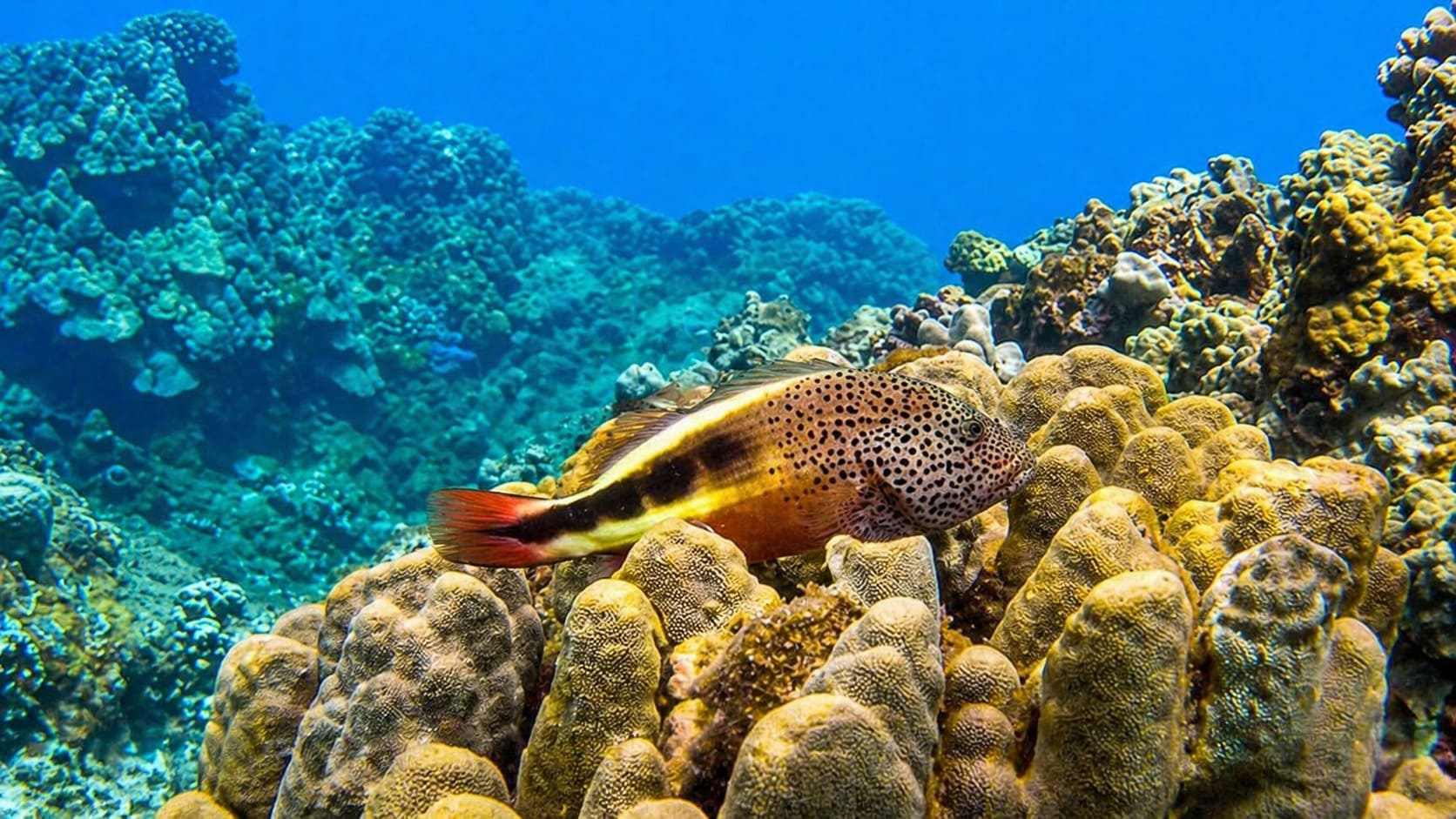
Hawkfishes are reef fish that perch on coral heads and rocky outcrops, waiting for prey to pass nearby. In Hawaii, their name is piliko'a, meaning “coral clinging,” which fits their still, watchful posture on the reef.
Hawkfishes Overview
Hawkfishes are reef fish known for their watchful, perched behavior. They often sit motionless on coral heads, rocky outcrops or reef ledges while waiting for prey. When a small fish or crustacean comes close, they strike quickly. Visitors can browse the broader Hawaii fish guide for more reef fish and marine animal profiles.
Six hawkfish species live in Hawaiian waters. Their Hawaiian name is piliko'a, meaning “coral clinging.” This name describes the way they rest on reef structures and seem to cling to coral while scanning the surrounding water. For more ocean background, visitors can also explore the broader Hawaii ocean life section.


Quick Facts About Hawkfishes
- Family: Cirrhitidae
- Hawaiian name: Piliko'a
- Meaning of Hawaiian name: “Coral clinging”
- Hawaii species: Six species
- Common habitat: Coral heads, reef ledges and rocky outcrops
- Feeding style: Ambush predator
- Diet: Small fish and crustaceans
- Social pattern: Often one male with one or more females
How Hawkfishes Hunt
Hawkfishes use patience rather than speed over long distances. First, they choose a perch with a good view. Then they wait almost motionless until prey comes close enough. Finally, they lunge forward in a quick burst and grab the prey.
This hunting style works well on reefs because coral heads and rocks provide excellent lookout points. Their still posture can also make them easy for snorkelers and divers to observe. Other reef predators and ambush hunters include groupers, lizardfishes, scorpionfishes and trumpetfishes and cornetfishes.
Where to See Them in Hawaii
Look for hawkfishes on coral heads, reef outcrops and rocky ledges. They often sit in open view, especially when they feel secure. However, they may dart away or shift position if a swimmer gets too close.
Because they perch rather than constantly swim, hawkfishes are good subjects for patient underwater viewing. Move slowly and scan the tops of coral and rock structures. Visitors planning reef time can also review Hawaii snorkeling, Hawaii beach safety tips and guided options such as Oahu snorkeling tours, Maui snorkeling tours, Kauai snorkeling tours and Big Island snorkeling tours.
Sex Change and Social Groups
Many hawkfish species can change sex. Most begin life as females, and males are sex-reversed females. In a group, one male may live with one or more females.
If the male dies, the dominant female can change sex and take over the male role. As a result, the group can maintain its breeding structure even after losing the original male.
Identification Notes
- Look for a fish sitting still on coral or rock.
- Watch for a sudden strike at nearby prey.
- Notice the alert, perched posture.
- Check reef ledges and coral heads carefully.
- Different species vary in color and pattern.
Snorkeling and Diving Tips
Hawkfishes often allow calm observers to watch them from a short distance. However, avoid touching coral or crowding the fish. If you stay still, the fish may return to its perch and resume hunting behavior.
With their coral-perching style, quick ambush strikes and Hawaiian name piliko'a, hawkfishes are distinctive reef predators in Hawaiian waters. Visitors interested in reef habitats can also read about the Hawaiian coral reef, Hawaii beach sand composition and marine debris in the Hawaiian Islands.