

Hawaii Marine Life Guide
Needlefishes
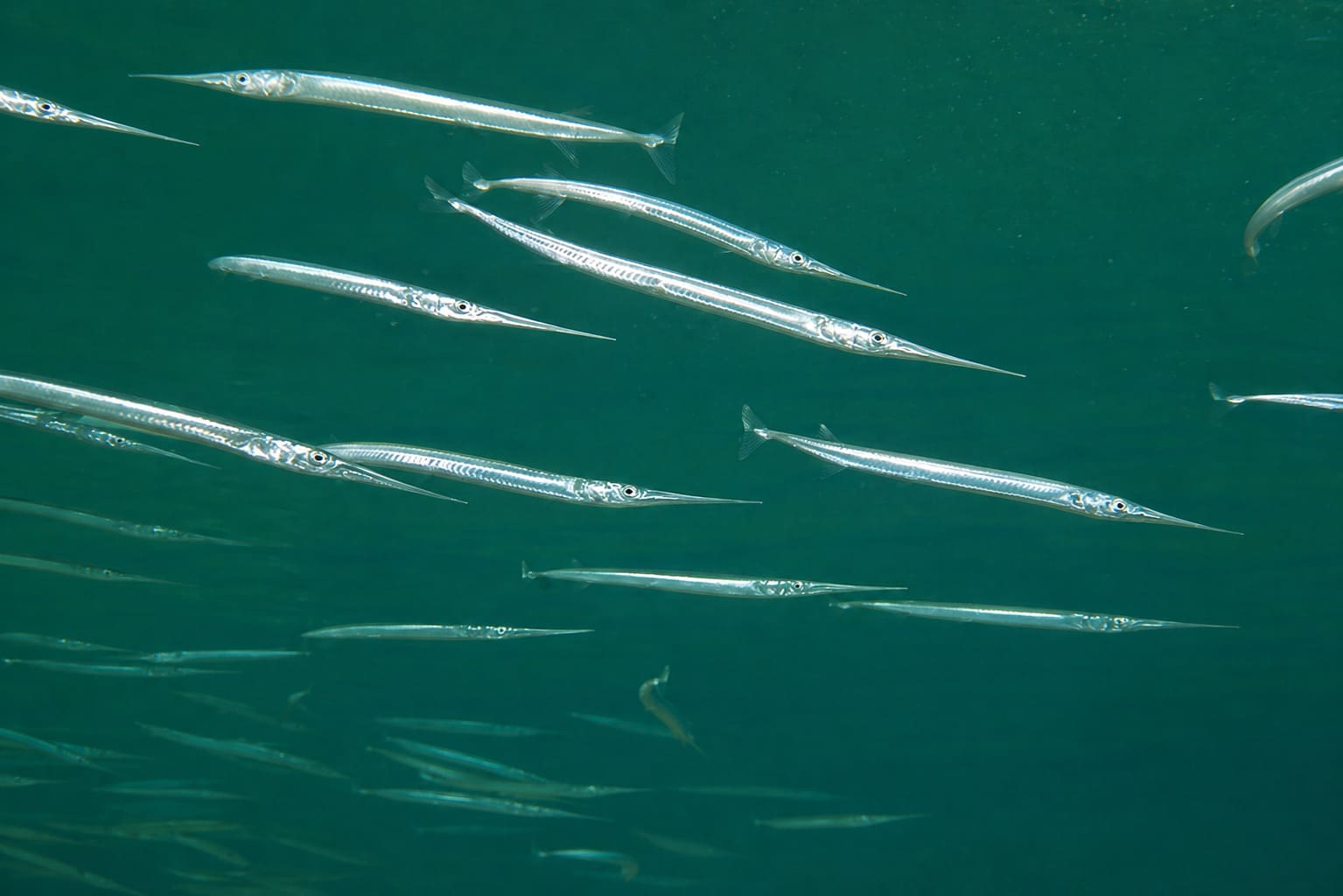
Needlefishes are long, slim surface hunters with sharp, needlelike beaks and strong swimming ability. In Hawaii, they are called 'aha, meaning “cord,” a fitting name for their thin bodies and quick movement just below the water's surface.
Needlefishes Overview
Needlefishes are long, slender fish that usually swim just below the ocean surface. Their pointed, needlelike beaks contain sharp teeth, which they use to catch small schooling fish. Because of their shape, juvenile needlefish can look like tiny twigs floating at the surface. Visitors can browse the broader Hawaii fish guide for more reef fish and marine animal profiles.
In the Hawaiian language, needlefishes are called 'aha, meaning “cord.” At least four species live in Hawaiian waters. Their thin bodies, fast swimming and surface-feeding habits make them distinctive fish to watch from shore, boats or while snorkeling. For more ocean background, visitors can also explore the broader Hawaii ocean life section.


Quick Facts About Needlefishes
- Family: Belonidae
- Hawaiian name: 'Aha
- Meaning of Hawaiian name: “Cord”
- Hawaii species: At least four species
- Body shape: Long, slim and surface-adapted
- Key feature: Pointed beak with sharp teeth
- Habitat: Near the ocean surface
- Diet: Small schooling fish
How to Identify Needlefishes
Needlefishes have a long, narrow body and an extended beak that looks sharp and pointed. They often hold close to the surface, where their slim shape helps them blend with ripples and reflections.
- Look for a long, thin fish just below the surface.
- Notice the pointed beak and sharp-looking profile.
- Watch for quick surface movement.
- Juveniles may look like small floating twigs.
Feeding and Surface Behavior
Needlefishes feed mainly on small schooling fish. They swim fast, strike quickly and swallow prey whole. Their surface position gives them access to small fish that gather near the top of the water.
They can also leap out of the water. This behavior helps them escape predators or move quickly, but it can also create a safety concern when people swim, boat or dive near them. Other fast or surface-associated fish include barracudas, jacks and trumpetfishes and cornetfishes.
Night Diving and Light Safety
Needlefishes may become attracted to bright lights at night. For that reason, divers should use extra caution in areas where these fish are common. It is safer to keep dive lights off until fully in the water and submerged.
Large needlefishes can cause serious injuries if they leap toward a light or strike a person. Their sharp beaks can puncture skin, and small beak fragments may remain in a wound. Visitors planning ocean time can also review Hawaii beach safety tips, Hawaii snorkeling and guided options such as Oahu snorkeling tours, Maui snorkeling tours, Kauai snorkeling tours and Big Island snorkeling tours.
Injury and First Aid Note
If a needlefish causes a puncture wound, the wound should be cleaned and disinfected promptly. Medical care may be needed, especially if the wound is deep or if any beak pieces remain in the skin. Quick treatment helps reduce the risk of infection.
Viewing Tips
Needlefishes are best observed calmly from a distance. Watch the surface for long, silver shapes gliding in the light. Avoid shining lights directly at them at night, and do not try to touch or chase them.
With their cord-like bodies, sharp beaks and Hawaiian name 'aha, needlefishes are some of the most recognizable surface hunters in Hawaiian waters. Visitors interested in reef and shoreline habitats can also read about the Hawaiian coral reef, Hawaii beach sand composition and marine debris in the Hawaiian Islands.