
Hawaii Marine Life Guide
Octopuses
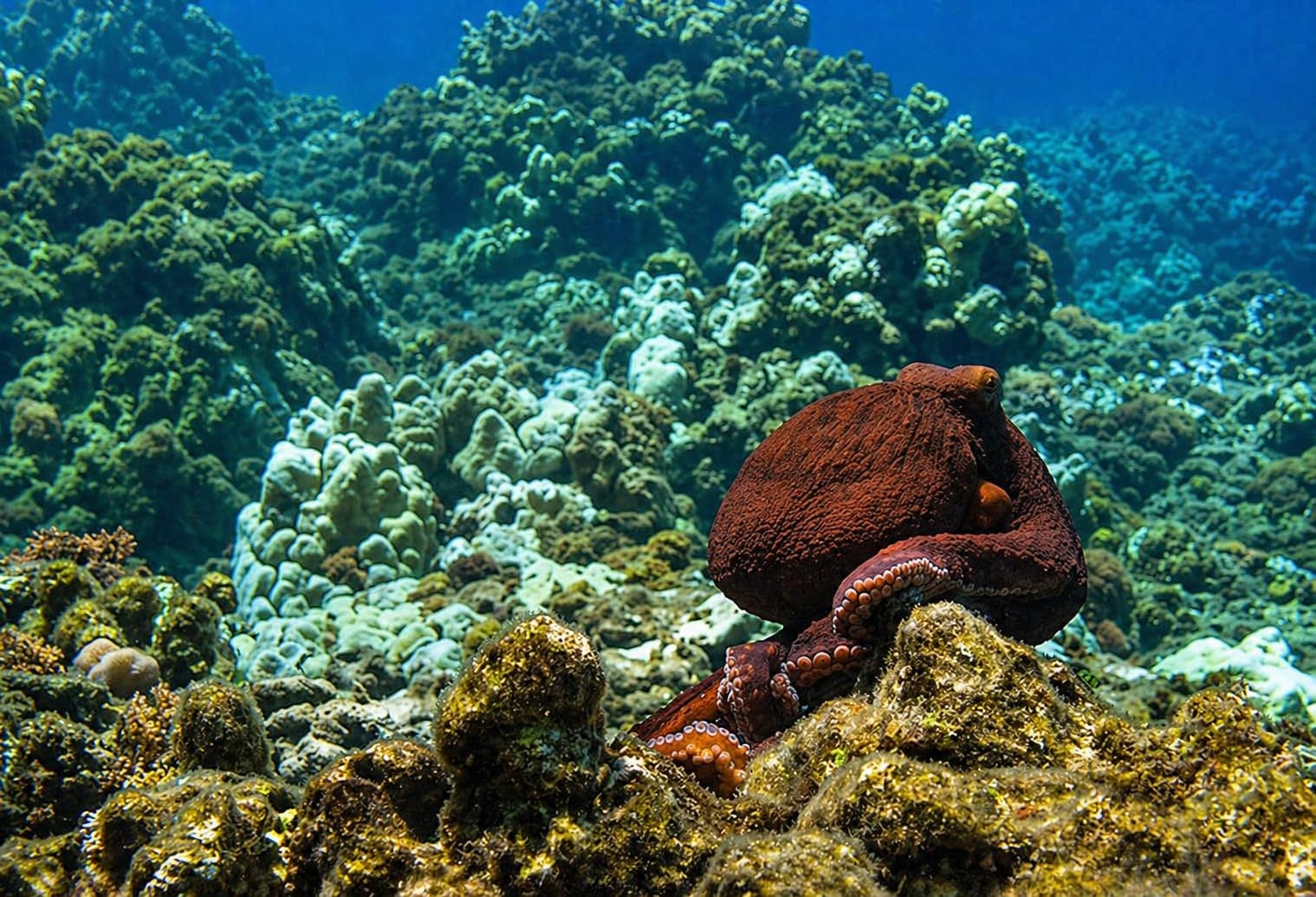
Octopuses are intelligent, flexible reef animals with eight arms, powerful suction cups and remarkable camouflage skills. In Hawaii, the Hawaiian Day Octopus, or he'e mauli, is the species most often seen by snorkelers and divers.
Octopuses Overview
Octopuses are among the most intelligent animals in Hawaii's reefs. They have flexible bodies, eight arms, strong suction cups and the ability to change color and texture quickly. Because they have no bones or shell, they can squeeze into tight reef holes and crevices. Visitors can browse the broader Hawaii fish guide for more reef fish and marine animal profiles.
The most common octopus in Hawaii is the Hawaiian Day Octopus, known scientifically as Octopus cyanea. In the Hawaiian language, octopus is called he'e, and the Hawaiian Day Octopus is known as he'e mauli. For more ocean background, visitors can also explore the broader Hawaii ocean life section.


Quick Facts About Octopuses
- Group: Octopoda
- Common Hawaii species: Hawaiian Day Octopus
- Scientific name: Octopus cyanea
- Hawaiian name: He'e
- Hawaiian Day Octopus name: He'e mauli
- Arms: Eight arms with many suction cups
- Body feature: No bones and no shell
- Defense tools: Camouflage, ink, hiding and quick movement
- Habitat: Shallow reefs, reef holes and rocky crevices
Intelligence and Problem Solving
Octopuses have large brains compared with their body size. They can solve problems, explore objects and learn from their surroundings. In addition, they use their arms and suction cups with great control, which helps them search, grip and move through reef habitat.
Their intelligence also supports their defense behavior. When threatened, an octopus may change color, flatten against the reef, squeeze into a hole or release ink before escaping. Other reef animals with strong camouflage or hiding behavior include eels, scorpionfishes, filefishes and lizardfishes.
Body Features
All octopuses have eight arms, a hard beak, three hearts, an ink sac and a funnel, also called a siphon. They use the funnel to push water out of the body and propel themselves forward. They can also crawl over the reef using their arms.
- They use suction cups to grip rocks and prey.
- They use a hard beak to bite and feed.
- They use ink to confuse predators.
- They use color and texture changes to blend into the reef.
Hawaiian Day Octopus Habitat
The Hawaiian Day Octopus is active during the day, which makes it easier for divers and snorkelers to see than many other octopus species. At night, it often retreats into holes in the reef. It can be found in shallow water and down to depths of about 150 feet.
This species may grow to an arm span of about 3 feet (90 cm) and weigh around 4 to 5 pounds. However, its camouflage can make it difficult to spot even when it is nearby. Visitors planning reef time can also review Hawaii snorkeling, Hawaii beach safety tips and guided options such as Oahu snorkeling tours, Maui snorkeling tours, Kauai snorkeling tours and Big Island snorkeling tours.
Feeding and Behavior
Octopuses hunt crabs, shrimp, small fish and other reef animals. They often search reef holes and rock surfaces with their arms. Because they can change shape and color so well, they can approach prey quietly and avoid predators at the same time.
When resting, a Hawaiian Day Octopus may sit partly hidden near a den. If it feels safe, it may move across the reef, shift colors and explore its surroundings. Related bottom-dwelling or reef-associated animals include crabs, sea cucumbers, rays and goatfishes.
Snorkeling and Diving Notes
If you see an octopus in Hawaii, keep a respectful distance and avoid touching or cornering it. These animals are sensitive, intelligent and easily stressed by harassment. In addition, reaching into reef holes can damage habitat and may expose your hand to hidden animals.
With its problem-solving ability, camouflage and Hawaiian name he'e mauli, the Hawaiian Day Octopus is one of the most fascinating animals to encounter on Hawaii's reefs. Visitors interested in reef habitats can also read about the Hawaiian coral reef, Hawaii beach sand composition and marine debris in the Hawaiian Islands.