

Hawaii Marine Mammal Guide
Wrasses
Wrasses are active, colorful reef fish found throughout Hawaii's coral habitats. Known in Hawaiian as hinalea, they include carnivores, plankton feeders and cleaner species that remove parasites from other fish.
Wrasses Overview
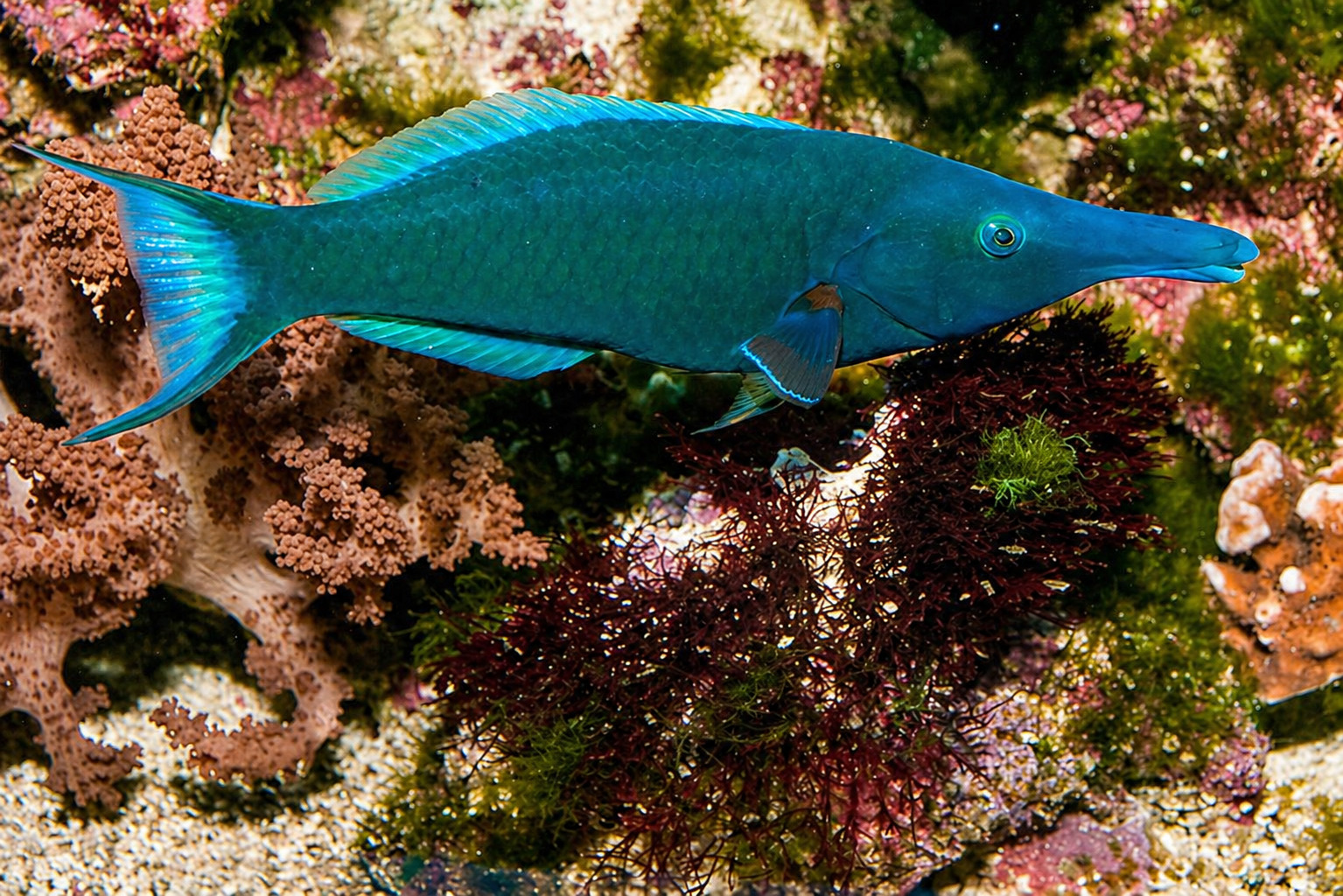
Wrasses are common coral reef fish in Hawaii. Most species have elongated bodies and a continuous dorsal fin, but their colors, patterns and sizes vary widely. Some are small and quick, while others are larger, brighter and more noticeable on the reef. Visitors can browse the broader Hawaii fish guide for more reef fish and marine animal profiles.
In the Hawaiian language, wrasses are called hinalea. They are either carnivores or plankton feeders, and all have sharp teeth. Many species move constantly across the reef while searching for food, defending territories or interacting with other fish. For more ocean background, visitors can also explore the broader Hawaii ocean life section.


Quick Facts About Wrasses
- Family: Labridae
- Hawaiian name: Hinalea
- Common habitat: Coral reefs, reef flats, rocky reefs and reef slopes
- Body shape: Often elongated with a continuous dorsal fin
- Diet: Small animals, plankton or reef-based prey, depending on species
- Teeth: Sharp teeth used for feeding
- Color: Highly variable, often brighter in mature males
- Notable behavior: Many species can change sex during their lifetime
Color and Reef Behavior
Wrasses are among the most colorful fish on Hawaii's reefs. Their colors can help with communication, mating, territory and recognition between individuals. In many species, males show brighter colors than females.
They often swim with quick, darting movements. Because they stay active, snorkelers may see them weaving between coral heads, rocky ledges and reef slopes throughout the day. Other colorful reef fish to compare include butterflyfishes, angelfishes, damselfishes and Moorish idols.
Sex Change in Wrasses
Many wrasses begin life as females. Later, some individuals change into males. Males are often larger, more colorful and more active than females. They may also lead or defend a group of females.
If the dominant male dies, the dominant female in the group can change into a male and take his place. This process helps the group continue breeding even after losing its male leader. Similar color and sex changes also make parrotfishes interesting to identify on Hawaii's reefs.
Cleaner Wrasses
Some wrasses provide cleaning services for other reef fish. Cleaner wrasses remove parasites, dead skin and small bits of debris from “client” fish. This relationship benefits both sides: the cleaner gets food, and the other fish gets grooming.
The Hawaiian cleaner wrasse is one well-known example. Watching a cleaning station can reveal fish lining up or pausing while the cleaner works around their fins, gills and body.
Feeding Habits
Wrasses feed in different ways depending on species. Some hunt small crustaceans, worms, mollusks or other reef animals. Others feed on plankton drifting in the water. Their sharp teeth help them grab, scrape or pick food from reef surfaces.
- Some species hunt small reef animals.
- Some feed on plankton in the water column.
- Cleaner wrasses eat parasites and dead skin from other fish.
- Many search actively across coral and rocky reef habitats.
Other reef fish that pick, graze or search along reef surfaces include goatfishes, surgeonfishes and unicornfishes, triggerfishes and hawkfishes.
Where to See Them in Hawaii
Wrasses occur on coral reefs throughout Hawaii. Look for them over reef flats, along rocky ledges, around coral heads and near cleaning stations. Since many are colorful and active during the day, they are often easy to spot while snorkeling or diving.
However, their quick movement can make them difficult to photograph. A calm approach and patient observation usually work best. Visitors planning reef time can also review Hawaii snorkeling, Hawaii beach safety tips and guided options such as Oahu snorkeling tours, Maui snorkeling tours, Kauai snorkeling tours and Big Island snorkeling tours.
Snorkeling Notes
Wrasses are harmless to observe and add bright color and movement to Hawaii's reefs. Still, avoid touching coral, chasing fish or interrupting cleaning stations. In addition, let fish approach or move naturally without pressure.
With their bright colors, sharp teeth, sex-changing biology and Hawaiian name hinalea, wrasses are one of the most interesting and diverse reef fish groups in Hawaiian waters. Visitors interested in reef habitats can also read about the Hawaiian coral reef, Hawaii beach sand composition and marine debris in the Hawaiian Islands.