

Hawaii Reef Fish Guide
Angelfishes
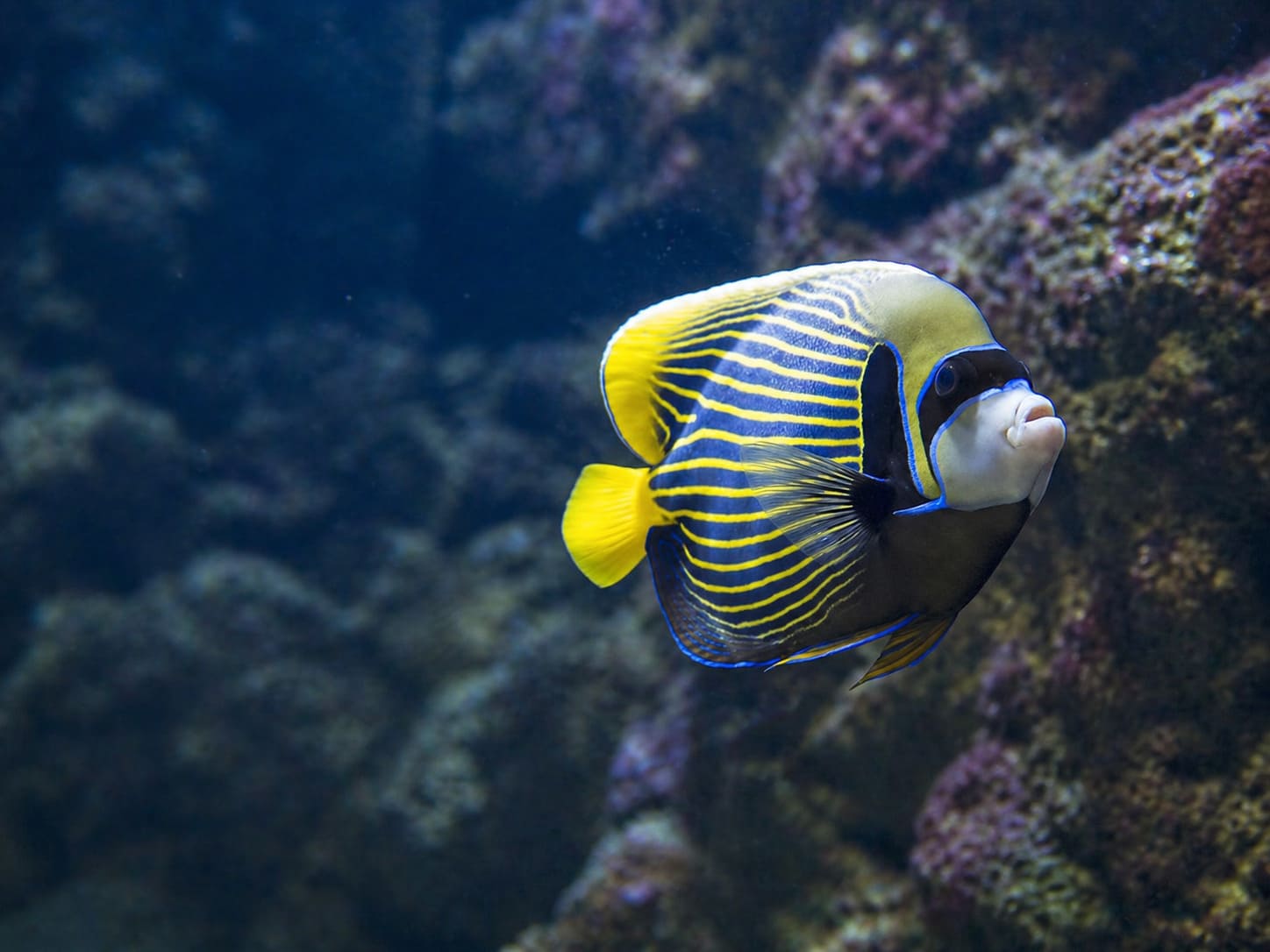
Angelfishes are colorful reef fish often seen by snorkelers and divers on Hawaii's shallow coral reefs. Their bright patterns, laterally compressed bodies and close resemblance to butterflyfishes make them some of the most eye-catching fish in Hawaiian waters.
Angelfishes Overview
Angelfishes can be found on Hawaii's shallow reefs and in tropical waters of the Atlantic, Indian and Pacific oceans. There are about 86 species of angelfish worldwide, and five are commonly seen in Hawaiian waters. Visitors can browse the broader Hawaii fish guide for more reef fish and marine animal profiles.
Many angelfishes have vibrant colors and bold markings, which makes them popular with snorkelers, divers and underwater photographers. They can sometimes be confused with butterflyfishes because both groups have flat, colorful bodies and often swim close to coral reefs.


Quick Facts About Angelfishes
- Family: Pomacanthidae
- Common habitat: Shallow coral reefs and rocky reef areas
- Worldwide species: About 86 species
- Common Hawaii species: About five species
- Body shape: Flattened, oval to disk-like body
- Key feature: Spine on the gill cover, called the operculum
- Often confused with: Butterflyfishes
Where Angelfishes Live in Hawaii
In Hawaii, angelfishes usually live around shallow coral reefs, reef walls, rocky ledges and areas with plenty of shelter. They often stay close to reef structure, where they can feed, hide and defend small territories.
Snorkelers and divers may see them at calm reef sites throughout the Islands. Clear water, healthy coral habitat and careful observation improve the chance of spotting these colorful fish. Visitors planning ocean time can also review Hawaii snorkeling, Hawaii beach safety tips and the broader Hawaii ocean life guide.
How to Identify Angelfishes
Angelfishes often have bright colors, strong patterns and flattened bodies. Some show blue, yellow, orange, black or white markings. Their colors may change as they mature, and juveniles can look very different from adults.
- Look for a colorful, flattened reef fish.
- Check for a small spine on the gill cover.
- Watch for steady movement near coral or rocky reef structure.
- Compare body shape and markings carefully with butterflyfishes.
Angelfishes vs. Butterflyfishes
Angelfishes and butterflyfishes can look similar at first glance. Both often have bright colors and compressed bodies. The main difference is that angelfishes have a noticeable spine on the gill cover, while butterflyfishes do not.
Angelfishes may also look a bit more robust than many butterflyfishes. Their behavior can differ too, as some angelfishes defend territories more strongly around reef ledges and coral heads. Other colorful reef fish groups to compare include damselfishes, wrasses and triggerfishes.
Diet and Reef Role
Angelfishes feed on a mix of sponges, algae, small invertebrates and other reef foods, depending on the species. Their feeding habits help connect them to the health and balance of reef ecosystems.
Because they rely on reef habitat, angelfishes benefit from clean water, healthy coral communities and responsible snorkeling and diving practices. Reef grazers and nearby species such as parrotfishes, surgeonfishes and unicornfishes and goatfishes also play important roles in Hawaii's marine habitats.
Snorkeling and Diving Notes
Angelfishes are a highlight for many Hawaii snorkelers and divers. Move slowly, avoid chasing fish and keep your fins away from coral. The best encounters happen when fish feel undisturbed and continue their natural behavior.
With their brilliant colors, reef habitat and distinctive gill spine, angelfishes are among the most memorable fish to look for in Hawaiian waters. Visitors who want guided ocean activities can compare Oahu snorkeling tours, Maui snorkeling tours, Kauai snorkeling tours and Big Island snorkeling tours.