
Hawaii Reef Fish Guide
Parrotfishes
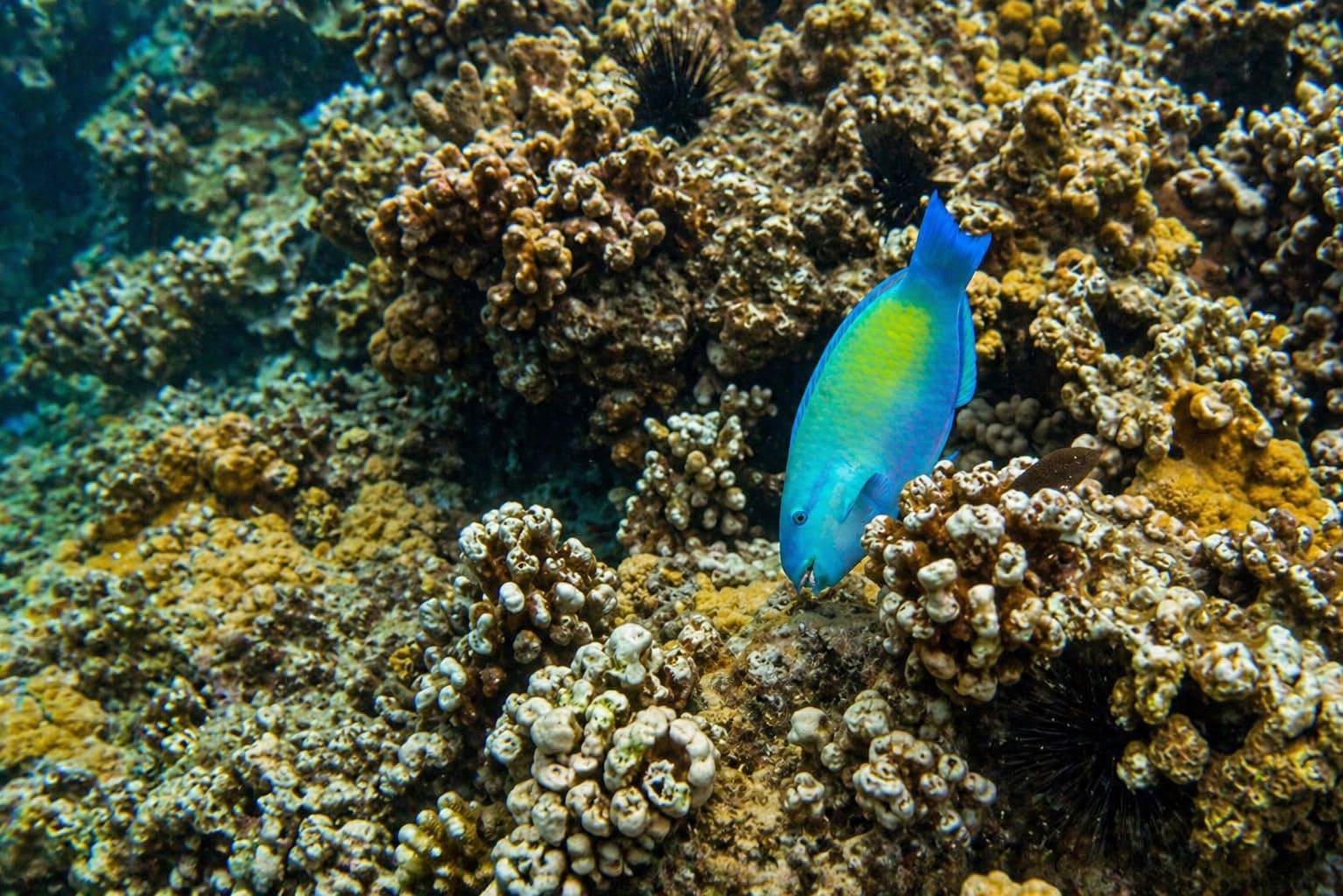
Parrotfishes are colorful reef grazers that use strong beaklike teeth to scrape algae from rocks and coral surfaces. In Hawaii, they are called uhu, while juveniles are known as 'ohua and mid-sized fish as panuhu.
Parrotfishes Overview
Parrotfishes are colorful reef fish best known for their strong, beaklike dental plates. These teeth look somewhat like a parrot's beak and help the fish scrape algae from rocks and coral heads. As a result, parrotfishes play an important role in keeping reef surfaces grazed. Visitors can browse the broader Hawaii fish guide for more reef fish and marine animal profiles.
In Hawaii, parrotfishes are called uhu. Juveniles are known as 'ohua, while mid-sized fish are called panuhu. As these fish grow, many species change color and may also change sex. For more cultural background, visitors can also explore the Hawaiian language and Hawaiian culture sections.

Quick Facts About Parrotfishes
- Family: Scaridae
- Hawaiian name: Uhu
- Juvenile name: 'Ohua
- Mid-sized fish name: Panuhu
- Diet: Mainly algae
- Key feature: Beaklike dental plates
- Common colors: Often blue-green, with changing patterns as they mature
- Swimming style: Mainly uses pectoral fins
How Parrotfishes Feed
Parrotfishes graze on algae growing on rocks, coral heads and reef surfaces. Their fused teeth form a strong scraping surface, which allows them to bite and rasp food from hard areas. While feeding, some species also take in small pieces of coral or limestone.
Over time, this feeding behavior helps shape the reef. In addition, some of the ground-up material passes through the fish and contributes to fine reef sand. This makes parrotfishes important grazers in tropical reef ecosystems. Other reef grazers and surface-feeding fish include chubs, surgeonfishes and unicornfishes and triggerfishes.
How to Identify Parrotfishes
Many parrotfishes have bright blue, green, pink or yellow coloring, though patterns vary by species, age and sex. They often move quickly over the reef, so they can be harder to study than slower fish. Still, their beaklike mouth and pectoral-fin swimming style provide useful clues.
- Look for a colorful reef fish grazing on rocks or coral.
- Notice the beaklike mouth.
- Watch for steady movement powered by the side fins.
- Expect colors and patterns to vary by age and sex.
Color and Sex Changes
Parrotfishes often change appearance as they grow. Juveniles, females and mature males may show very different colors. Therefore, one species can look like several different fish during its life.
Many parrotfishes also change sex as they mature. In some species, individuals begin life as females and later become males. Because of these changes, identifying parrotfishes can be challenging, even for experienced snorkelers and divers. Other colorful reef fish to compare include wrasses, butterflyfishes, angelfishes and damselfishes.
Where to See Them in Hawaii
Parrotfishes live on coral reefs throughout Hawaii. They often feed close to rocks, coral heads, reef flats and shallow reef slopes. Snorkelers may see them biting at reef surfaces, leaving small pale scrape marks behind.
Because they move fast and often graze continuously, the best way to watch them is to stay calm and let them pass naturally through the reef area. Visitors planning reef time can also review Hawaii snorkeling, Hawaii beach safety tips and guided options such as Oahu snorkeling tours, Maui snorkeling tours, Kauai snorkeling tours and Big Island snorkeling tours.
Reef Viewing Notes
Parrotfishes help support reef balance, so it is important to protect the habitats where they feed. Avoid touching coral, standing on reef surfaces or chasing fish. Instead, float quietly and observe their grazing behavior from a respectful distance.
With their beaklike teeth, bright colors and Hawaiian names uhu, 'ohua and panuhu, parrotfishes are among Hawaii's most distinctive and important reef fish. Visitors interested in reef habitats can also read about the Hawaiian coral reef, Hawaii beach sand composition and marine debris in the Hawaiian Islands.