
Hawaii Reef Fish Guide
Damselfishes
Damselfishes are small, active reef fish often seen swarming above coral heads in Hawaii. Many species show bright colors and bold patterns, while others defend algae patches or feed on plankton over the reef.
Small Reef Fish Around Coral Heads
Damselfishes are small reef fish, usually six inches or less in length. They often appear in large numbers around coral heads, rocky reef areas and shallow reef slopes. Many species have bright colors or bold markings, which makes them easy to notice while snorkeling or diving. Visitors can browse the broader Hawaii fish guide for more reef fish and marine animal profiles.
These fish have a single dorsal fin and a forked tail. In Hawaii, they often swim actively above coral, dart into cover when threatened and return quickly to their feeding or territory areas. Some feed on plankton in the water, while others graze on algae. For more reef background, see the Hawaiian coral reef and the broader Hawaii ocean life guide.


Quick Reef Fish Facts
- Family: Pomacentridae
- Typical size: Usually six inches or less
- Worldwide species: About 345 species
- Hawaii species: About 17 species
- Body features: Single dorsal fin and forked tail
- Common habitat: Coral heads, reef slopes and shallow rocky reefs
- Diet: Plankton, algae or both, depending on the species
Where to See Them in Hawaii
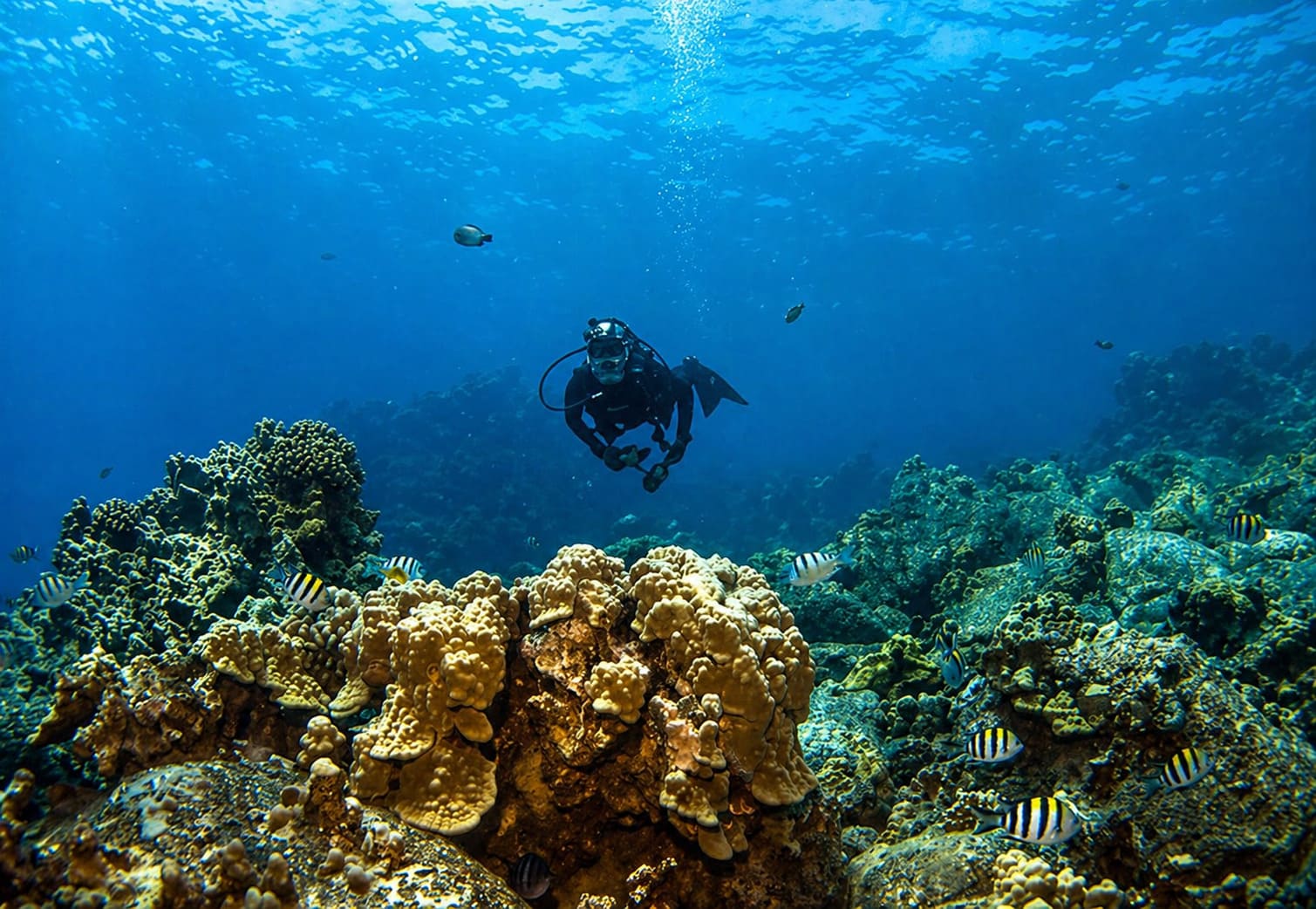
These fish are common around healthy reef structure. Snorkelers often see groups moving above coral heads, especially in clear, shallow water. Because they are active during the day, they are among the easier reef fish to watch.
Some species stay close to a favorite coral head or reef patch. Others move in loose groups while feeding on plankton. If you pause and watch one area, you may notice repeated patterns as the fish leave cover, feed and return again. Visitors planning reef time can also review Hawaii snorkeling, Hawaii beach safety tips and guided options such as Oahu snorkeling tours, Maui snorkeling tours, Kauai snorkeling tours and Big Island snorkeling tours.
Color, Shape and Behavior
Many members of this family show bright colors, strong contrast or clean markings. Their small size does not make them shy. In fact, some species boldly defend feeding territories and may chase away larger fish that come too close.
- Look for small fish hovering over coral heads.
- Watch for quick dashes into reef cover.
- Notice bright colors or bold black-and-white patterns.
- Observe whether the fish stay in one territory or move in groups.
Feeding Habits
Some species feed on plankton drifting through the water. Others graze on algae growing on rocks or coral surfaces. A few species defend algae patches and tend them almost like underwater gardens.
This feeding behavior helps connect them to reef health. Plankton-feeding species move energy from open water into the reef community, while algae-grazing species help shape the growth of reef plants. Other reef fish groups to compare include butterflyfishes, angelfishes, wrasses and triggerfishes.
Hawaiian Names and Common Species
Of the many small reef fish in this group, mainly the larger species received Hawaiian names. This may be because the smaller ones were not important food sources in old Hawaii.
Common examples in Hawaiian waters include the Hawaiian Sergeant, called mamo; the Blackspot Sergeant, called kupipi; and the Hawaiian Dascyllus, called 'alo'ilo'i. These species are familiar sights on reefs and are often noticed by snorkelers because of their activity and markings. Visitors interested in Hawaiian culture and language can also browse the Hawaiian language section.
Snorkeling Notes
Move slowly when watching reef fish, and avoid touching coral or resting your fins on reef surfaces. These small fish often return to normal behavior when swimmers stay calm and give them space.
With their small size, bright patterns and busy movement over coral heads, damselfishes add constant color and motion to Hawaii's reef environment. Visitors interested in reef protection can also read about marine debris in the Hawaiian Islands and Hawaii beach sand composition.