

Hawaii Reef Fish Guide
Triggerfishes
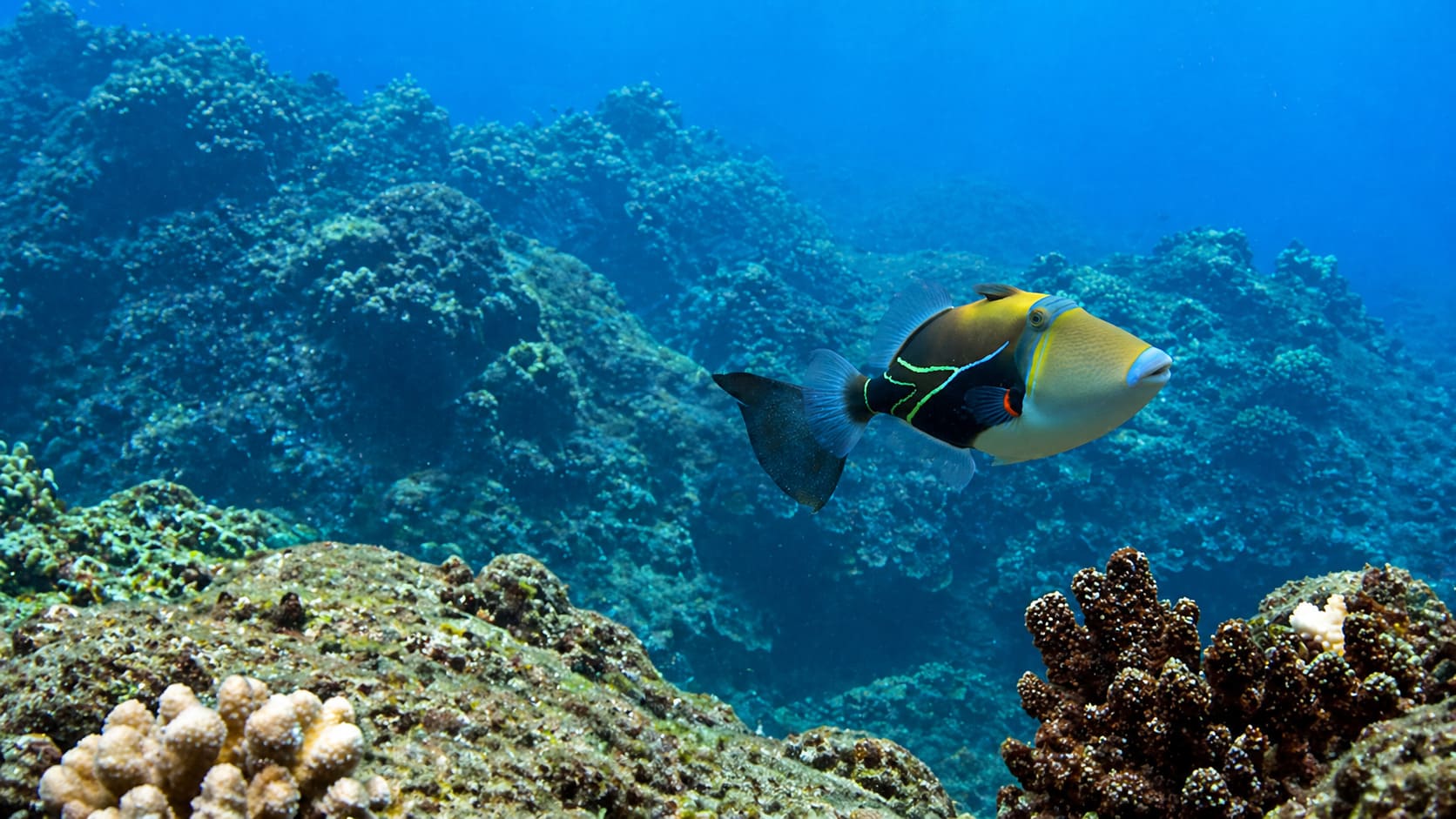
Triggerfishes are sturdy reef fish with strong jaws and a special locking dorsal spine used for defense. Hawaii's state fish, the wedgetail triggerfish or humuhumunukunukuapua'a, is one of the most famous reef fish in the Islands.
Triggerfishes Overview
Triggerfishes are sturdy reef fish with strong jaws, small powerful mouths and a unique defensive spine system. In Hawaii, the most famous species is the wedgetail triggerfish, known in the Hawaiian language as humuhumunukunukuapua'a. It is Hawaii's state fish and is also commonly called the Picasso triggerfish. Visitors can browse the broader Hawaii fish guide for more reef fish and marine animal profiles.
The Hawaiian name has two parts. Humuhumu means “to stitch pieces together,” while nukunukuapua'a means “nose like a pig.” The name fits the fish's unusual face, markings and reef behavior. For more ocean background, visitors can also explore the broader Hawaii ocean life section.


Quick Facts About Triggerfishes
- Family: Balistidae
- Hawaii species: 10 species
- Hawaii state fish: Wedgetail triggerfish
- Hawaiian name: Humuhumunukunukuapua'a
- Other common name: Picasso triggerfish
- Key feature: Locking dorsal spine system
- Habitat: Shallow reefs, reef flats, rocky areas and crevices
- Defense behavior: Locks into holes or crevices when threatened
Why They Are Called Triggerfishes
Triggerfishes get their name from the special arrangement of their first two dorsal spines. The first spine is thick and strong. The second, smaller spine acts like a trigger that locks or releases the first spine.
When a triggerfish feels threatened, it may wedge itself into a reef hole or crevice. Then it raises and locks the large dorsal spine. As a result, predators have a much harder time pulling the fish out of its hiding place. Other reef fish with unusual defense features include filefishes, pufferfishes, porcupinefishes and boxfishes.
Hawaii's State Fish
The wedgetail triggerfish is one of Hawaii's most recognizable reef fish. Its bold markings, angular shape and memorable Hawaiian name make it a favorite among visitors, snorkelers and local residents.
This species can be seen on many shallow reefs around the Hawaiian Islands. It often swims close to reef structure, where it can find food and quickly retreat into shelter. Visitors interested in Hawaii symbols and culture can also browse Hawaii fun facts and trivia, Hawaiian culture and Hawaiian history.
Behavior and Defense
Triggerfishes can act boldly when they feel threatened. Some may defend territory or nesting areas, especially during breeding periods. Although they are not usually dangerous, their bite can be painful because their jaws are strong.
- They use reef holes and crevices for protection.
- They lock their dorsal spine when hiding.
- They have small but strong mouths and jaws.
- Some may nip if approached too closely near a nest.
Where to See Them in Hawaii
Triggerfishes live around coral reefs, rocky shorelines, reef flats and shallow coastal habitats. Snorkelers may see them darting over coral, feeding near the bottom or disappearing into reef cracks.
Because they often stay near shelter, look carefully around reef edges and rocky crevices. However, avoid crowding or chasing them, especially if a fish seems defensive. Visitors planning reef time can also review Hawaii snorkeling, Hawaii beach safety tips and guided options such as Oahu snorkeling tours, Maui snorkeling tours, Kauai snorkeling tours and Big Island snorkeling tours.
Snorkeling Notes
Triggerfishes are best viewed calmly and from a respectful distance. Do not reach into reef holes or try to force one from its shelter. In addition, keep fins away from coral and avoid disturbing nesting areas.
With its locking spine, strong jaws and famous Hawaiian state fish, the triggerfish family is one of the most distinctive groups on Hawaii's reefs. Visitors interested in reef habitats can also read about the Hawaiian coral reef, Hawaii beach sand composition and marine debris in the Hawaiian Islands.