

Hawaii Reef Fish Guide
Chubs
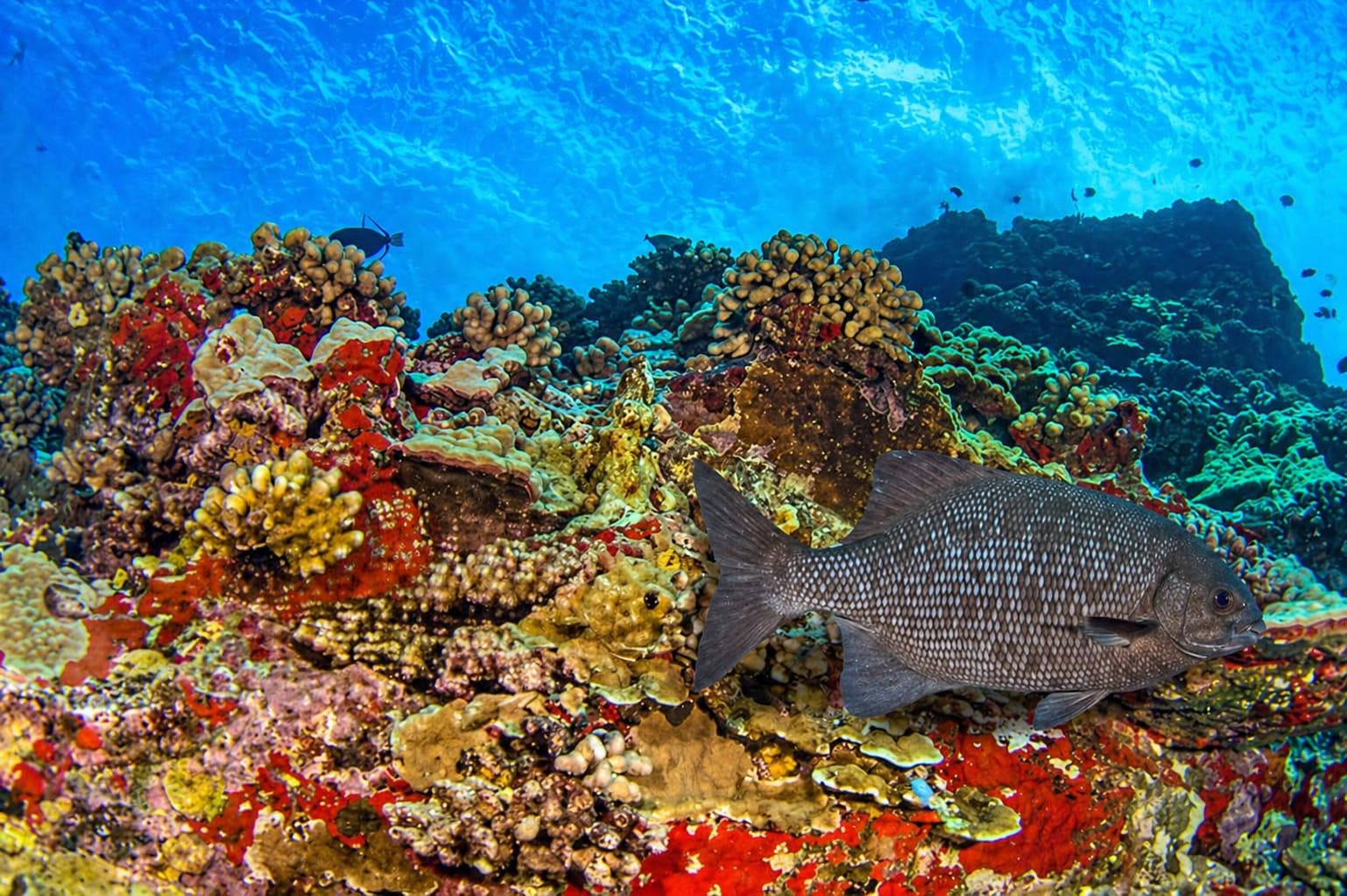
Chubs are sturdy, oval reef fish often seen in Hawaii's shallow rocky areas. Known in Hawaiian as nenue, they graze on seaweed and algae, and they can become bold and competitive when people feed fish.
Chubs Overview
Chubs are heavy-looking reef fish with oval, medium-sized bodies, small pointed mouths and strong tails. In Hawaii, they often swim through shallow rocky areas where seaweed and algae grow. Their sturdy shape and active grazing behavior make them easy to notice around reef edges and rocky shorelines. Visitors can browse the broader Hawaii fish guide for more reef fish and marine animal profiles.
Worldwide, there are 47 species of chubs. Six of them live in Hawaiian waters. In the Hawaiian language, chubs are called nenue.

Quick Facts About Chubs
- Family: Kyphosidae
- Hawaiian name: Nenue
- Worldwide species: 47 species
- Hawaii species: Six species
- Body shape: Oval, sturdy and heavy-looking
- Mouth: Small and pointed
- Tail: Large and strong
- Habitat: Shallow rocky areas and reef zones
- Diet: Seaweed, algae and other marine plants
Where Chubs Live in Hawaii
Chubs usually stay around shallow rocky shorelines, reef flats and coastal areas with good algae growth. Because they feed on marine plants, they often move close to rocks and reef surfaces while grazing.
Snorkelers may see them in small groups or larger schools. However, their behavior changes when people offer food. In those situations, they may crowd together quickly and push toward the food source. Visitors planning reef time can also review Hawaii snorkeling, Hawaii beach safety tips and the broader Hawaii ocean life guide.
How to Identify Chubs
Chubs have a strong, oval body and a blunt overall look. Their small mouths help them graze on seaweed and algae, while their large tails help them swim strongly through surge and shallow reef water.
- Look for a medium-sized, oval reef fish.
- Notice the small pointed mouth.
- Watch for grazing behavior near rocks and reef surfaces.
- Check shallow rocky areas where seaweed grows.
Diet and Feeding Behavior
Chubs mainly eat seaweed, algae and other marine vegetation. As a result, they help shape the growth of plants in rocky reef areas. They often browse along reef surfaces and pick food from rocks.
When people feed them, chubs can become bold and pushy. They may swarm around the food source and even nibble hands while trying to reach food faster. For this reason, fish feeding is not recommended. Other reef grazers and plant-feeding fish include parrotfishes, surgeonfishes and unicornfishes and triggerfishes.
Hanauma Bay Feeding History
At one time, fish feeding was allowed at Hanauma Bay on Oahu. During that period, chubs became famous for their aggressive feeding response. People sometimes called them “Hanauma Bay's piranhas” because they swarmed quickly around offered food.
Today, feeding reef fish is discouraged because it changes natural behavior, affects reef health and can make fish act unnaturally around swimmers. Therefore, the best way to enjoy chubs is to watch them grazing on their natural foods.
Snorkeling Notes
Chubs are interesting to watch because they move confidently through shallow reef habitats. If you stay calm and avoid feeding them, you can observe their natural grazing behavior and see how they interact with the rocky reef environment.
With their sturdy bodies, plant-based diet and Hawaiian name nenue, chubs are an important part of Hawaii's shallow reef fish community. Visitors interested in reef habitats can also read about the Hawaiian coral reef, marine debris in the Hawaiian Islands and Hawaii beach sand composition.