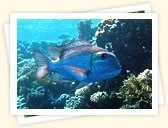
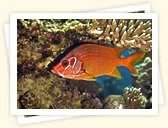
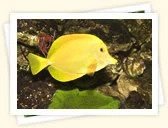
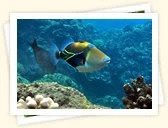
Many argue that the beauty of Hawaii is unsurpassed by any other location on Earth. And what continues to draw millions of visitors a year is often below sea level. Humpback whales, bottlenose dolphins, stingrays, sea lions, manta rays, colorful reef fish and giant sea turtles - these are just a few of the amazing and diverse sea creatures that frequent the Pacific coastlines of the Hawaiian Islands. Snorkeling, scuba diving and snuba, a combination of the two, are popular activities that allow us land dwellers to peek into the environment that these marine animals call home.
Malama
I Ke Kai
Malama i ke kai means to "care for or protect the ocean," an integral Hawaiian value that dates back over centuries. The Hawaiian chant of creation, the kumulipo, explains that all life began in the sea - that humanity is tied to all living things, especially marine life. The Hawaiian archipelago is not described as islands in a sea, but rather, a sea of islands, thereby acknowledging the ocean as being equally important with the aina, or land. The ancient Hawaiians shared an intimate knowledge of the sea and showed ultimate respect to its inhabitants. The unique ecosystem of Hawaii has existed in isolation for years and relies on continuous conservation for survival. Visitors to Hawaii can "malama i ke kai" in
several ways:
Learn about Hawaii's delicate ecosystem before visiting.
Respect all warning signs near the ocean.
Help keep Hawaiian beaches clear of litter and debris.
Pick up anything you brought with you, and if you spot rubbish, take a minute
to help it into a trash can.
Report any knowledge of poaching or dumping.
Do not desecrate important cultural sites, rock formations, or coral reef.
Don't feed or harm marine life.
Leave coral, sand and rocks in their place.
Diving and Snorkeling
The topographical layout of the Hawaiian coasts presents an underwater world that draws divers from around the world. The volcanic activity that formed the Hawaiian Islands continues to expand the island layout with the help of the active volcano Kilauea on the Big Island, constantly adding to the long lava tubes, ornate arches and coral gardens on the sea floor. Accessing these underwater cities also allows divers to see rare and unique indigenous aquatic species found only in Hawaii.
The Coral Reef
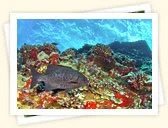
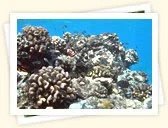
The ubiquitous coral reef ecosystem that surrounds the Hawaiian coastlines is a complex structure that supports countless life forms and nourishes Hawaii's interdependent marine community. From filtering water and providing nourishment to protecting the shores from sediment and storms, the coral reef is the lifeblood of the symbiotic underwater community. Divers will find literally thousands of life forms present in the coral reef, including hard and soft corals, colorful fish of all sizes, octopus, eels, algae, sea anemones, sponges, crustaceans, worms, turtles and many others. Although the massive coral reef is in constant expansion, it also faces difficult challenges, such as pollution, damage from chemicals and other wastes, damage from human destruction, disease and bleaching. Coral reef branches are incredibly delicate and can be destroyed with even minor contact.
While we have the privilege of viewing the amazing marine communities, we must recognize that we are guests and practice respect. The general rule is look but don't touch!
Protect Hawaii's Ocean Ecosystem
Do not step on the coral with feet or fins.
Do not grab onto coral for balance or out of curiosity.
Even the slightest touch can kill a coral colony.
Do not attempt to touch or hold any kind of marine life.
Support reef friendly businesses.
Use fewer chemicals in your home - even chemical use thousands of miles
away from the islands can end up in the Pacific Ocean.
Wear floatation devices while snorkeling to help keep you off the reef.
When diving, use a mooring buoy or sand anchor to keep you away from reef
formations.
Support organizations that protect coral reefs.
Don't use chemically enhanced pesticides and fertilizers.
Educate yourself on the importance of the reef and share your knowledge.
Buy only sustainably harvested reef fish.
Recycle
Conserve water
Report dumping or illegal fishing.
Hawaii's underwater world is truly unique and beautiful, and with help from all who visit these Pacific communities, our ocean ecosystem will continue to thrive and grow for generations to come. Wherever you are exploring along the Hawaiian shores, remember the cardinal rule of ocean respect: look but don't touch.
The
Humuhumunukunukuapua'a
The humu…what? To pronounce the state fish of Hawaii, break it up into six parts: humu humu nuku nuku apua a. Hawaiian for “triggerfish with a pig-like snout,” the “humu” is a brightly-colored, indigenous fish that populates the waters around all islands.
Below is an overview of some more fish and other marine animals that can be found in Hawaiian waters.
Angelfishes can be found on Hawaii's shallow reefs, as well as in the tropical Atlantic, Indian and Pacific oceans. There are about 86 species of angelfish, of which five are common in Hawaii. Read More
Barracudas can be found in tropical and subtropical oceans worldwide. They have a long body that's covered with small and smooth scales. Barracudas have very sharp teeth and have a reputation similar to sharks. Read More
There are about 18 species of bigeyes. Two of them, the Hawaiian Bigeye and the Common Bigeye, live in Hawaii's nearshore waters. Two other species live in deeper waters further offshore.Read More
Blennies are small fish with long bodies (some almost like eels) with large eyes and mouths. They usually hang out on the sea floor. Many of them like to hide in the sand or in reef crevices. Read More
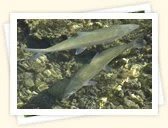
Bonefishes have slim and silvery bodies with a deeply forked tail. They can be seen in shallow, sand-bottomed waters. Two species of bonefish can be found in Hawaiian waters, the Short Jaw Bonefish and the Longjaw Bonefish. Read More
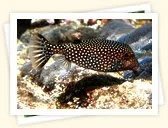
Boxfishes are closely related to the pufferfishes and filefishes. Five species can be seen in Hawaiian waters. Their bodies are encased in a rough shell and only their eyes, fins and mouths are movable. Read More
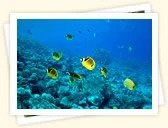
Butterflyfishes are among the most common coral reef fish species in Hawaii. They are yellow in color with disk-like bodies. While many fish blend in with their environment, butterflyfish are just the opposite - they stand out. Read More
Chubs are typically heavy-looking fishes with oval, medium-sized bodies and small, pointed mouths and large tails. In Hawaii, they can be observed in shallow rocky areas, feeding on plants, including seaweed. Read More
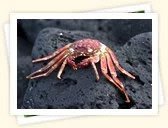
There are almost 200 species of crabs in Hawaii. The scientific name of crabs is decapod crustaceans, a name that applies to true crabs, which typically have a very short projecting tail or a short abdomen that's hidden under the thorax. Read More
Damselfishes are small (six inches or less) and usually brightly-colored reef fish, usually occurring in abundance. They have a single dorsal fin and a forked tail. In Hawaii, they can easily be spotted swarming over coral heads. Read More
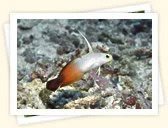
Dartfishes have two dorsal fins and feed on plankton. They are related to gobies and can be observed in sand- and rubble-bottomed areas. They are shy and if approached, they hide in burrows. Read More
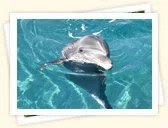
These fascinating mammals are intriguing, graceful and fun to watch. They rely on several forms of communication, including whistling and body language and use echolocation (sonar) to find food. Read More
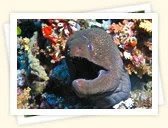
Eels look like snakes and like to hide in reef crevices and sand. There are hundreds species of eels, but in Hawaii, only moray eels, conger eels and snake eels can be spotted by divers and snorkelers. Read More
Filefishes have narrow bodies, small mouths with sharp teeth and a stout dorsal spine with often times small, thornlike spikes which they raise when they feel aroused or threatened. Read More
Goatfishes can easily be spotted while snorkeling over a sandy ocean bottom. They can be recognized by their barbels, which they use to brush over the sand to find worms, molluscs and other invertebrates. Read More
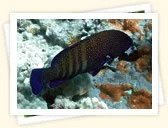
Groupers have large mouths, heavy bodies (they can grow to an enormous size), protruding lower jaw and are usually solitary bottom-dwellers. They feed by carefully stalking their prey and strike when close enough. Read More
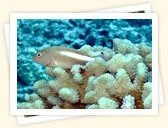
Hawkfishes can usually be seen waiting motionless on an outcrop or coral head waiting for prey. As soon as a smaller fish or crustacean is seen, they strike quickly. Most species are able to change sex. Read More
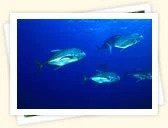
Jacks are strong fighting fish. Most feed on fish, which they usually chase with great speed, often making swift moves and changing directions to confuse their prey. Their Hawaiian name is ulua. Read More
Lizardfishes usually lay calmly on rocks or sand and strike quickly when prey is spotted. They have a mouthful of sharp teeth, including on their tongue, and blend in easily in their surroundings and are therefore difficult to spot. Read More
There are three species of monk seals on Earth - the Caribbean, the Mediterranean and the Hawaiian monk seal, also known as monachus schauinslandi. Currently, Hawaii’s monk seal population is estimated to be around 1,500. Read More
Moorish Idols resemble butterflyfishes in behavior and appearance. However, contrary to butterflyfishes Moorish Idols propel themselves mainly with their pectoral fins. Their Hawaiian name is kihikihi. Read More
Needlefishes have long and slim bodies with pointed, needlelike beaks with sharp teeth. They can be seen just below the surface and feed on small schooling fish, which they swallow whole. Read More
The most common octopus in Hawaii is the Hawaiin Day Octopus. It is a very intelligent creature with a large brain, a talent for problem solving and skilled in a variety of defense mechanisms. Read More
Parrotfishes are herbivorous and feed mainly on algae. They have beaklike dental plates that make it easy for them to scrape off algae from rocks and coral heads. Read More
Porcupinefishes are covered with sharp spines and can inflate into a large ball too big to swallow, which makes it difficult for predators to attack and eat them. They are also poisonous. Read More
Pufferfishes are closely related to porcupinefishes. When threatened, they inhale water and expand into a balloon shape, which makes it difficult or impossible for a predator to swallow them. Read More
Even though they hardly look like sharks, rays are closely related to them. Rays’ skeletons are composed of cartilage and they don't have swim bladders. They are carnivores and most of them are bottom dwellers. Read More
Remoras are also known as suckerfishes. With their sucking disk that's on the top of their heads they attach themselves to larger animals, such as turtles, whales, rays, dolphins and sharks. Read More
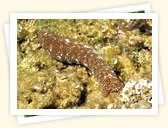
Sea cucumbers have leathery skin and an elongated body with a single gonad. They feed on debris on the seafloor or in midwater. The smallest species of sea cucumbers is just 0.12 inch (3 mm) long. Read More
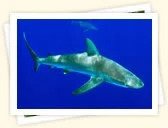
Sharks are known to have a fantastic sense of smell. They can detect blood in the water from as far as a quarter mile away. They can also sense low frequency vibrations, for example of a wounded animal, a mile away. Read More
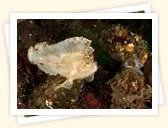
Scorpionfishes are sedentary carnivores and some of them have venomous spines. Since many of them are masters of camouflage and blend in with their surroundings, it is often difficult to spot them. Read More
Snappers are carnivores. Most species of snappers that live in Hawaiian waters inhabit the deeper offshore waters, including the onaga, 'opakapaka and 'ula'ula, all prized food fishes. Read More
Most squirrelfishes and soldierfishes are red in color. They are nighttime predators with large black eyes and a forked tail fin. The name holocentridae means “all spiny,” which describes these fishes well. Read More
Surgeonfishes and unicornfishes are some of the most common fishes on Hawaii's reefs. They usually have oval or oblong bodies with eyes located high on their heads. Most surgeonfishes are herbivores. Read More
The humuhumunukunukuapua'a (wedgetail triggerfish) is Hawaii's state fish. It is a common sight on Hawaii's reefs. It is also commonly known as Picasso triggerfish. Read More
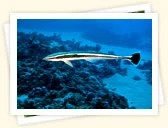
Trumpetfishes and cornetfishes are the most common fish predators on Hawaii's reefs. They follow small fish around and when close, they suck them into their tubelike mouths. Read More
Four species of sea turtles inhabit Hawaiian waters: the Hawaiian green sea turtle, the hawksbill, the leatherback and the olive ridley. The honu, or green sea turtle, is the most common. Read More
As much as 60 percent of the North Pacific humpback whale population migrates to Hawaiian waters to spend winter in the warm waters and commence with mating and birthing rituals. Read More
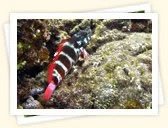
Wrasses are common coral reef fish. Most species have elongated bodies with a continuous dorsal fin. But they come in all sorts of colors and sizes. All of them are either carnivores or planktivores and have sharp teeth. Read More
















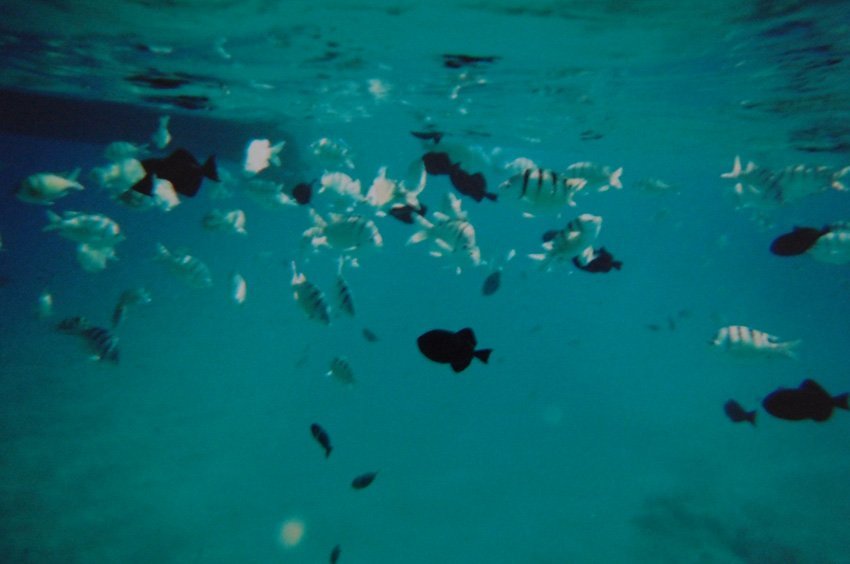 Tropical fish
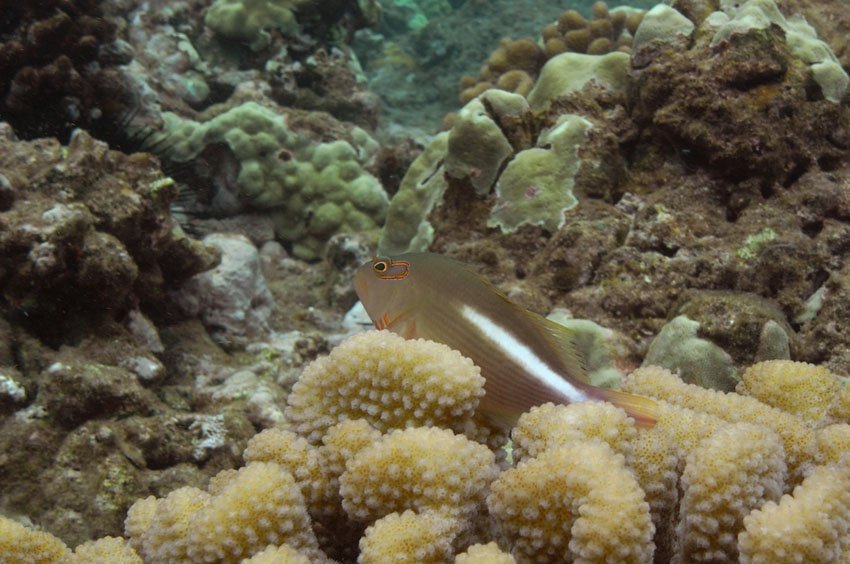 Arc eye hawkfish at Ka'anapali, Maui
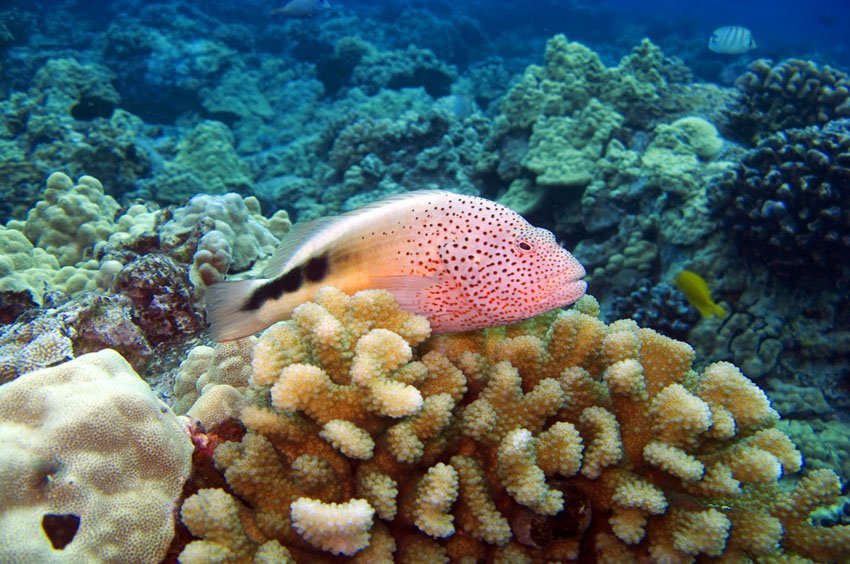 Blackside hawkfish
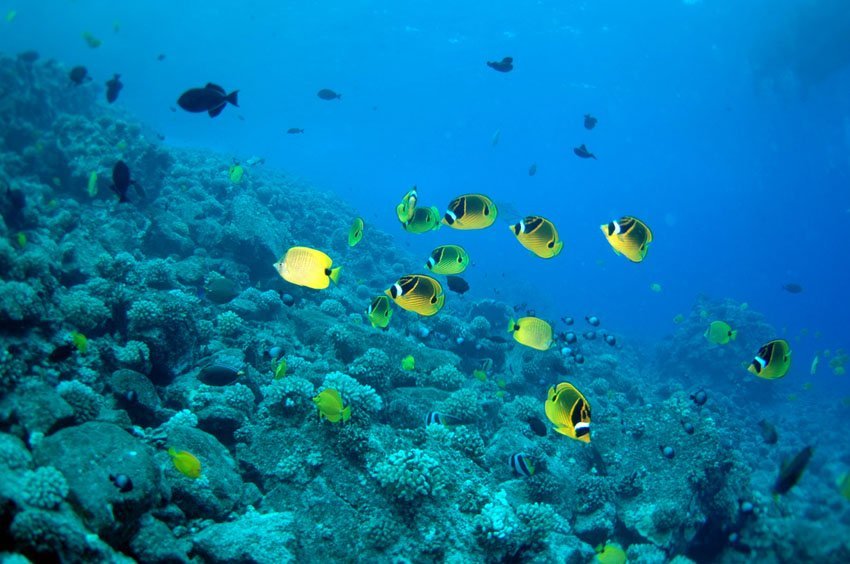 Butterflyfish
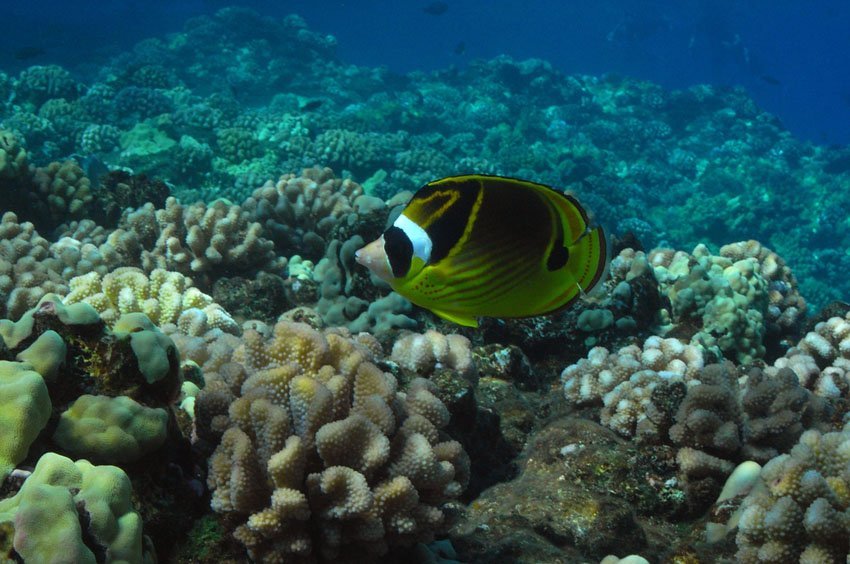 Butterflyfish at Molokini
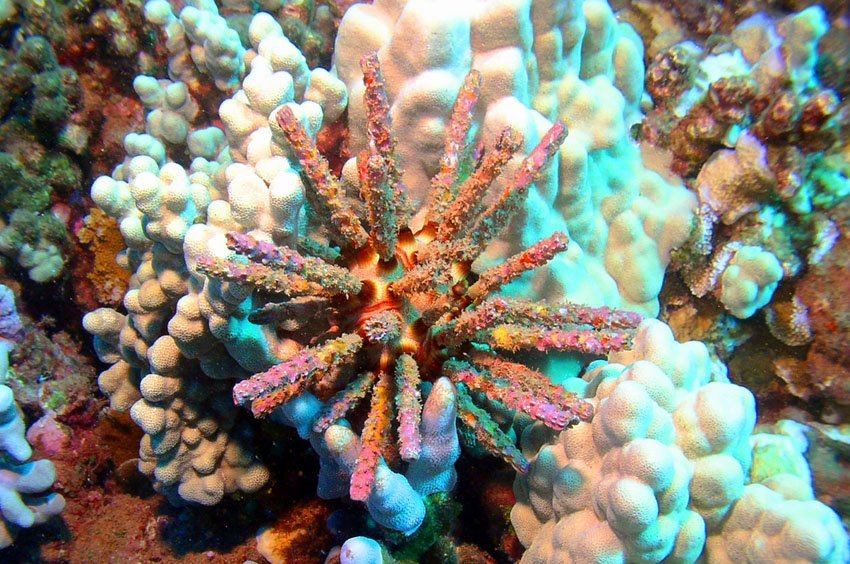 Colorful sea urchin on a Maui coral reef
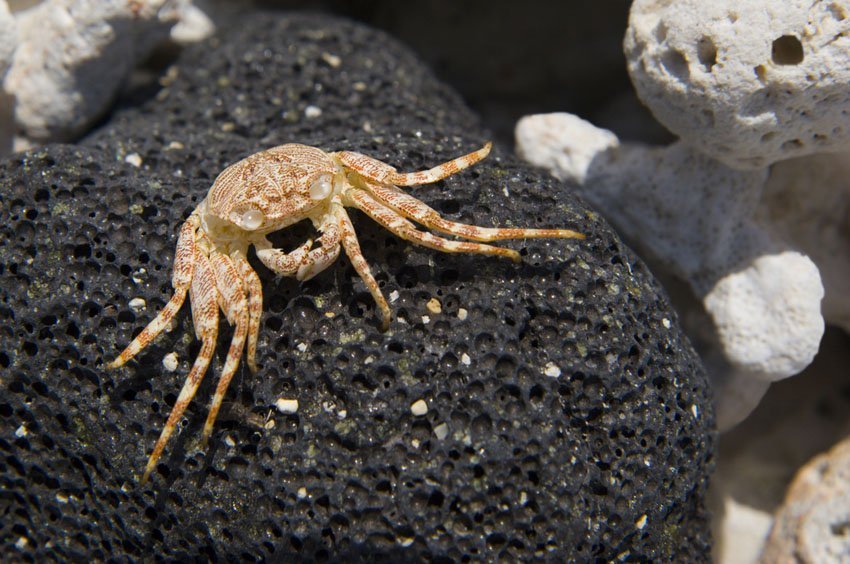 Hawaiian crab on volcanic rock
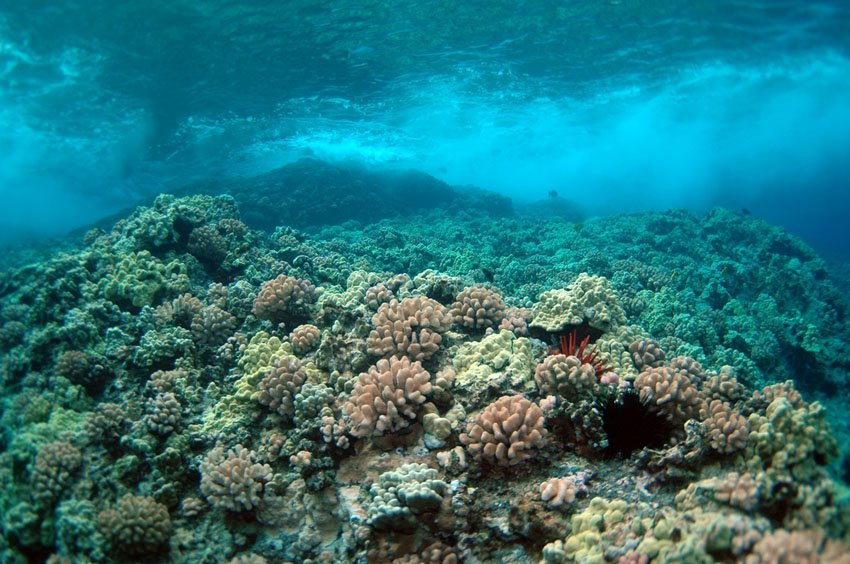 Hawaiian reef
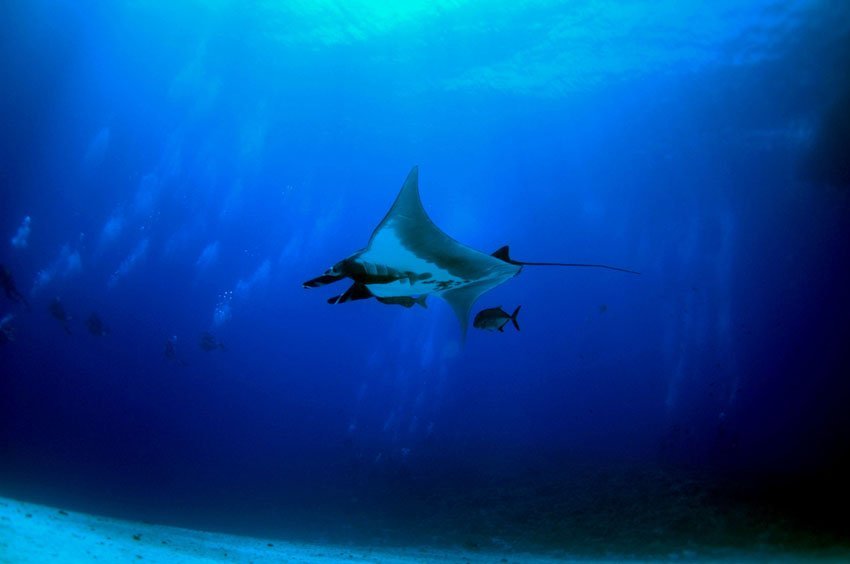 Manta ray
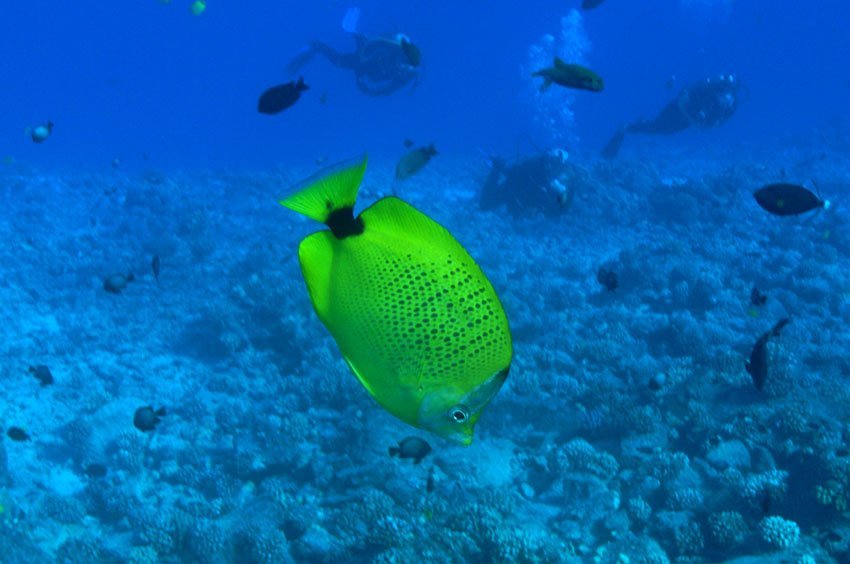 Milletseed butterflyfish
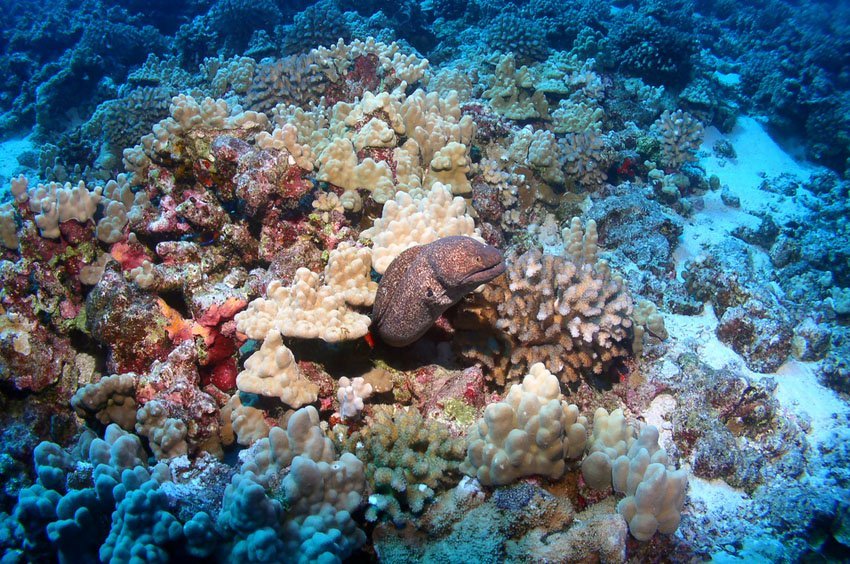 Moray eel at Molokini
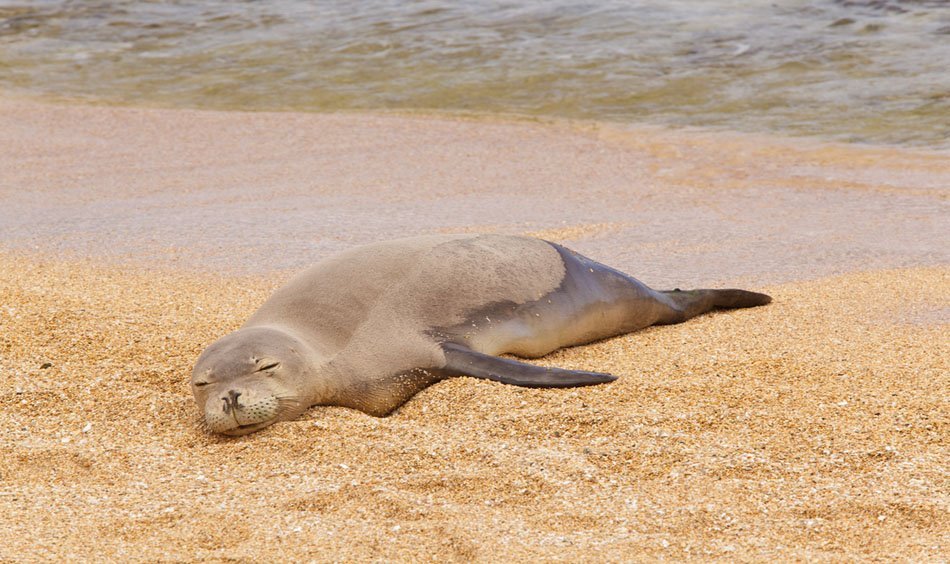 Napping monk seal
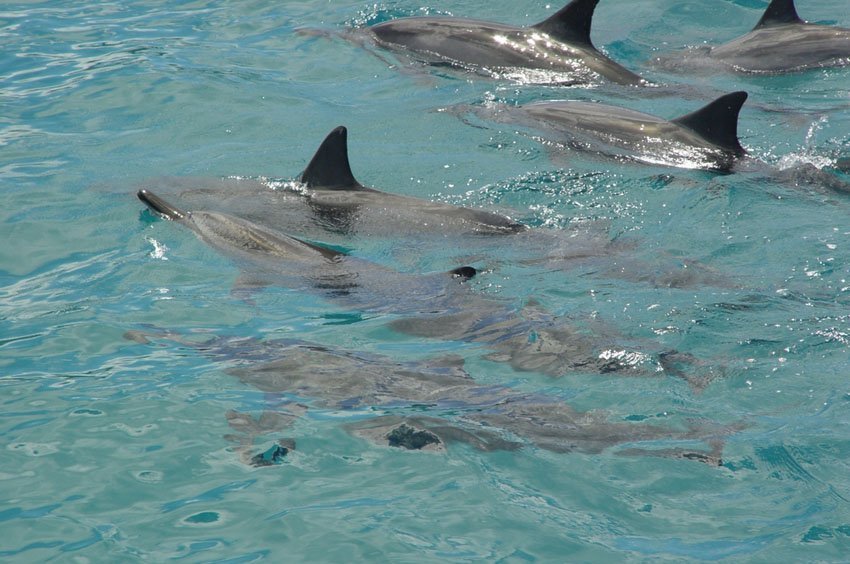 Dolphins
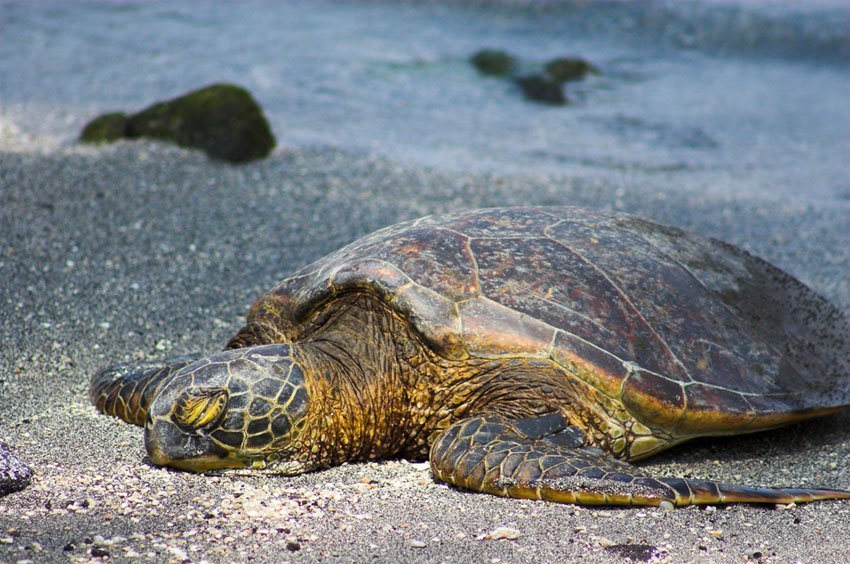 Sleepy green sea turtle on Big Island
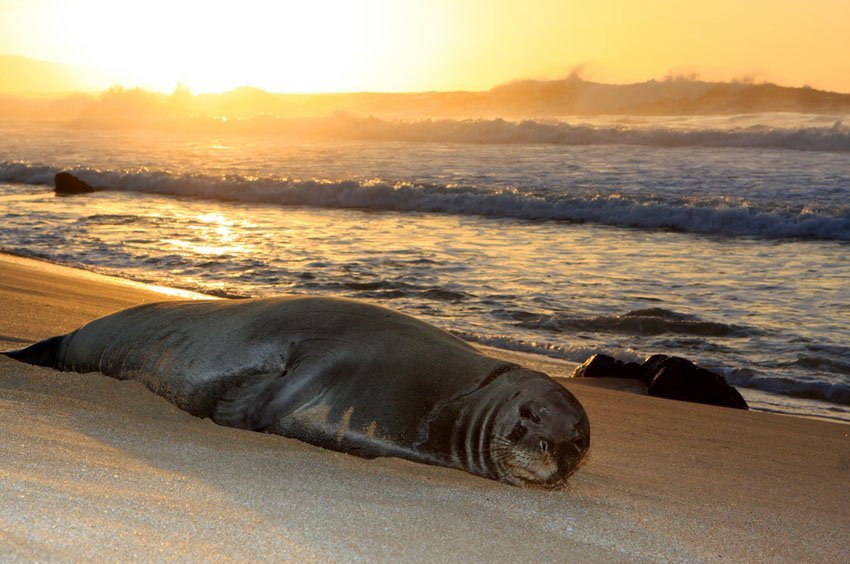 Sleepy Hawaiian monk sea
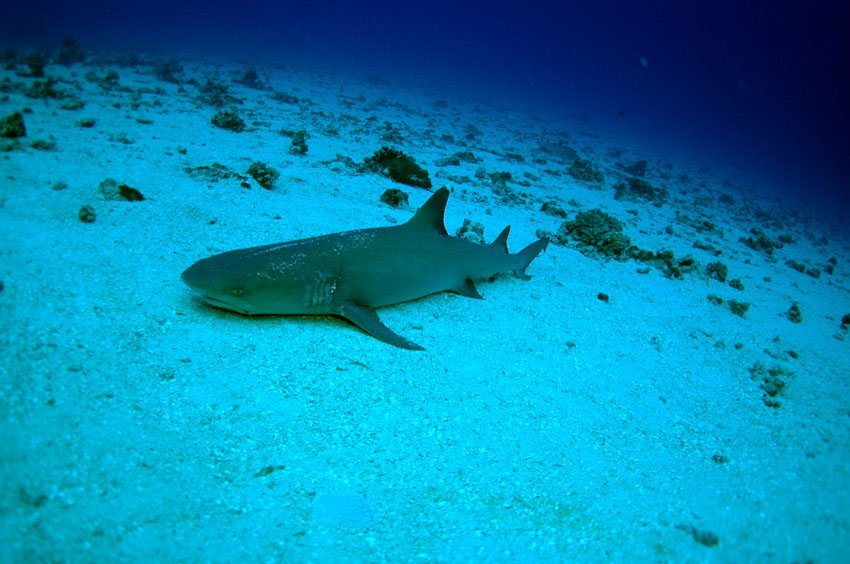 White tip reef shark
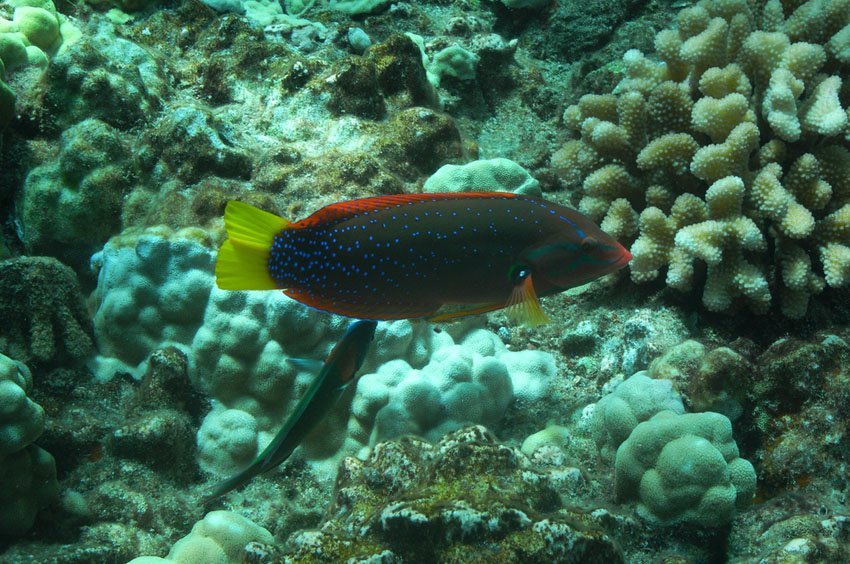 Wrasse at Molokini
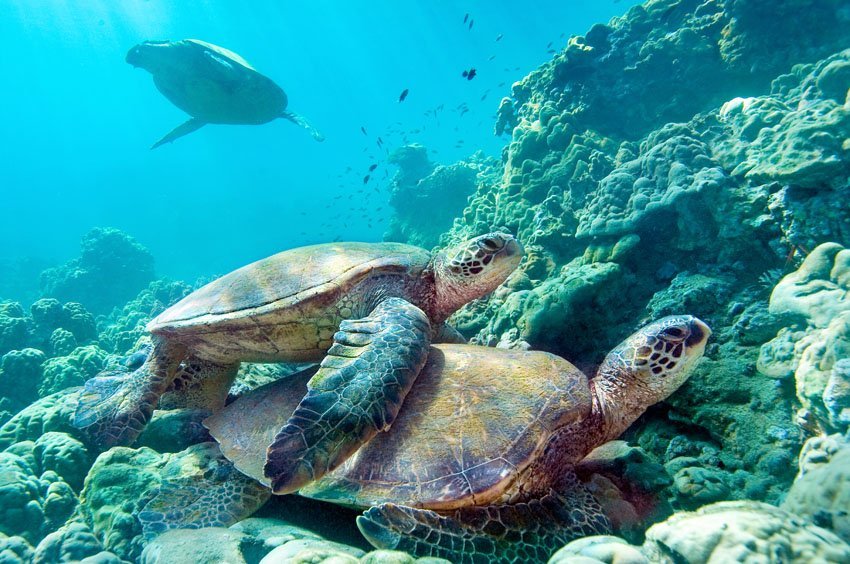 Playful honus
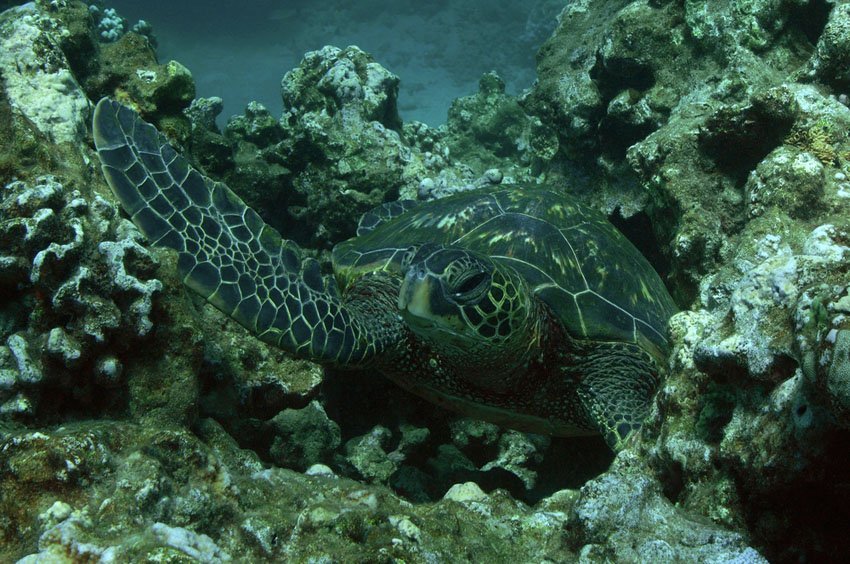 Sea Turtle at Honolua Bay