Since Hawaii's native fauna evolved in the absence of predators or competitors, they did not develop natural defenses such as thorns, poisons, or camouflage. The first Polynesian settlers arrived in Hawaii around 500 A.D. who brought pigs, horses, sheep, goats and dogs with them. Scientists believe that at that time, the Hawaiian Islands were inhabited by some 67 species of birds, of which a third are extinct today.
The first settlers did not find any other animals, such as amphibians, mosquitoes, reptiles or bugs. The Islands were home to only two endemic mammals, the Hawaiian monk seal and the hoary bat. It is believed that the hoary bat at some time was accidentally blown to Hawaii from North or South America.
In the 19th century, the Hawaiian monk seal almost became extinct because it was being caught for its oil and skin. Today, they are on the endangered species list and have made a comeback.
Much of the fauna in Hawaii developed special adaptations to their new home and evolved into new species. Today, nearly 90 percent of the fauna in Hawaii are endemic, meaning that they exist nowhere else in the world.
Agricultural inspections at airports and harbors work at keeping out unwanted species. One example of an unwanted species is snakes. Hawaii has no endemic snakes. However, a few have been brought here, but they are under continuous eradication programs.
Kauai is home to the largest number of native bird species in Hawaii. It is the only island in Hawaii free of mongoose, which prey upon the eggs of ground-nesting birds.
Of Hawaii's two native mammals, the hoary bat lives at the Koke'e State Park, while the Hawaiian monk seal can occasionally be spotted napping on a remote beach. Wild goats, pics and black-tailed deer are non-native mammals that are hunted.
On the Big Island, wild horses can be found in Waipi'o Valley, feral cattle graze on the slopes of Mauna Kea, while wild goats, pigs and sheep live in the island's interior. On the island of Oahu, goats and wild pigs live in the mountain valleys. In Kalihi Valley, brush-tailed rock-wallabies can be observed. Although they are difficult to spot, the wallabies are interesting for zoologists because they may be an extinct subspecies in their native Australia.
Within the last 200 years, more bird species have become extinct in the Hawaiian Islands than anywhere else in the world. Of the 67 initial species, 23 are now extinct and 30 are endangered. Even the alala (Hawaiian crow) is threatened.
Among the native bird species in Hawaii are the aeo (Hawaiian stilt). It can be observed in protected wetlands, such as the Hanalei National Wildlife Refuge on Kauai, the Kealia Pond on Maui and Kanaha Wildlife Sanctuary on Maui.
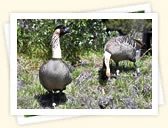
Hawaii’s state bird is the nene, a duck. At one point it was almost extinct, but because of strict laws, about 500 nene are in existence today. They thrive in three places in the Islands: Haleakala National Park on Maui, the slopes of Mauna Kea on the Big Island and at Mauna Kea State Park bird sanctuary. They can also be observed in a few other places.
From the reptile family, it is worthy to mention the gecko. This small lizard is about 4 inches long. It lives comfortably in people's houses and actually it is good to have one because it is harmless and it likes to eat cockroaches. So it's like having a natural roach remover.
Underwater there are about 680 fish species that inhabit the Hawaiian waters. There are about 450 types of reef fish in Hawaii, of which 27 percent are endemic to Hawaii.
Conger and moray eels are the most common eels in Hawaii. Moray eels are usually harmless if one leaves them alone. In the past, some divers fed them, which made the animals associate divers with food. So they occasionally can be aggressive if they are hungry.
Humpback whales migrate to Hawaii each year from Alaska. They arrive in the warm Hawaiian waters around the end of November and stay here until spring (end of March). Maui is the best island for viewing the whales on their annual migration route to their birthing grounds. Whale watching cruises are a popular activity in Hawaii. Humpback whales can be up to 45 feet long, so they can easily be spotted even from land. Other whales, such as sperm, false killer, pilot, pygmy killer and melon-headed whales can be observed year-round.
Hawaii is also home to about 40 species of sharks, including the harmless whale shark to the not so harmless tiger shark. Occasionally great white sharks have been seen as well. The most common shark species in Hawaii are the gray reef, white-rip and black-tip reef sharks.
Black-crowned night herons, known as auku'u in the Hawaiian language, are wetland birds and can be found on all main Hawaiian Islands. Their habitat is around streams, marshes and ponds. Read More
Cattle egrets live around ponds, pastures, taro fields and along roadsides (in urban and remote regions). They mainly feed on insects and crayfish and travel in flocks to and from their feeding sites. Read More
This small reddish duck lives in ponds and marshes. It belongs to the species of migratory waterfowls. The adult male has a red head and body with a brown back, a dark bill and a red eye. Read More
This duck is aptly named for its golden-yellow eye. Adult males have a dark head with a green shimmer, a round white patch under the eye, a dark back and a white belly and neck. Read More
The common merganser is a large duck that eats fish and nests in holes in trees. When in breeding season males can be easily distinguished from females by their white body with a salmon-pink tinge. Read More
The common myna is common on all main Hawaiian islands. Mynas were introduced from India in 1865 to control insect pests. They travel in pairs and are social birds gathering in noisy flocks. Read More
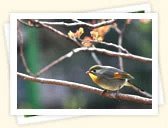
The common redpoll belongs to the finch family. Its habitat is in shrubs and thickets. Adult makes have a bright red crown, black chin, black-brown wings and tail, and a red or pink cheek and breast. Read More
This open country bird is common on Lanai and Kahoolawe. It can also be found in limited numbers in the dry shrublands of the Big Island's Mauna Kea. Gambel's Quails have a cinnamon-red crown. Read More
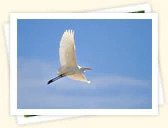
Also known as the common egreg, the great egret is a large bird with an all-white plumage. Adult birds can have wingspans of 65-85 inches (165-215 cm) and weigh up to 2.1 pounds (950 grams). Read More
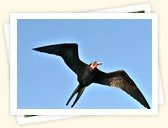
Known as 'iwa in the Hawaiian language, the great frigatebird is common in the Northwestern Hawaiian Islands. The birds are large with a wingspan of 90 inches (229 cm). Wings are pointed and angular. Read More
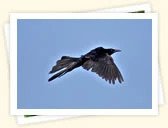
The great-tailed grackle is a large and noisy bird. Adult males grow up to 17 inches (43 cm) long. Their tail is almost as long as their body. They are black in color with a violet-blue sheen to their feathers. Read More
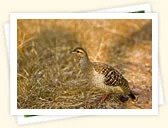
First introducted to Hawaii in 1958, grey francolins frequent dry, open grasslands and shrubs as well as coastal kiawe forests. In Hawaii, they can also be seen on golf courses or along roadsides. Read More
The nene is the state bird of Hawaii. Nearly extinct in 1951, captive-bred birds were reintroduced into the wild in the 1950s on the Big Island, Maui and Kauai. Their numbers have increased a lot on Kauai in recent years. Read More
Also known as ‘io in the Hawaiian language, Hawaiian hawks are common on Hawaii's Big Island, particularly at the Hawaii Volcanoes National Park and in valleys along the Hamakua Coast. Read More
Known as 'Alae 'ula in the Hawaiian language, the Hawaiian moorhen generally occurs in wetland habitats below 410 feet (125 m) of elevation on the islands of Kauai and Oahu. Read More
Also known as pueo, the Hawaiian owl is endemic to the Islands. It can be found on all main Hawaiian islands, but is most common on Maui, Kauai and the Big Island. Males and females look alike. Read More
Known as ae'o in the Hawaiian language, the Hawaiian stilt is endemic to the Islands. It can be found on all main Hawaiian islands around marshes, ponds and mudflats. Read More
The hooded merganser is a small fish-eating duck that can be seen on shallow ponds. Adult males in breeding season have a circular crest with a large white patch, golden eyes and a black face. Read More
The house finch is common on all main Hawaiian Islands. It can be found in coastal regions as well as high up in the mountains. In Hawaii, the house finch is also known as papayabird or linnet. Read More
Kalij pheasants are common on Hawaii's Big Island in forests between 1000 feet (305 m) to 7,500 feet (2,286 m) of elevation. Native to South Asia, they were introduced to Hawaii in 1962. Read More
Known as moli in the Hawaiian language, the Laysan albatross is common in the Northwestern Hawaiian Islands. Their courtship displays are complex and most birds mate for life. Read More
The long-tailed duck's plumage varies throughout the year. They feed by diving for small fish and crustaceans and can dive to depths of 200 feet (61 m). Males make a loud, musical call "Ow, ow, owal-ow". Read More
The mallard duck is common throughout temperate and subtropical regions of North America and Eurasia. Its habitat is in all kinds of wetlands and can be found in the wild as well as in urban park ponds. Read More
Known as 'a in the Hawaiian language, masked boobies nests on Moku Manu Island off Oahu and on Ka'ula off Ni'iihau. It is rare elsewhere in the main Hawaiian islands. Read More
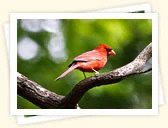
The northern cardinal is common on all main Hawaiian islands. It was introduced to Hawaii from the eastern United States in 1929. It is also known as Kentucky or red cardinal. Read More
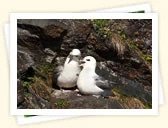
The northern fulmar is related to albatrosses and shearwaters. It is most common in the northern oceans. Its body is grey and white in color with a pale yellow bill and bluish legs. Read More
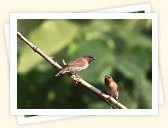
Nutmeg manikins are common on all main Hawaiian islands from sea level to the mountains and alpine regions (on the Big Island). Native to Southeast Asia, they were introduced to Hawaii around 1865. Read More
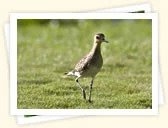
The Pacific golden plover is a migratory shorebird that breeds in Siberia and western Alaska in the summer months and winters on islands across the Pacific (including Hawaii), Southeast Asia and northeastern Africa. Read More
The red-billed leiothrix can be found in forests on all main Hawaiian islands, except Kauai and Lanai. Native to China, they were introduced to Hawaii in 1918. Adult males and females look similar. Read More
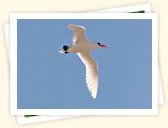
The red-billed tropicbird breeds on tropical islands like Hawaii. Adult birds are slim and mainly white. They have long wings and a red bill. Their diet includes fish and squid, but they are poor swimmers. Read More
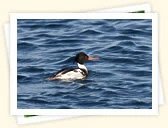
The red-breasted merganser is a diving duck that lives in rivers, lakes as well as oceans. However, it prefers saltwater and dives to find food. It feeds on small fish, crustaceans, frogs and aquatic insects. Read More
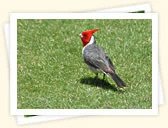
The red-crested cardinal is common in the lowlands of the main Hawaiian islands. Native to South America, it was introduced to Oahu around 1930. It is also known as Brazilian Cardinal. Read More
The red-vented bulbul is common on the island of Oahu, but it has also been observed on the Big Island, Kauai, Kahoolawe and Molokai. It feeds on insects, fruits and the occasional lizard. Read More
Rock doves are common on all main Hawaiian islands. They are also known as Domestic Pigeon. Native to Europe, Africa and Asia, rock doves were introduced to Hawaii in 1796. Read More
Known as ‘akekeke in the Hawaiian language, the ruddy turnstone is a winter visitor to the Hawaiian Islands, typically arriving in August and leaving for arctic breeding grounds in April. Read More
The semipalmated sandpiper is a small shorebird and a long-distance migrant. In the winter months, the birds migrate in large flocks to warmer regions. They forage on mudflats and mainly feed on aquatic insects and crustaceans. Read More
The Western Meadowlark can be found on Kauai only. It was introduced from the western United States in 1931. They forage on the ground and feed on insects. Nests are also built on the ground. Read More
White-fronted geese have light orange legs and feet and a pinkish bill. Adult males are usually large than adult females. But both sexes look similar. They are grayish brown with light grey breasts. Read More
Zebra doves are some of the most commonly seen birds in urban areas in Hawaii. They frolic in beach parks, on sidewalks, in shopping centers and yards. They are quite tame and often times don't fly away when a human comes close to them. Read More
















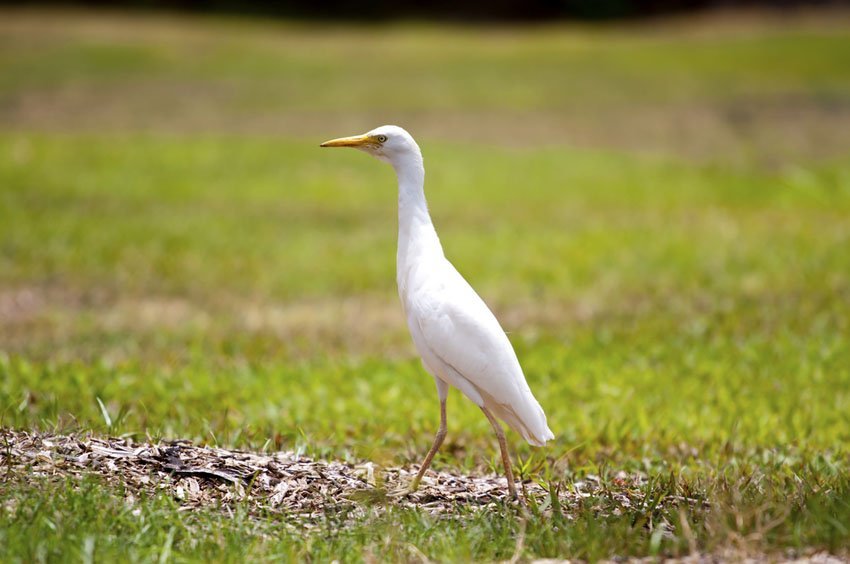 Cattle Egret
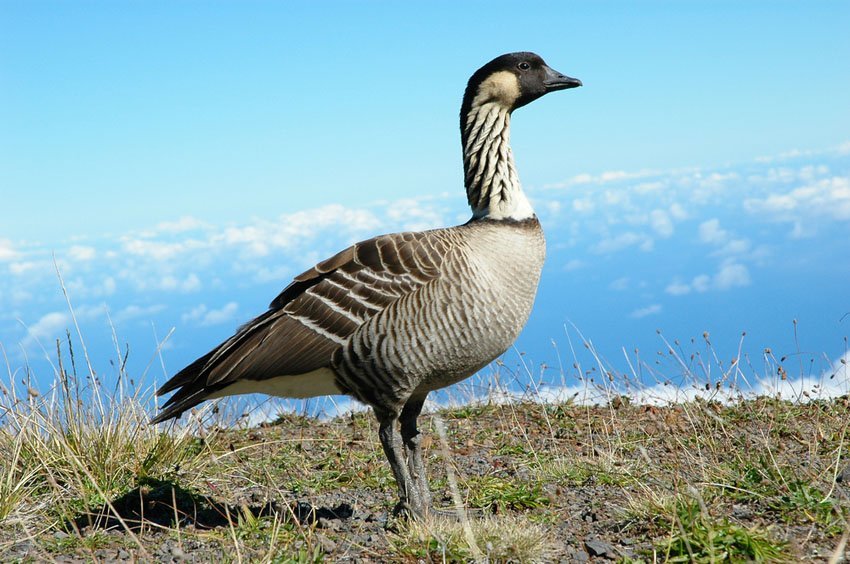 Nene endangered Hawaiian goose
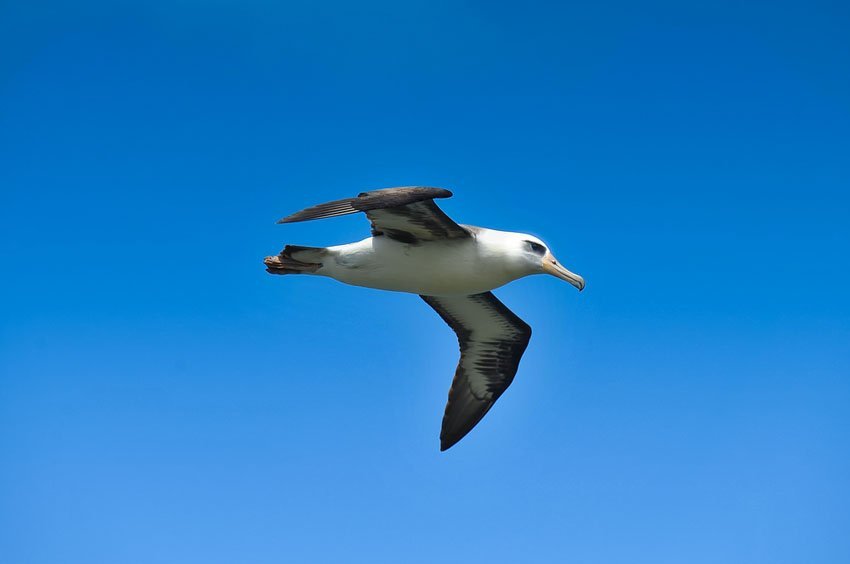 Hawaiian albatross
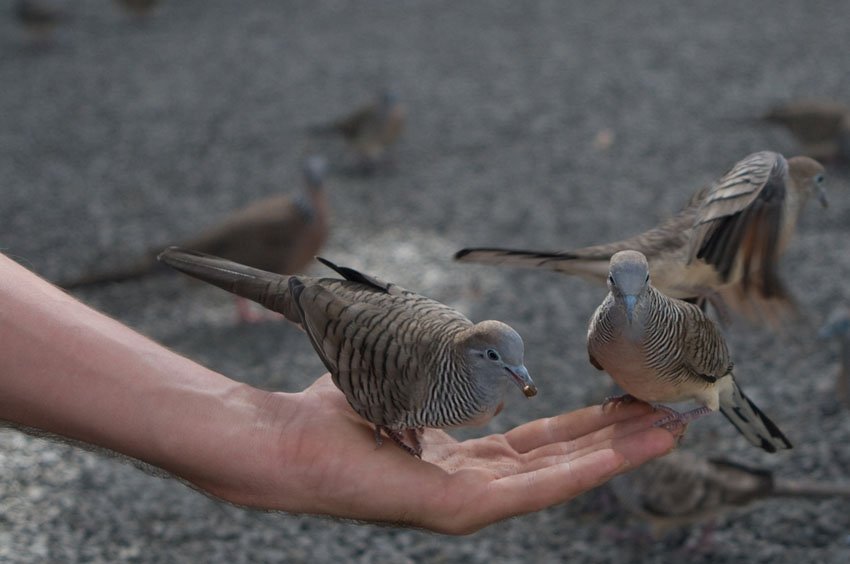 Hawaiian zebra doves
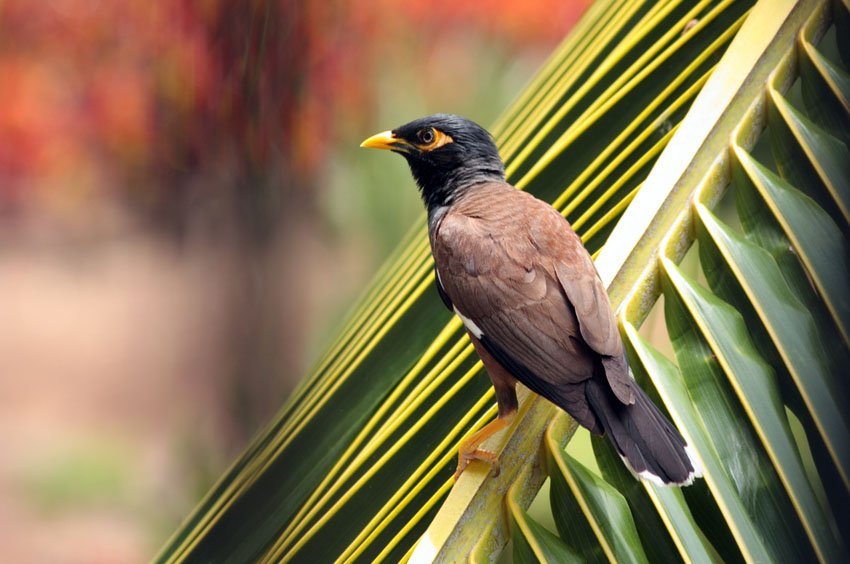 Mynah bird
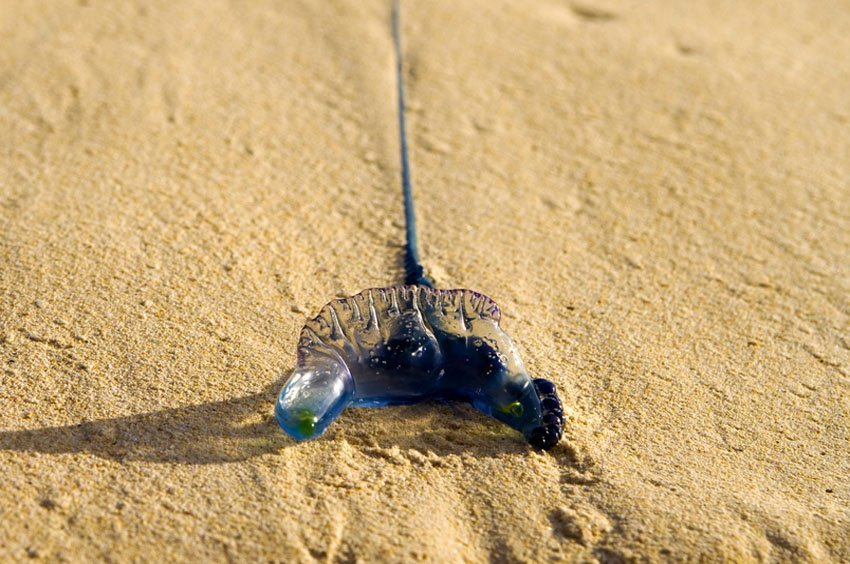 Portuguese Man-of-War
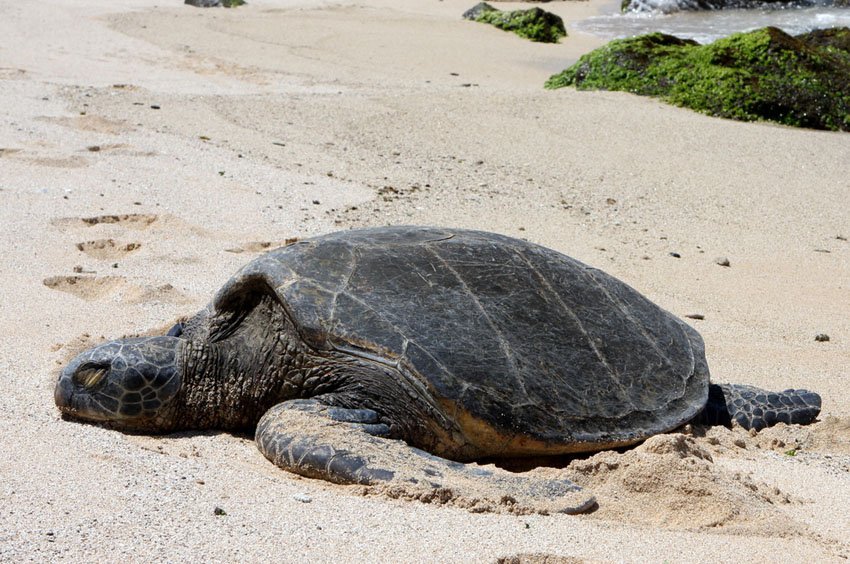 Sleeping green sea turtle
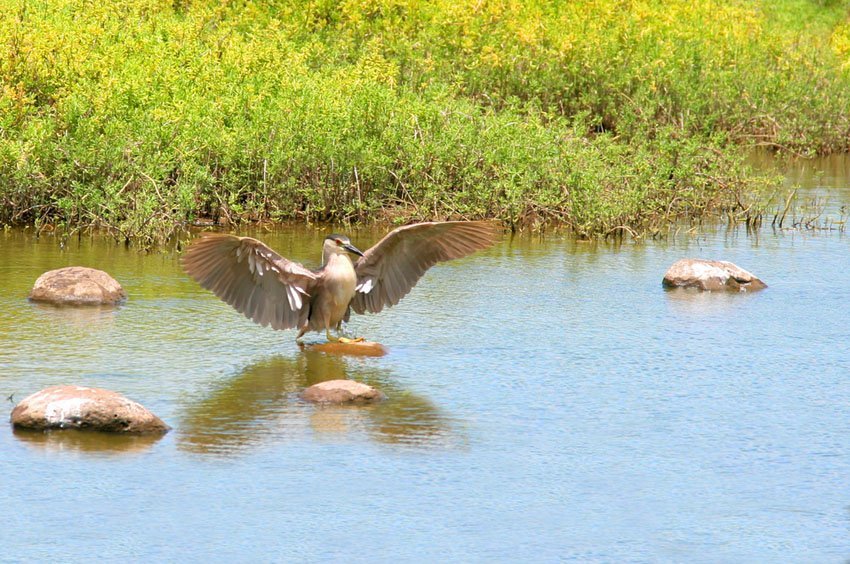 Black-crowned night heron
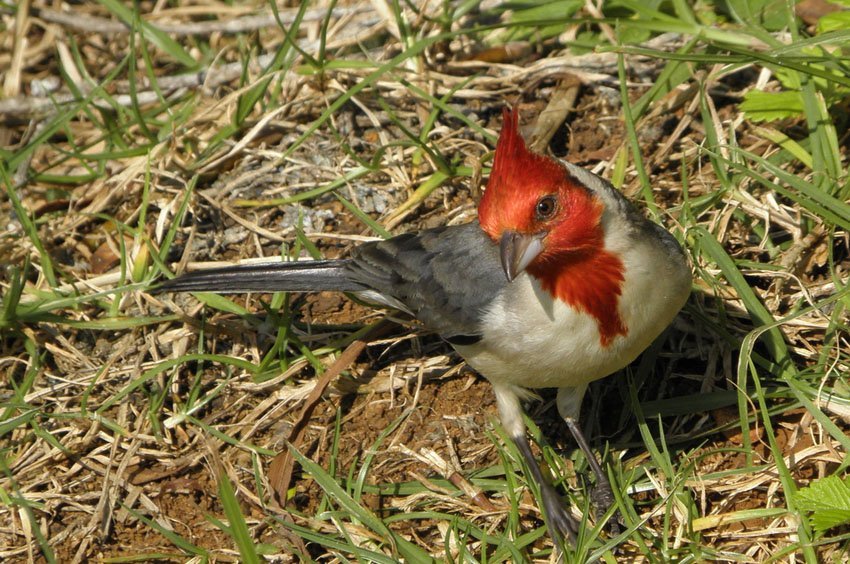 Hawaiian red-crested cardinal
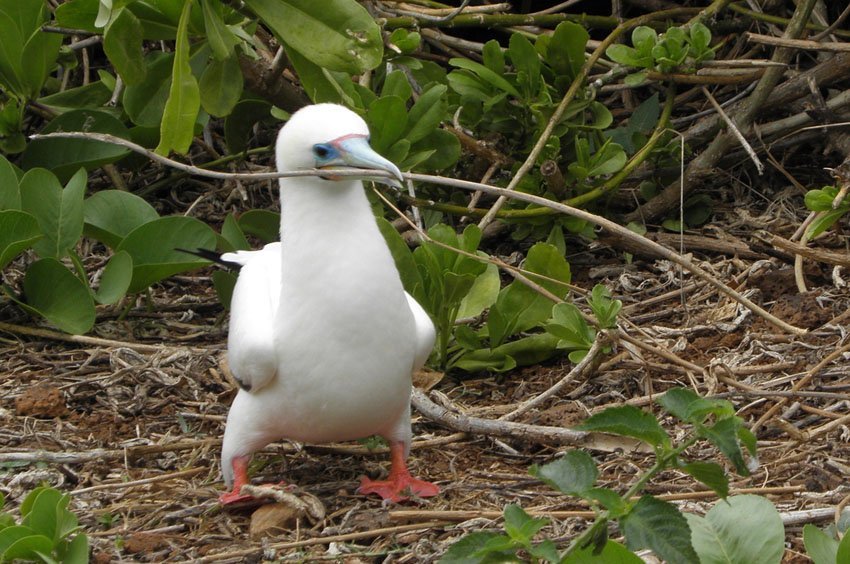 Red-footed boobie
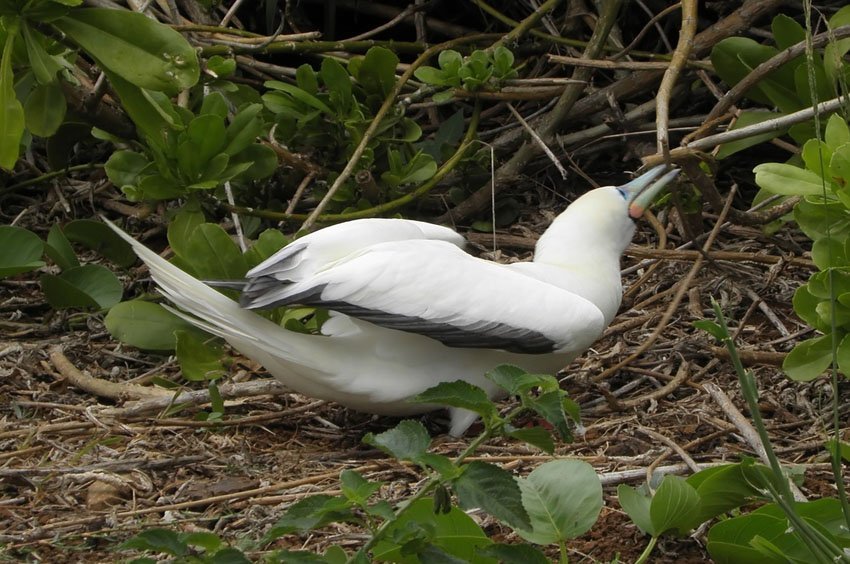 Red-footed boobie
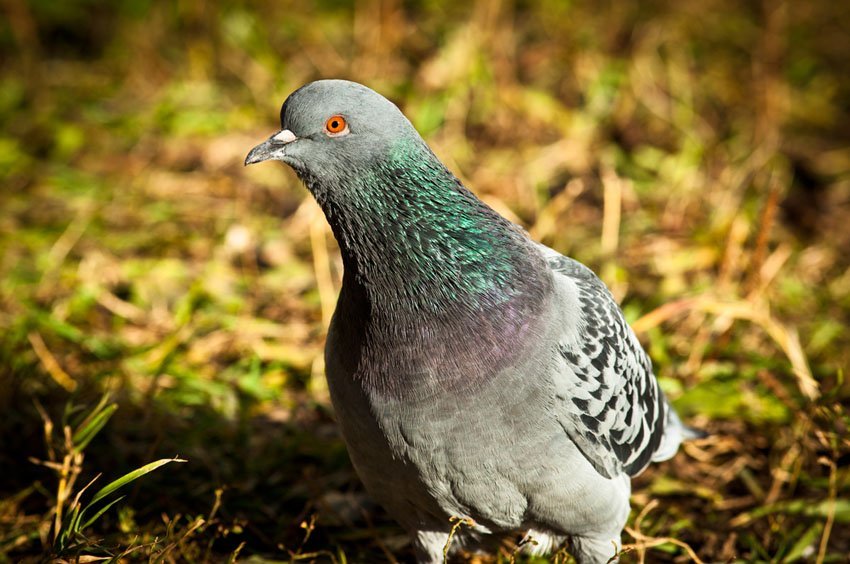 Rock Dove