















Hawaiian Culture
-
 Hawaiian Hula
 -
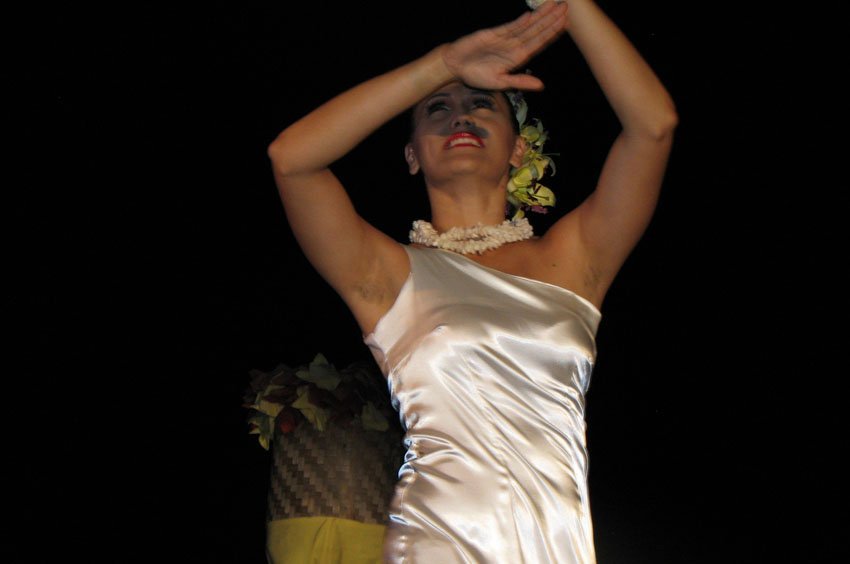 Hawaiian dancer
 -
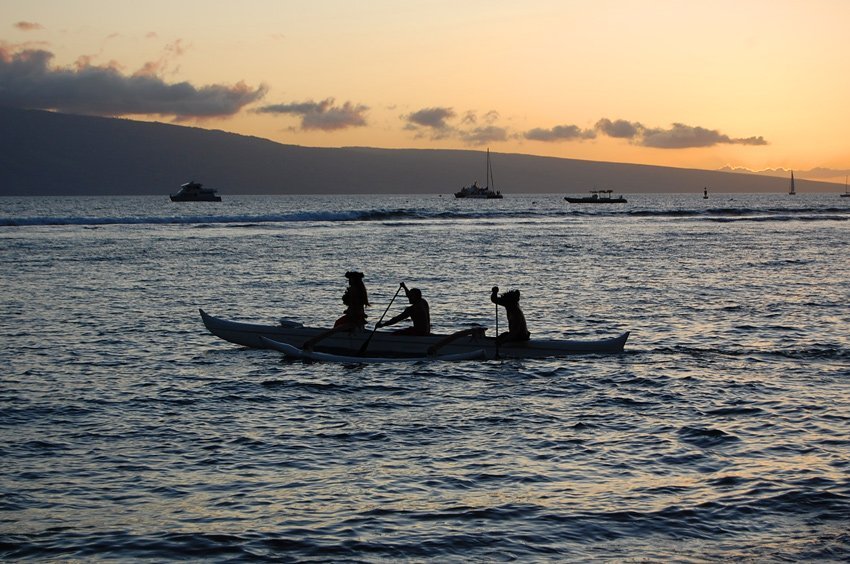 Canoe ride at a luau
 -
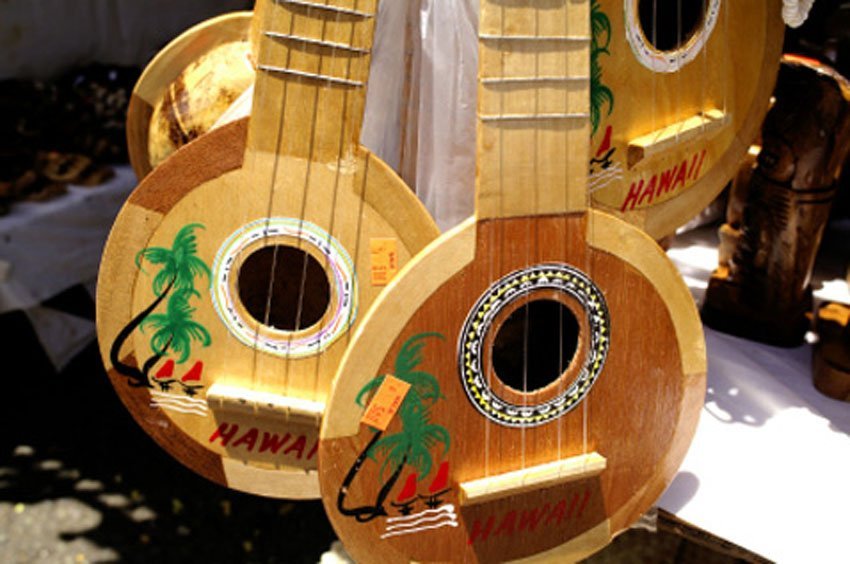 Hawaiian ukulele
 -
 Aloha
Aloha -
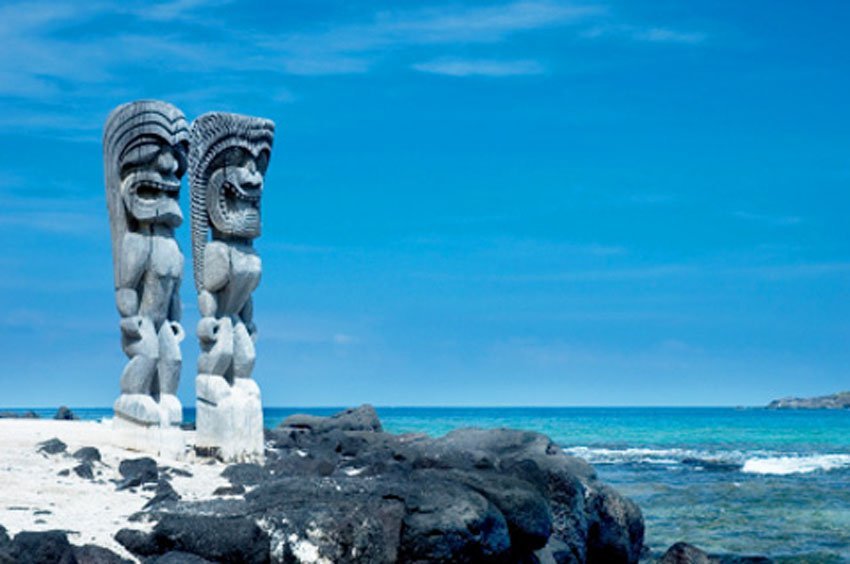 Tikis at Pu'uhonua O Honaunau
An overview of Hawaii's culture
Hawaii is a tropical paradise which has more than its share of pristine beaches, stunning sunsets, towering waterfalls and reefs teeming with colorful fish. Anyone who has been here knows Hawaii is different, unique, special and unforgettable. What sets these islands apart from the rest of the world? It's the native culture, the Hawaiian culture. It's a culture that is filled with fascinating customs, music, legends, traditions and values.
The flower lei
Today, probably the most enjoyable and unforgettable Hawaiian custom is the flower lei. Custom dictates that a lei should be offered graciously with a kiss and removed only in private. It's considered rude to remove a lei once it's accepted in view of anyone, but especially in view of the person(s) who gave it to you. Lei designs are limited only to the imagination and range from the simple common one-strand orchid or tuberose presented as a special treat to those who arrive by plane or ship to the more elaborate or rare depending on how important the occasion may be.

Expert canoe builders and non-instrument navigators
Early Hawaiians have a history of being expert canoe builders. The tradition requires that prayer and food offerings are made to forest gods before, during and after the tree is taken from the forest. Cultural protocols determine exactly how the tree for a canoe would be felled.
Early Hawaiians were also master non-instrument navigators. Using only the sun, moon, stars and waves, they were known to traverse the Pacific, which resulted in the occupation of many small islands in Polynesia. The Hawaiians had an intimate knowledge of the location and types of celestial bodies. Everything from the North Star to the South Cross have Hawaiian identities and lore.
The language
Then there's the Hawaiian language. Comprised of only five vowels and eight consonants, Hawaiian has the shortest alphabet in the world. Tricky for most to master, the language is compromised of soft sounds with words having many and often hidden meanings. One of the most notable is the word aloha. It's probably the most widely known of all Hawaiian words, and it is one of the most important.
Aloha not only means hello, goodbye and love, it also means sympathy, kindness, compassion, affection and fondness. This word is more than a greeting or expression of love - it is the basis of what Hawaiians consider to be one of the culture's core values.
Hawaiian cultural values also include terms like akahai, which defines a person's demeanor as modest, gentle and unpretentious. Also important is lokahi, meaning harmony and peace, oluolu meaning agreeable and pleasant and ahonui, which means patient and enduring.


The hula
Another Hawaiian icon is the hula. It's an image of swaying hips, graceful hands and colorful costumes. The hula has evolved over the years from an activity exclusively for men and for religious purposes to today's contemporary dances, where both the men and women dance for fun, expression and enjoyment. Hula today has two major forms, the ancient, or hula kahiko and the modern, or hula auana.
Hula kahiko is accompanied in the Hawaiian language along with drums and other percussion implements. Hula kahiko is performed for storytelling or for religious and ceremonial purposes. Dancers are adorned with bark cloth, coconut fibers and native grasses, plants and ferns. Hula auana is colorful, fun, upbeat and musical. Auana dances are accompanied by song in either English or Hawaiian, as well as ukuleles and piano guitars. The dancers' dresses are colorful and are decorated with flower prints.
The music
Music has also grown to be a familiar and popular part of Hawaiian culture. Ever evolving from a beginning of simple drumbeats and chants, music today is filled with a multitude of artists and genres that include hapa-haole (Hawaiian melody with English lyrics), traditional, luau, kolohe (naughty or teasing hula), chalangalang, jawaiian and more.
The legends
Another facet of the culture lies in legends. Ancient Hawaiians were known to be storytellers. Legends were a way of documenting history, knowledge, facts and beliefs from generation to generation. Some of the more popular legends include the story of the demi-God Maui, who pulled the island up from the bottom of the sea, the wicked, deceptive and jealous volcano goddess Pele and her snow god sister Poliahu. There are legends about the Kumulipo, which tell about the creation of the Hawaiian Islands and others that tell fishing stories about the shark gods.
The Hawaiian culture also has many superstitions and omens, which are widely known and still observed today. Rain and rainbows are considered blessings from the gods. This is especially true if it rains during weddings. Taking pork over the Pali Highway, which connects the leeward to the windward side on the island of Oahu, is considered a deed that is said to anger the gods and to bring bad luck or at least car trouble. It's still considered bad luck to bring bananas on a boat, to step over a baby who is lying on the floor and to wear a lei if you are pregnant.
Another dark omen that is more modern in nature is about the taking of lava rocks from a volcano, which will lead to being followed by bad luck. Many such rocks are known to be returned by visitors to Hawaii via mail. People often times send the rocks they collected and took home back to the Hawaii Volcanoes National Park with no return addresses.
The Hawaiian culture is rich, living, mysterious and unique. It's what truly makes Hawaii special. So, when you're in Hawaii, be sure to look past the sunsets, sunshine, surf and sand and take the time to explore the culture that makes the Hawaiian Islands truly special and unforgettable.
