Hawaii Reef Fish Guide
Goatfishes
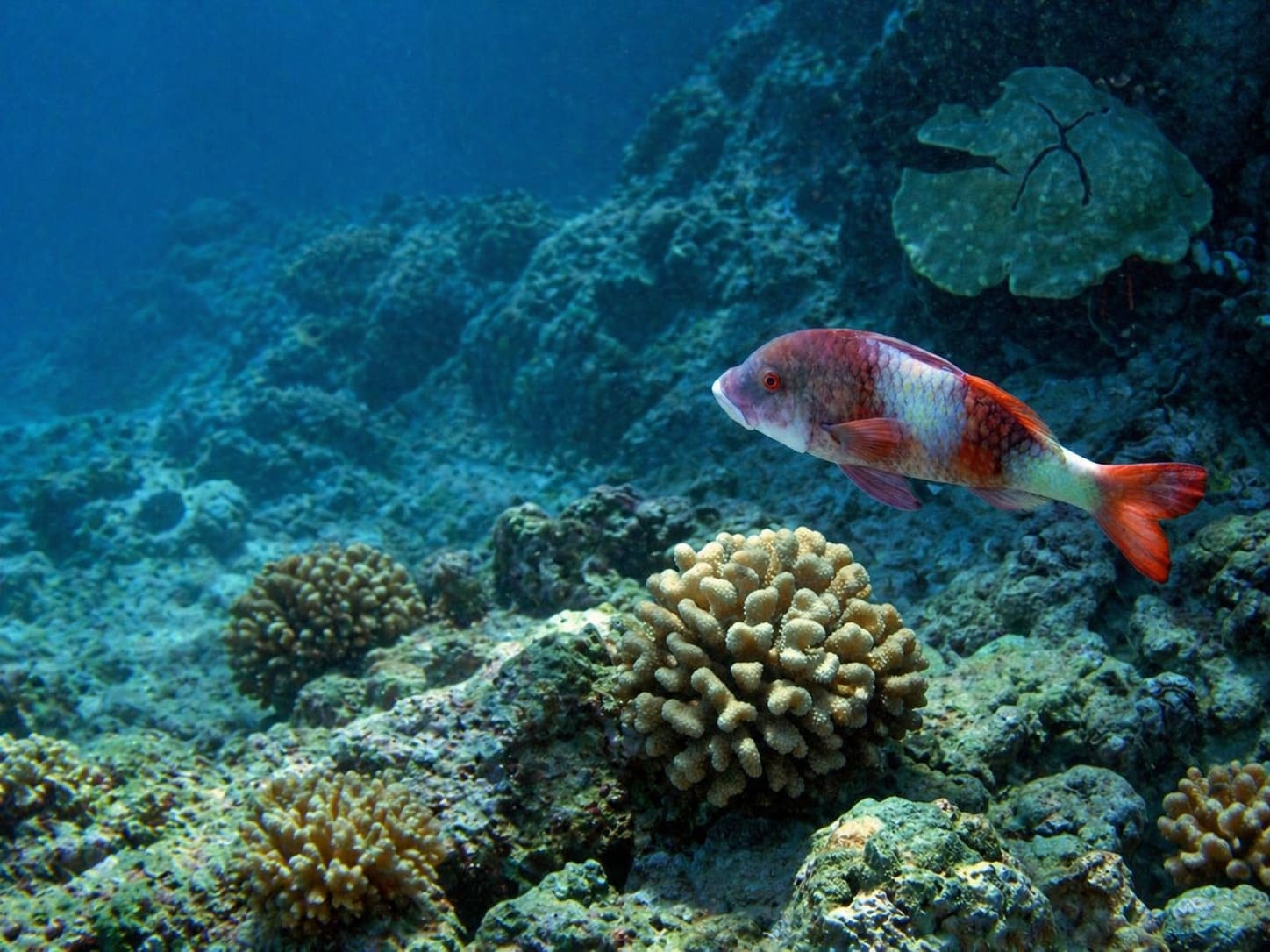
Goatfishes are easy to recognize by the two whisker-like barbels under their chin. In Hawaii, many are seen sweeping sandy bottoms for hidden food, with names such as weke, 'oama and moano.
Goatfishes in Hawaii
Goatfishes are common around Hawaii's reefs, sandy bottoms and mixed sand-and-rubble areas. Their easiest feature to spot is the pair of whisker-like barbels under the chin. They sweep these barbels over sand and reef cracks to find hidden food.
Goatfishes belong to the Mullidae family. They have forked tails, and many can change color quickly. Some stay close to the bottom while feeding, while others may gather in midwater during the day.
How Goatfishes Feed
The chin barbels work like sensitive feelers. Goatfishes brush them across the ocean floor to find worms, mollusks, shrimps, crabs and other small animals buried in sand or tucked into rubble. When you see one pause and probe the bottom, it is searching for its next meal.
This feeding style makes goatfishes fun to watch while snorkeling. They often move slowly from one sandy patch to another, then dig or stir lightly when the barbels find something interesting.
Hawaiian Names
There is no single Hawaiian name for all goatfishes. Striped goatfishes are often called weke. Young weke under about seven inches are called 'oama. Other goatfishes are known as moano.
Goatfishes are important in Hawaii's reef and food traditions, and they remain familiar to many local fishers. For visitors, their barbels, forked tails and color changes make them easier to recognize underwater. Related pages include the Hawaii fish guide, bonefishes, rays, crabs and Hawaii snorkeling tours.