

Hawaii Reef Fish Guide
Snappers
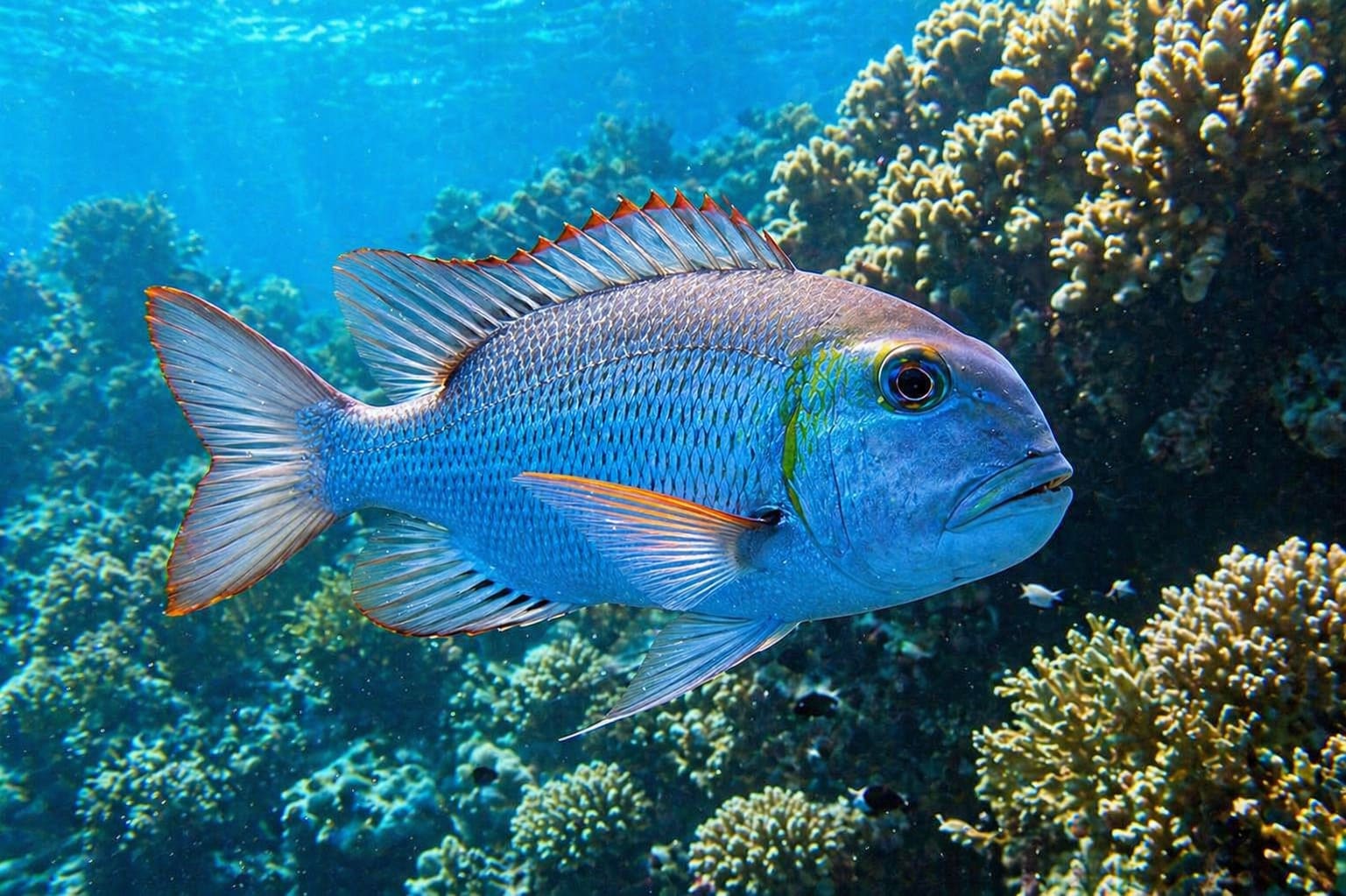
Snappers are carnivorous reef and deepwater fish found throughout Hawaiian waters. Some, such as onaga, 'opakapaka and 'ula'ula, live offshore and are prized food fish, while others appear closer to reefs where divers and snorkelers may see them.
Snappers Overview
Snappers are carnivorous fish in the family Lutjanidae. In Hawaii, many species live in deeper offshore waters, while others can be seen closer to reefs and rocky slopes. They range in size from about 10 inches (25 cm) to 3 feet (90 cm), depending on the species. Visitors can browse the broader Hawaii fish guide for more reef fish and marine animal profiles.
Fourteen snapper species inhabit Hawaiian waters. Several deepwater species, including onaga, 'opakapaka and 'ula'ula, are prized food fish in Hawaii. Meanwhile, snorkelers and divers are more likely to see reef-associated species such as forktail snapper, gray snapper, bluestripe snapper and blacktail snapper. For more ocean background, visitors can also explore the broader Hawaii ocean life section.


Quick Facts About Snappers
- Family: Lutjanidae
- Hawaii species: 14 species
- Diet: Carnivorous
- Typical size range: About 10 inches (25 cm) to 3 feet (90 cm)
- Common habitats: Deep offshore waters, reefs, rocky slopes and reef edges
- Prized deepwater fish: Onaga, 'opakapaka and 'ula'ula
- Likely reef sightings: Forktail snapper, gray snapper, bluestripe snapper and blacktail snapper
Deepwater Snappers in Hawaii
Many of Hawaii's best-known snappers live in deeper offshore waters. These include onaga, 'opakapaka and 'ula'ula. Because they live deeper than most snorkelers and casual divers go, people often know them best as important local food fish.
These deepwater species are valued for their flavor and firm texture. As a result, they appear in local seafood markets, restaurants and traditional fish discussions more often than they appear in shallow reef encounters. Visitors interested in food traditions can also read about Hawaiian food and dining in Hawaii.
Reef Species Divers May See
Some snapper species use shallower reef areas and are more visible to divers and snorkelers. These include the forktail snapper, called wahanui; gray snapper, called uku; bluestripe snapper, called ta'ape; and blacktail snapper, called to'au.
These species may swim near reef slopes, rocky ledges and open areas close to coral structure. Because they often move in groups or patrol near cover, careful reef observation can reveal them. Visitors planning reef time can also review Hawaii snorkeling, Hawaii beach safety tips and guided options such as Oahu snorkeling tours, Maui snorkeling tours, Kauai snorkeling tours and Big Island snorkeling tours.
Diet and Feeding Behavior
Snappers are carnivores. Depending on the species and habitat, they may feed on smaller fish, crustaceans, squid and other marine animals. Many hunt near reef structure or deeper rocky areas where prey gathers.
- They use strong jaws to capture prey.
- Many species feed near reefs or rocky slopes.
- Deepwater species hunt in offshore habitats.
- Reef species may gather in groups or move along ledges.
Other reef predators and carnivorous fish include groupers, jacks, barracudas and lizardfishes.
Introduced Snappers
Not every snapper found on Hawaii's reefs is native. The bluestripe snapper, or ta'ape, was introduced from French Polynesia in the 1950s to support fisheries. It is now common on many Hawaiian reefs.
Although ta'ape is edible and widely present, some conservationists consider it invasive because it may compete with native reef fish. Therefore, its role in Hawaii's reef ecosystem remains an important topic in marine management.
Viewing and Fishing Notes
Snorkelers and divers should look for snappers near reef edges, rocky drop-offs and deeper reef slopes. Since some species can be cautious, slow movement and patience help. Meanwhile, anglers and seafood buyers often know deepwater snappers by their Hawaiian names and food value.
With deepwater food fish such as onaga and reef species such as uku, ta'ape and to'au, snappers form an important and varied group in Hawaiian waters. Visitors interested in reef habitats can also read about the Hawaiian coral reef, Hawaii beach sand composition and marine debris in the Hawaiian Islands.