

Hawaii Marine Life Guide
Remoras
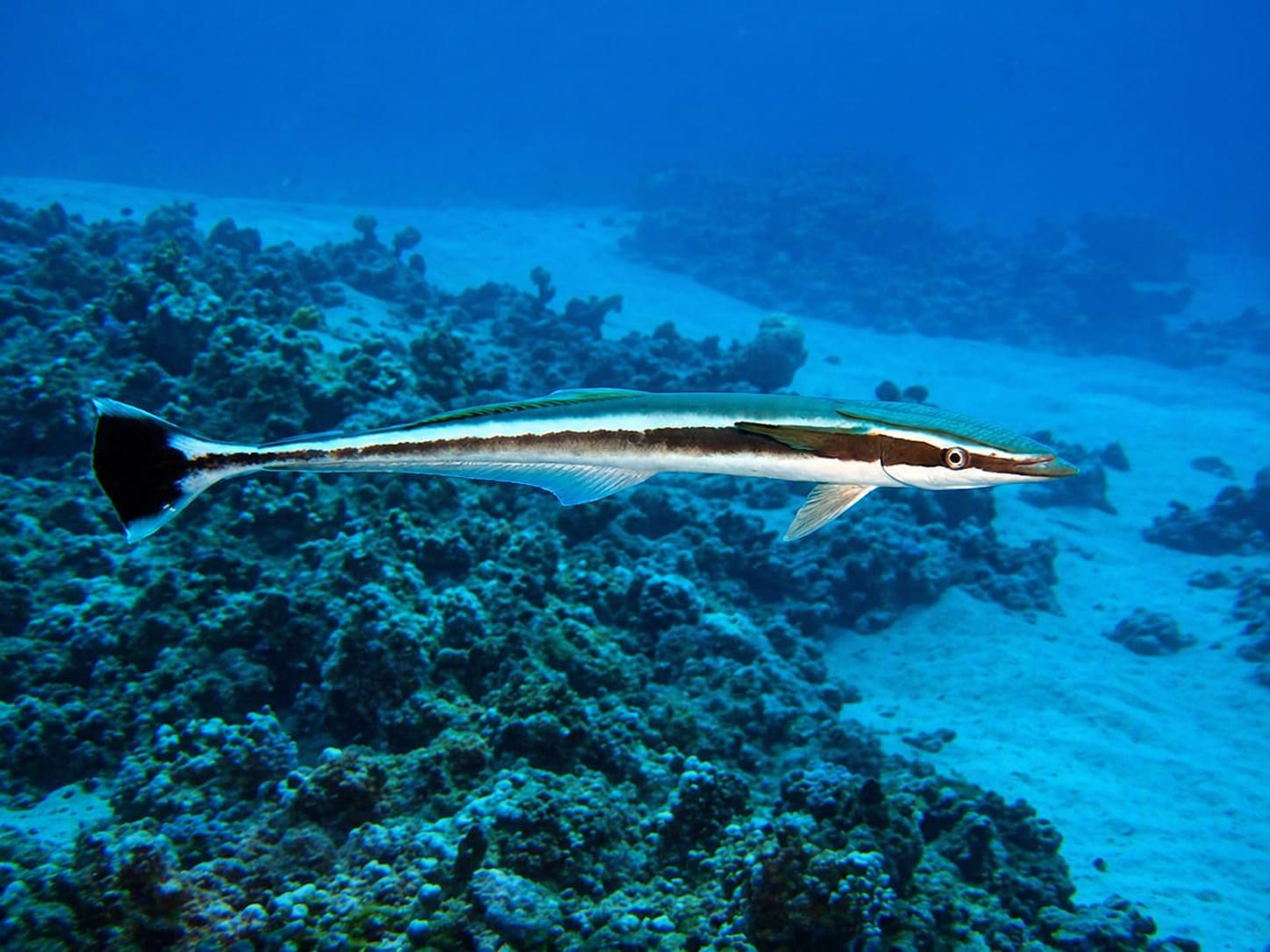
Remoras are unusual fish with a suction disk on top of the head, allowing them to attach to sharks, turtles, whales, rays, dolphins and even boats. In Hawaii, they are called omo and are also known as suckerfishes.
Remoras Overview
Remoras are also known as suckerfishes because they use a suction disk on top of the head to attach to larger animals. This disk is a modified fin that works like a natural suction cup. By attaching to sharks, sea turtles, whales, rays, dolphins and other marine animals, remoras save energy while moving through the ocean. Visitors can browse the broader Hawaii fish guide for more marine animal profiles.
In the Hawaiian language, remoras are called omo. They do not usually harm the animals they attach to. Instead, they hitch a ride and may feed on scraps, small food particles or parasites around the host animal. For more ocean background, visitors can also explore the broader Hawaii ocean life section.

Quick Facts About Remoras
- Family: Echeneidae
- Other common name: Suckerfishes
- Hawaiian name: Omo
- Key feature: Suction disk on top of the head
- Common hosts: Sharks, turtles, whales, dolphins and rays
- Other attachments: Boats, divers, floating objects and other remoras
- Largest species noted: Slender Remora
- Possible size: Up to about 3 feet (90 cm)
How Remoras Attach
The suction disk on a remora's head has ridges that help create grip. When the fish presses the disk against a host, it can hold on while the larger animal swims. This lets the remora travel long distances without using as much energy.
Because the disk sits on top of the head, the fish can attach beneath a shark, turtle or ray and ride along as the animal moves. It can release and reattach when needed.
Do They Harm Their Hosts?
Remoras usually do not harm the animals they attach to. They do not bore into the skin or feed directly on the host's body. Instead, they use the host for transportation, protection and access to food opportunities.
For example, a remora may eat scraps left behind when a shark feeds. In other cases, it may pick up small organisms or particles in the surrounding water. Related large marine animals in Hawaii include Hawaiian monk seals, sea turtles, dolphins and whales.
Where to See Them in Hawaii
Remoras may appear around larger marine animals in Hawaiian waters. Divers and snorkelers might see them attached to sharks, sea turtles, rays or other large animals. Occasionally, they may also approach boats or divers.
If a remora swims near you, stay calm and avoid touching or grabbing it. The fish may be curious, but it is best to let it move naturally. Visitors planning ocean time can also review Hawaii snorkeling, Hawaii beach safety tips and guided options such as Oahu snorkeling tours, Maui snorkeling tours, Kauai snorkeling tours and Big Island snorkeling tours.
Slender Remora
The Slender Remora is the largest remora species and can grow up to about 3 feet (90 cm) long. Despite its size, it is not aggressive toward people. Its most notable feature remains the suction disk, which allows it to attach to much larger ocean animals.
Viewing Notes
Remoras are fascinating because their lifestyle depends on hitchhiking. Instead of swimming constantly on their own, they use larger animals and objects to travel efficiently. As a result, they often appear in close association with some of Hawaii's most impressive marine life.
With their suction disk, hitchhiking behavior and Hawaiian name omo, remoras are among the most unusual fish found in Hawaiian waters. Visitors interested in reef and ocean habitats can also read about the Hawaiian coral reef, Hawaii beach sand composition and marine debris in the Hawaiian Islands.