
Hawaii Marine Mammal Guide
Monk Seals
The Hawaiian monk seal is an endangered marine mammal found only in the Hawaiian Islands. Known for resting alone on beaches and hunting along the seafloor, this rare seal needs space, protection and respectful viewing whenever it hauls out on shore.
Monk Seals Overview
There are three monk seal species: the Caribbean monk seal, the Mediterranean monk seal and the Hawaiian monk seal. The Caribbean monk seal is extinct, while the Mediterranean and Hawaiian species remain endangered. The Hawaiian monk seal, Monachus schauinslandi, lives only in the Hawaiian Islands. Visitors can browse the broader Hawaii fish guide for more marine animal profiles.
Hawaiian monk seals are among Hawaii's most special marine mammals. They spend much of their time at sea, but they also haul out on beaches to rest, molt and care for pups. Because they are endangered, people must give them plenty of space and avoid disturbing them. For more ocean background, visitors can also explore the broader Hawaii ocean life section.


Quick Facts About Hawaiian Monk Seals
- Scientific name: Monachus schauinslandi
- Native range: Hawaiian Islands only
- Conservation status: Endangered
- Estimated population: About 1,600 seals, according to NOAA Fisheries
- Main breeding area: Northwestern Hawaiian Islands
- Adult size: About 7 feet (2.13 m) long
- Adult weight: About 400 to 500 pounds (181 to 226 kg)
- Diet: Octopuses, eels, lobsters, reef fish and other seafloor prey
Where Monk Seals Live in Hawaii
Hawaiian monk seals breed mainly in the remote Northwestern Hawaiian Islands. However, they also appear in the Main Hawaiian Islands, especially on beaches of Kauai and Oahu. They may haul out on sand, rocky shoreline or quiet coastal areas to rest.
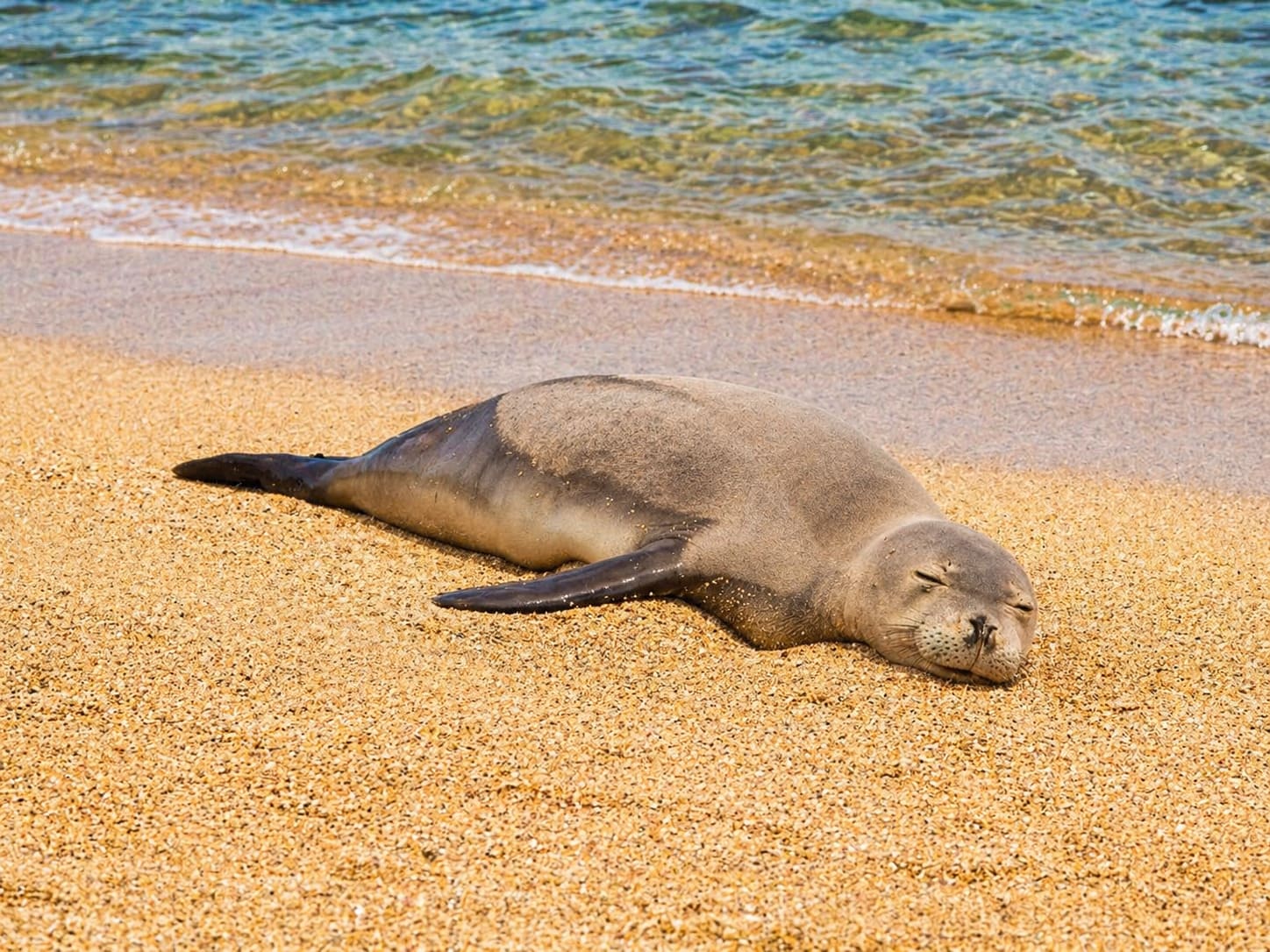
These seals often prefer solitude. As a result, a resting monk seal may remain on a beach for hours and then return to the ocean. If you see one on shore, keep your distance and let it rest undisturbed. Beachgoers can also review Hawaii beach safety tips before visiting shoreline areas.
Diet and Diving Ability
Hawaiian monk seals hunt underwater, often near the seafloor. They feed on octopuses, eels, lobsters, reef fish and other marine animals. Their strong diving ability helps them search reef and bottom habitats for food.
They can dive as deep as about 600 feet (182 m) and can stay underwater for up to 20 minutes. This allows them to reach prey that many beachgoers never see. Related marine animals in Hawaii include dolphins, whales and sea turtles.
Protection and Viewing Rules
The Hawaiian monk seal is protected by the Endangered Species Act and the Marine Mammal Protection Act. It is illegal to harass, capture, touch, disturb or kill monk seals. Even a curious approach can interrupt resting, nursing or natural behavior.
- Stay far back from resting seals.
- Never touch, feed or pour water on a seal.
- Keep dogs and children away.
- Do not block the seal's path to the ocean.
- Follow signs, ropes and instructions from wildlife volunteers or officials.
Why Monk Seals Need Space
Monk seals come ashore to rest and recover. Pups also need quiet time with their mothers. When people crowd them, the seals may become stressed or leave the beach before they are ready.
Giving monk seals space helps protect an endangered species and keeps people safe as well. Although they may look calm or sleepy, they are large wild animals with strong jaws.
Conservation Notes
NOAA Fisheries estimates the current Hawaiian monk seal population at about 1,600 seals, with about 1,200 in Papahanaumokuakea and about 400 in the Main Hawaiian Islands. The population has trended upward since 2013, but the species remains endangered and still faces threats from marine debris, disease, habitat change, predation, fishery interactions and human disturbance.
With its rarity, island-only range and quiet beach-resting habits, the Hawaiian monk seal is one of Hawaii's most important marine animals to protect and respect. Visitors interested in marine conservation can also read about the Hawaiian coral reef, marine debris in the Hawaiian Islands and Hawaii sharks.