

Hawaii Marine Mammal Guide
Whales
Humpback whales visit Hawaii each winter to mate, give birth and nurse their young in warm Pacific waters. From December through April, their breaches, tail slaps and spouts make whale watching one of Hawaii's most memorable seasonal ocean experiences.
Whales Overview
Humpback whales are among the most impressive marine mammals seen in Hawaii. Each winter, they arrive from colder North Pacific feeding grounds and spend the season in Hawaii's warm waters. During this time, they mate, give birth and nurse their young. Visitors can browse the broader Hawaii fish guide for more marine animal profiles.
Whale watching season in Hawaii usually runs from December through the end of April. The peak months are often January through March, when sightings become more frequent and surface activity can be especially exciting. For more ocean background, visitors can also explore the broader Hawaii ocean life section.


Quick Facts About Humpback Whales in Hawaii
- Group: Cetacea
- Most famous Hawaii whale: Humpback whale
- Hawaii season: December through April
- Peak viewing: Often January through March
- Reason for migration: Mating, birthing and nursing calves
- Calf weight: Newborns can weigh about 3,000 pounds (1,360 kg) or more
- Common behaviors: Breaching, tail-slapping, spouting and fin-slapping
- Viewing rule: Stay at least 100 yards (91 m) away from humpback whales
Why Whales Come to Hawaii
Humpback whales travel thousands of miles from northern feeding areas to Hawaii. The Islands provide warm, relatively protected waters where females can give birth and nurse calves. Males also compete and sing during the breeding season.
As much as 60 percent of the North Pacific humpback whale population may migrate to Hawaiian waters in winter. As a result, Hawaii becomes one of the best places in the world to watch humpback whales from shore or by boat. Related marine mammals include dolphins and Hawaiian monk seals.
Whale Watching Season
The first whales may appear before December, but the main viewing season runs from December through April. Sightings usually increase in January and February, then taper off later in spring as whales begin their return migration north.
During the season, visitors may see spouts, backs, tails, pectoral fins and full breaches. Weather, ocean conditions and natural whale movement all affect how active the whales appear on any given day. Visitors can compare guided options such as Maui whale watching tours, Oahu whale watching tours, Kauai whale watching tours and Big Island whale watching tours.
Where to Watch Whales in Hawaii
Some popular shore-based viewing spots include Makapuu Lookout and Diamond Head on Oahu. Maui's west and south shores are also famous for whale watching, especially because the waters between Maui, Lanai, Molokai and Kahoolawe attract many humpbacks.
Boat tours can offer closer views, but operators must follow distance rules. Shore viewing can also be excellent during peak season, especially with binoculars. Visitors planning ocean time can also review Hawaii beach safety tips and Hawaii beaches.
Common Whale Behaviors
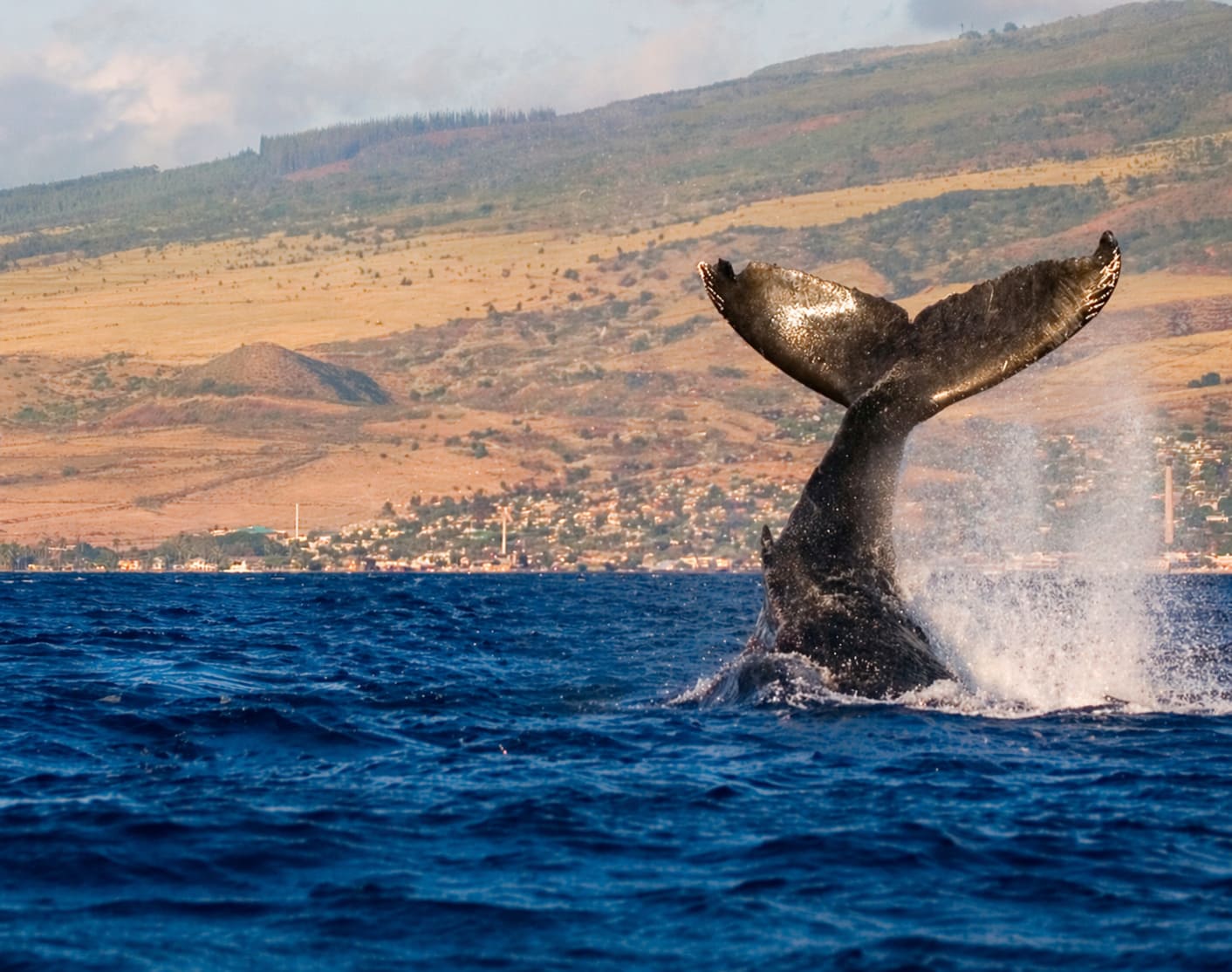
Humpback whales are known for dramatic surface activity. A breach happens when a whale launches much of its body out of the water and lands with a splash. Tail-slapping occurs when a whale lifts its tail and strikes the water surface.
- Spouting: A whale exhales at the surface, creating a visible misty blow.
- Breaching: A whale leaps partly or fully out of the water.
- Tail-slapping: A whale slaps its tail flukes against the surface.
- Pectoral fin-slapping: A whale rolls or floats while slapping a long fin on the water.
- Spyhopping: A whale raises its head vertically above the surface.
Calves and Mothers
Humpback calves are enormous at birth. A newborn can weigh about 3,000 pounds (1,360 kg) or more and may measure around 15 feet (4.5 m) long. The calf depends on its mother's milk and protection during its first months of life.
Because calves need rest and nursing time, people should keep a respectful distance from all whales. Disturbance can affect natural behavior and may put both whales and people at risk. Other large ocean animals in Hawaii include sea turtles, Hawaii sharks and rays.
Safety and Viewing Notes
Federal rules prohibit approaching humpback whales within 100 yards (91 m) in Hawaii. This rule applies to boats, swimmers, paddlers and other ocean users. If a whale approaches on its own, people should slow down, stop if safe and allow the whale to pass.
With their long migration, powerful surface displays and winter presence in Hawaiian waters, humpback whales are one of Hawaii's most unforgettable marine wildlife experiences. Visitors interested in ocean protection can also read about the Hawaiian coral reef, marine debris in the Hawaiian Islands and Hawaii beach sand composition.