

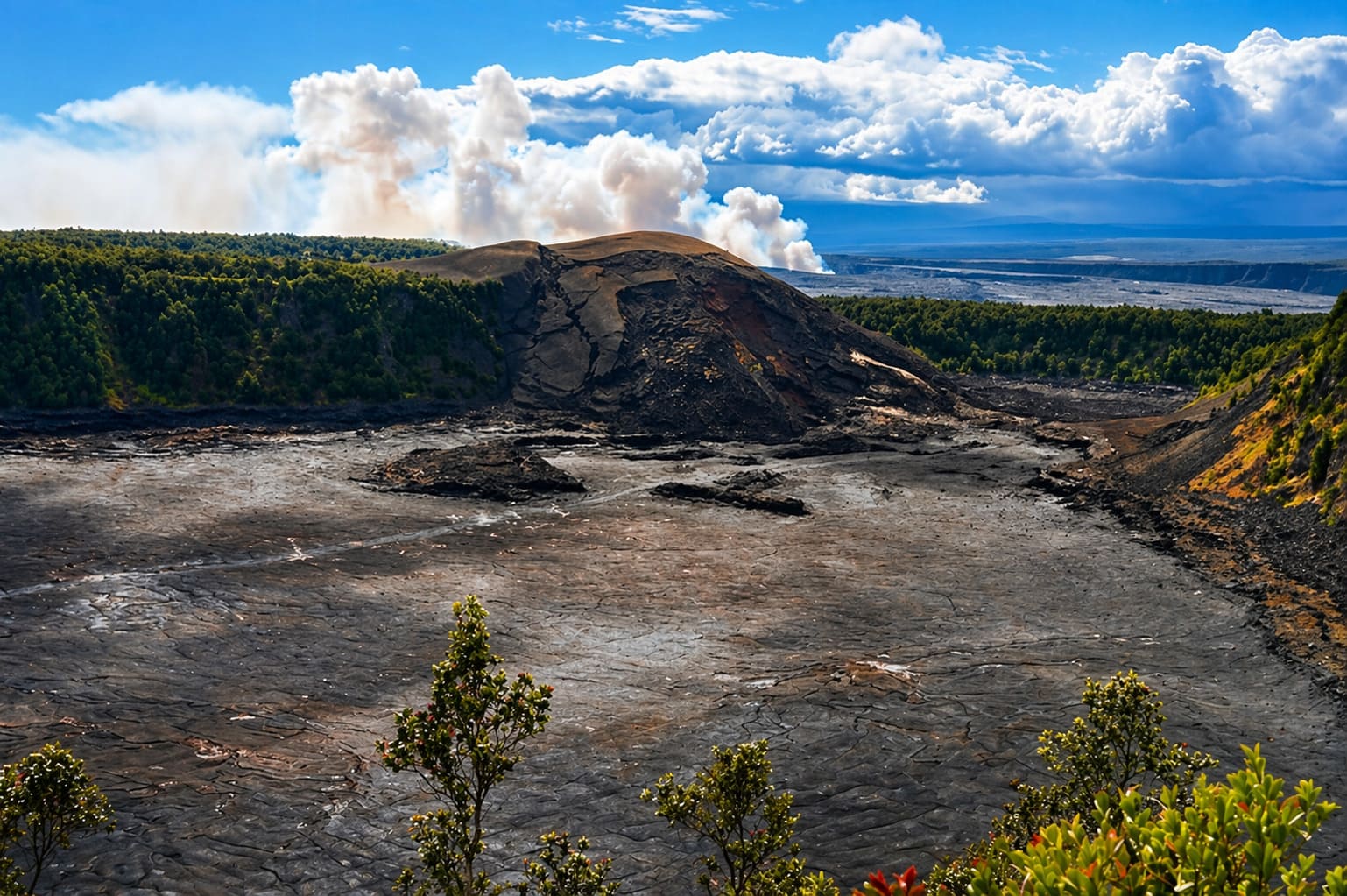
Fire, Lava & Island Origins
Hawaii Volcanoes
Hawaii volcanoes tell the story of how the Islands were built, from active Kilauea and massive Mauna Loa to Mauna Kea, Haleakala and Kama'ehuakanaloa.
The Hawaiian Islands are unique in geographic terms. As the only state in the USA composed entirely of volcanic rock, Hawaii has volcanoes that began evolving more than 70 million years ago. Because of its volcanic origins, Hawaii is essentially a chain of massive volcanoes rooted thousands of feet below the ocean floor. What you see above sea level is only a fraction of the giant volcanic topography that exists here. Each Hawaiian island shows that the volcanoes that created it erupted many times to push the island above sea level. Although there are many volcanoes beneath the surface, below is an overview of the volcanoes that make up the Hawaiian island chain.
Volcanoes on the Big Island of Hawaii
Mauna Loa
Spanning a maximum width of 75 miles (120 km) and covering a land area of 2,035 square miles (5,271 km²), Mauna Loa makes up more than half of the surface area of the Big Island of Hawaii. Mauna Loa rises 13,679 feet (4,169 m) above sea level, making it one of the world's tallest mountains. Due to its elevation, Mauna Loa receives snowfall during the winter months. The name Mauna Loa means "Long Mountain" in the Hawaiian language. Mauna Loa is the largest active subaerial volcano on Earth. Its volume is estimated at about 18,000 cubic miles (75,000 km³).
The first Mauna Loa eruption was recorded in 1843, and many eruptions have been recorded since. Mauna Loa's latest eruption occurred from November to December 2022, when lava erupted from the summit and Northeast Rift Zone. Prior to that, the volcano had not erupted since 1984. Mauna Loa remains closely monitored by the Hawaiian Volcano Observatory because future eruptions are possible. Eruptions at Mauna Loa tend to be non-explosive, but its lava flows can move quickly and threaten roads, communities and infrastructure. Eruptions in 1926 and 1950 destroyed villages, while the 1984 eruption sent lava toward Hilo before stopping.
Mauna Loa is a shield volcano, meaning it is a gently sloping mountain produced from a large number of generally very fluid lava flows. Shield volcanoes can also form on other planets. For example, Olympus Mons on Mars is the largest known volcano in the solar system.
Kohala
Kohala is around one million years old and breached sea level more than 500,000 years ago, making it the oldest subaerial volcano on the Big Island. Kohala is a shield volcano that rises 5,480 feet (1,670 m) above sea level. It encompasses 234 square miles (606 km²) and comprises 5.8% of the land area of the Big Island of Hawaii. Its volume is about 3,400 cubic miles (14,000 km³). It is estimated that Kohala's eruptive activity began to diminish about 300,000 years ago, when the volcano was much larger than it is now. The last eruption occurred about 120,000 years ago, and Kohala is now considered extinct.
While Kohala gradually diminished in activity, the younger volcanoes Mauna Kea and Mauna Loa buried its southern flanks. This factor makes it difficult to determine the volcano's exact shape and size during its earlier stage.
Kama'ehuakanaloa
Kama'ehuakanaloa, formerly known as Loihi, is the youngest volcano in the Hawaiian volcanic chain. It remains below the ocean's surface as an active submarine volcano. This undersea mountain sits southeast of the Big Island and rises thousands of feet above the ocean floor. Scientists expect that it may eventually emerge above sea level, but not for a very long time.
The former name Loihi means "long" and was given because of the volcano's elongated shape. In 2021, the Hawaii Board on Geographic Names updated the name to Kama'ehuakanaloa. The volcano sits near the Hawaiian hot spot and has shown signs of activity, including a notable eruption and earthquake swarm in 1996.
Kilauea
Kilauea is one of the most active volcanoes on Earth and one of the youngest volcanoes on the Big Island. Located in the southeast region of the island, Kilauea sits on the flank of Mauna Loa. Kilauea has been studied and monitored closely for many years because its activity can change quickly.
The name "Kilauea" is often translated as "spewing" or "much spreading." The long-running Pu'u O'o eruption began in 1983 and lasted for decades, but that eruptive episode ended in 2018. Since then, Kilauea activity has shifted through different summit and rift-zone eruptions, pauses and renewed activity. Visitors should always check current Hawaii Volcanoes National Park and USGS updates before planning around lava viewing.
Kilauea volcano is an important location in Hawaiian mythology. It is considered by many to be the home of Pele, the goddess of fire and volcanoes. Pele can be kind and gracious if appeased, or show anger if disrespected in the form of fiery volcanic activity.
Mauna Kea
The shield volcano Mauna Kea rises 13,796 feet above sea level and continues far below sea level to its base on the ocean floor. When measured from base to summit, Mauna Kea is taller than Mount Everest. "Mauna Kea" means "White Mountain" in Hawaiian, and this volcano is different from its neighbors Mauna Loa and Kilauea. Mauna Kea is considered dormant, not extinct. Its last eruptions occurred thousands of years ago. It has fewer eruptions, steeper topography, no summit caldera and different lava chemistry compared with Mauna Loa and Kilauea. Mauna Kea is also home to glacial deposits formed thousands of years ago. Because of its height, the summit of Mauna Kea receives snowfall in the winter.
Mahukona
Mahukona volcano is a submarine volcano located off the northwest side of the Big Island. Once an above-sea-level volcano, Mahukona now resides below sea level. The name "Mahukona" means "Leeward steam" in Hawaiian.
Hualalai
Hualalai has the distinction of being the third youngest and third most historically active volcano on the Big Island, after Mauna Loa and Kilauea. The town of Kailua-Kona, birthplace of famous Kona coffee, is built on the southwestern slope of Hualalai. Hualalai is named after the wife of Hawaii Loa, a famous Hawaiian navigator.
Hualalai created numerous lava flows in the past. The Kona airport is built atop one of Hualalai's lava flows. A series of earthquakes in 1929 showed that Hualalai could erupt again in the future.
Volcanoes on Maui
The two volcanoes that make up the island of Maui are East Maui and West Maui.
East Maui Volcano
East Maui Volcano, better known as Haleakala, is not extinct and could erupt again. It is the only other Hawaiian volcano besides Big Island volcanoes to have erupted within the last several centuries. Haleakala has a long eruptive history, and its most recent eruptions occurred roughly 400 to 600 years ago. In geologic time frames, this is considered recent.
The Hawaiian term "Haleakala" means "House of the Sun," and the summit of Haleakala holds a prominent place in Hawaiian history and mythology. Haleakala's summit landscape is one of Maui's major visitor destinations.
West Maui Volcano
West Maui Volcano is believed to have formed between 1.3 and 2 million years ago. Scientists estimate the last eruptions occurred about 1 million years ago. West Maui is considered extinct and non-threatening today.
Volcanoes on Molokai
The two volcanoes that comprise the island of Molokai are West Molokai, sometimes referred to as Mauna Loa, and East Molokai, otherwise referred to as Wailau.
West Molokai volcano is the smaller of the two above sea level, and East Molokai encompasses the eastern two-thirds of the island. Much of West Molokai lies below sea level, is buried by lava flow from other volcanoes, or was moved through the landslide process.
Volcanoes on Oahu
The Koolau and Waianae volcanoes comprise the island of Oahu. Waianae towers over the western side, and Koolau rises over the eastern side.
Koolau
Koolau is a basaltic volcano that comprises roughly two-thirds of the island of Oahu.
The famous Diamond Head Crater, Hanauma Bay and Koko Crater are volcanic features that draw many visitors. Koolau is a favorite volcanic subject because its lavas are different in makeup, with higher silica content than many other Hawaiian volcanoes.
Waianae
Waianae volcano is the taller and older of the two Oahu shield volcanoes. It is also much drier than Koolau, which helps keep some leeward coastal waters clearer because of lower runoff.
As Hawaii's volcanoes continue to erupt, the Hawaiian Islands continue to grow and change. Out of destructive eruptions comes the land that perpetuates life in Hawaii. Visitors can see this story in lava fields, craters, summit landscapes, sea cliffs and the living volcanic terrain of the Islands.


Frequently Asked Questions
How were the Hawaiian Islands formed?
The Hawaiian Islands formed as the Pacific Plate moved over a hot spot beneath the ocean floor. Repeated lava eruptions built shield volcanoes that eventually rose above sea level.
Which Hawaii volcanoes are active?
Kilauea and Mauna Loa on the Big Island are active volcanoes. Hualalai and Haleakala are also considered capable of future eruptions, while Kama'ehuakanaloa is an active undersea volcano.
What is the most active volcano in Hawaii?
Kilauea is one of the world's most active volcanoes and has erupted many times in modern history. Its activity changes frequently, so visitors should check current USGS and park updates.
When did Mauna Loa last erupt?
Mauna Loa last erupted in November 2022. The eruption lasted about two weeks and produced lava flows from the summit and Northeast Rift Zone.
What is Kama'ehuakanaloa?
Kama'ehuakanaloa, formerly known as Lo'ihi Seamount, is an active undersea volcano southeast of the Big Island. It is still below sea level and may eventually become a new island far in the future.
Is Mauna Kea active?
Mauna Kea is considered dormant, not extinct. Its most recent eruptions occurred thousands of years ago, and the summit remains culturally and environmentally significant.
Is Haleakala extinct?
No. Haleakala is not considered extinct. Scientists describe East Maui volcano as capable of erupting again, although its most recent eruptions occurred several centuries ago.
Where can visitors see volcanoes in Hawaii?
Hawaii Volcanoes National Park on the Big Island is the best-known place to see active volcanic landscapes, including Kilauea, Mauna Loa, craters, steam vents, lava fields and lava tubes.
Can visitors see flowing lava in Hawaii?
Sometimes, but visible lava is never guaranteed. Volcanic activity changes often, and viewing areas may close for safety. Check current Hawaii Volcanoes National Park and USGS updates before visiting.
Are Hawaii volcanoes dangerous?
They can be. Hazards include lava, volcanic gas, ash, earthquakes, unstable ground, cracks, cliffs and closed areas. Stay on marked trails and follow all park and emergency guidance.
Why are Hawaii volcanoes important in Hawaiian culture?
Volcanoes are deeply connected to Hawaiian stories, chants, place names and cultural practices. Kilauea is especially associated with Pele, the volcano goddess.
Can I take lava rocks from Hawaii?
No. Visitors should not remove lava rocks from parks, cultural sites or natural areas. It damages the landscape and disrespects places that hold cultural significance.