
Jacaranda Tree Overview
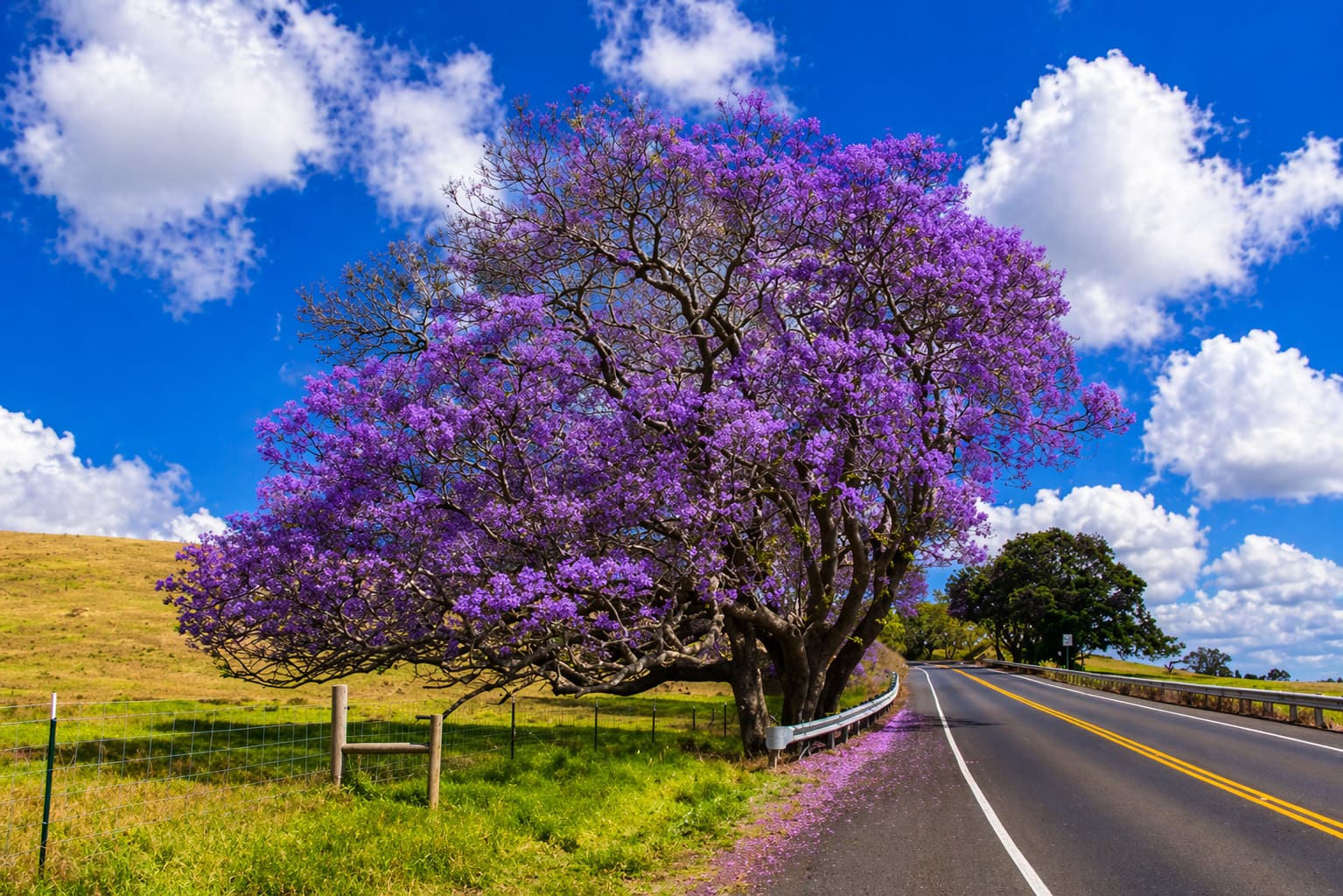
The jacaranda tree is an introduced ornamental tree that brings a soft lavender-blue color to Hawaii each spring. Native to South America, it was introduced to Hawaii around 1900 and has become especially noticeable in cooler upland areas where the climate suits it well.
When in bloom, jacaranda trees can transform a road, garden or hillside into a wash of purple-blue flowers. The trumpet-shaped blossoms appear in clusters, often before the tree is fully leafed out, which makes the color stand out even more. Mature trees can grow up to about 50 feet tall, with a graceful canopy that feels lighter than broad shade trees such as the banyan tree.
Flowers, Form and Growing Areas
Jacaranda trees are best known for their bloom season, but their shape also adds to their appeal. The leaves are fine and fern-like, giving the tree a delicate texture even when flowers are not present. After blooming, the fallen flowers may scatter below the tree, creating a purple layer on sidewalks, lawns or roadsides.
In Hawaii, jacarandas are most often associated with upland and cooler communities rather than hot coastal beaches. They may appear near gardens, parks, farms and scenic roads, especially in places with enough space for their canopy to spread. Compared with food trees such as breadfruit, banana or coconut, jacaranda is grown mainly for beauty and seasonal color.
Jacaranda Trees in Hawaii Landscapes
Jacaranda is not a native Hawaiian tree and does not carry the same cultural role as koa or hala. Its place in Hawaii is more ornamental, adding a springtime color that many residents and visitors remember after seeing it in bloom.
Within Hawaii's mix of native trees, canoe plants, fruit trees and ornamentals, jacaranda stands out for one simple reason: color. Its lavender-blue flowers bring a seasonal change to upland landscapes and make the tree easy to recognize when spring arrives.


