
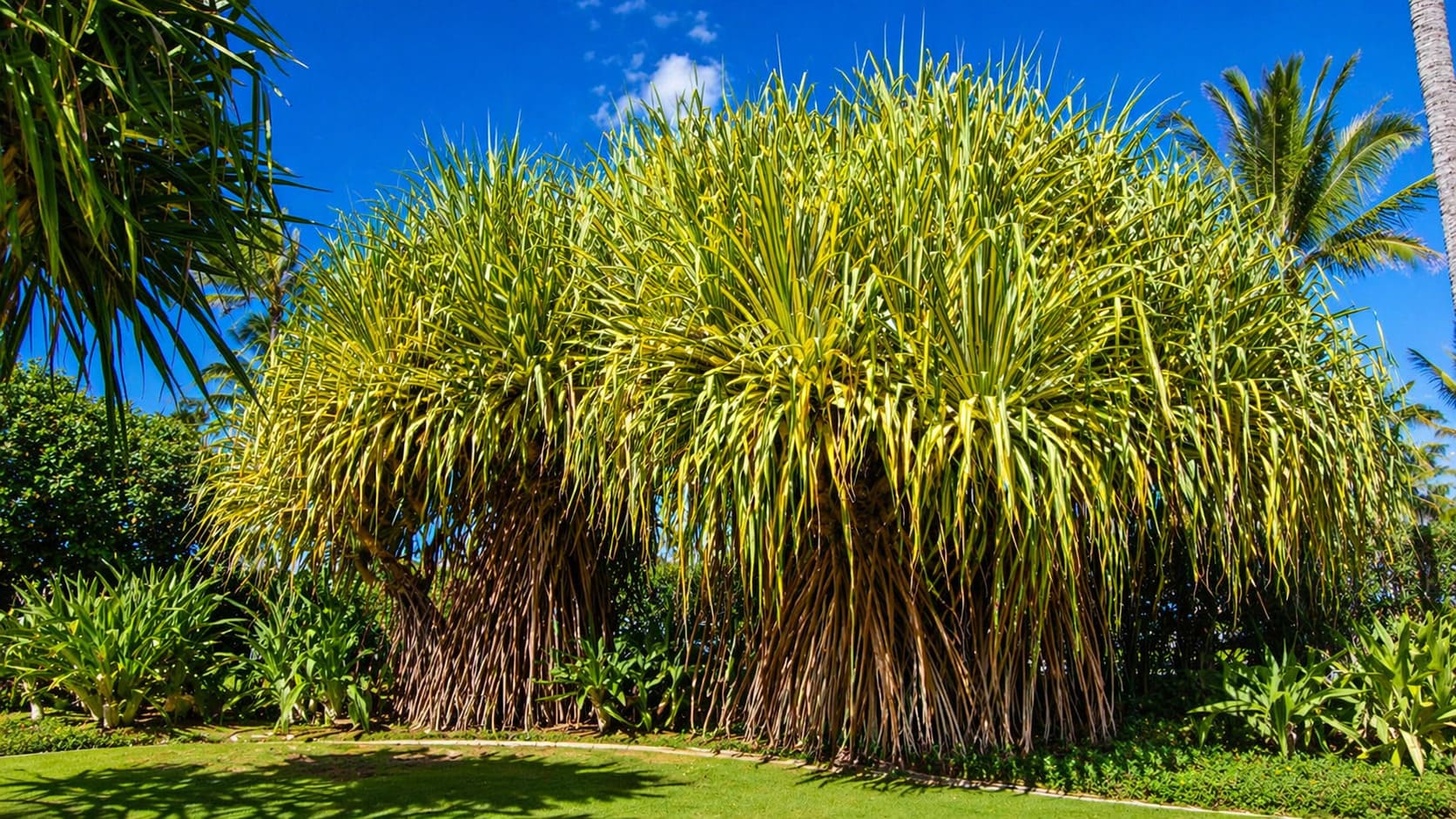

Hala Tree Overview
The hala tree, also called screwpine, is one of Hawaii's familiar coastal trees. It grows from sea level up to about 2,000 feet and is especially common along windward shores. With long, narrow leaves, prop-like roots and round fruit that can look almost like a pineapple, hala has a rugged look that fits salt air, wind and shoreline conditions.
Hala is different from upright palms such as coconut and broad shade trees such as the banyan tree. Its leaves grow in a spiral pattern, giving the tree one of its most recognizable features. Male hala trees produce small fragrant flowers in drooping clusters, while female trees produce the large segmented fruit.
Lau Hala and Traditional Uses
Hala leaves, known as lau hala, were extremely useful in old Hawaii. Ancient Hawaiians dried and prepared the leaves for weaving mats, baskets, hats, sandals and other everyday items. Lau hala also had an important role in house construction, especially for thatched roofs.
Hala roofing could last much longer than roofing made with coconut leaves. The old page notes a practical comparison worth keeping: lau hala roofs could last up to 15 years, while coconut leaf roofs usually lasted around 3 years. That durability made hala an important material, not just a coastal tree people passed by.
Hala Trees in Hawaii
The fruit of the hala tree can be eaten, though it was usually used as food only during hard times. The tree's greater value came from its leaves, flowers, fiber and place in coastal life. Compared with canoe food plants such as breadfruit, banana and taro, hala was more closely tied to weaving, shelter and practical craft.
Today, hala remains one of Hawaii's meaningful shoreline trees. Its spiky leaves, sturdy roots and traditional uses make it easy to recognize and worth knowing, especially in coastal areas where wind, salt and sun shape the landscape.


