Macadamia Tree Overview
The macadamia tree is one of Hawaii's best-known orchard trees, even though it is not native to the Islands. Native to Australia, the tree was first introduced to Hawaii in 1890 and eventually became closely tied to local agriculture, farm tours, gift shops and familiar island snacks.
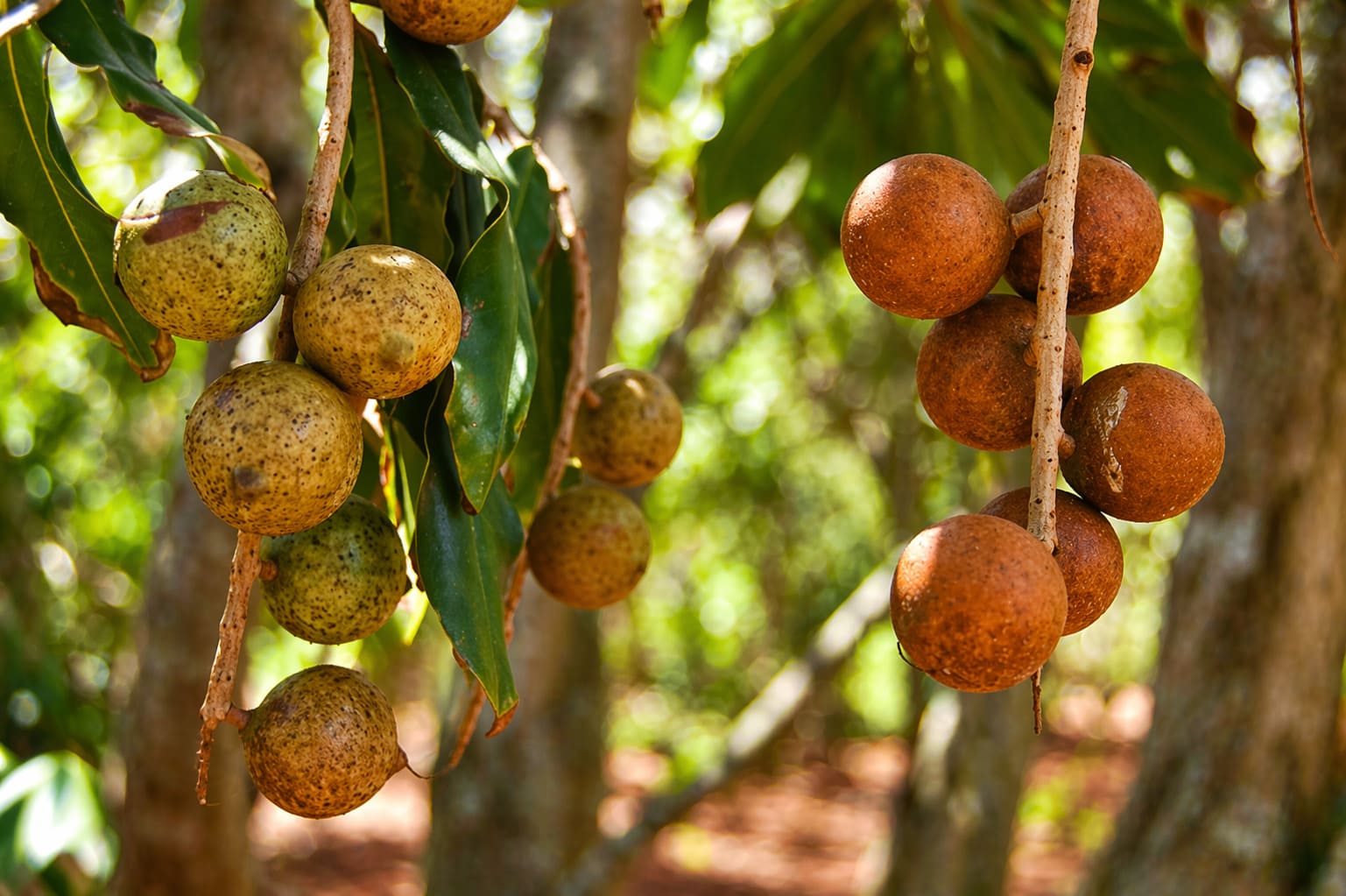
Macadamia trees have thin leaves with sharp, tooth-like edges. Their nuts are famous for being rich and buttery, but the shell is the real challenge. Macadamia nuts are so hard and dense that they cannot be cracked by hand. A hammer, nutcracker or special machine is needed to break through the brown shell and reach the edible kernel inside.
Growth, Harvest and Nut Shells
Macadamia trees grow best in warm areas with good drainage and enough rainfall or irrigation. In Hawaii, they are most often associated with agricultural areas rather than coastal parks or native forests. The nuts mature inside green husks, then the hard-shelled nuts are dried and cracked before roasting or use in food.
Compared with canoe plants such as coconut, breadfruit and banana, macadamia arrived much later. Its Hawaii story belongs more to farming, food production and modern island agriculture than to ancient voyaging life.
Macadamia Trees in Hawaii
Macadamia became popular in Hawaii because the trees could produce valuable nuts in suitable growing areas. The nut's rich flavor made it a favorite for candies, cookies, roasted snacks and chocolate-covered treats. Many visitors associate macadamias with the Big Island, where farms and orchards helped make the crop well known.
Macadamia trees also fit into Hawaii's larger mix of useful and ornamental trees. They do not have the native forest role of koa or the dramatic shade of the banyan tree, but they remain one of the Islands' most recognizable food trees. Their tough shells, sharp leaves and flavorful kernels make them easy to remember once you see the tree behind the nut.