
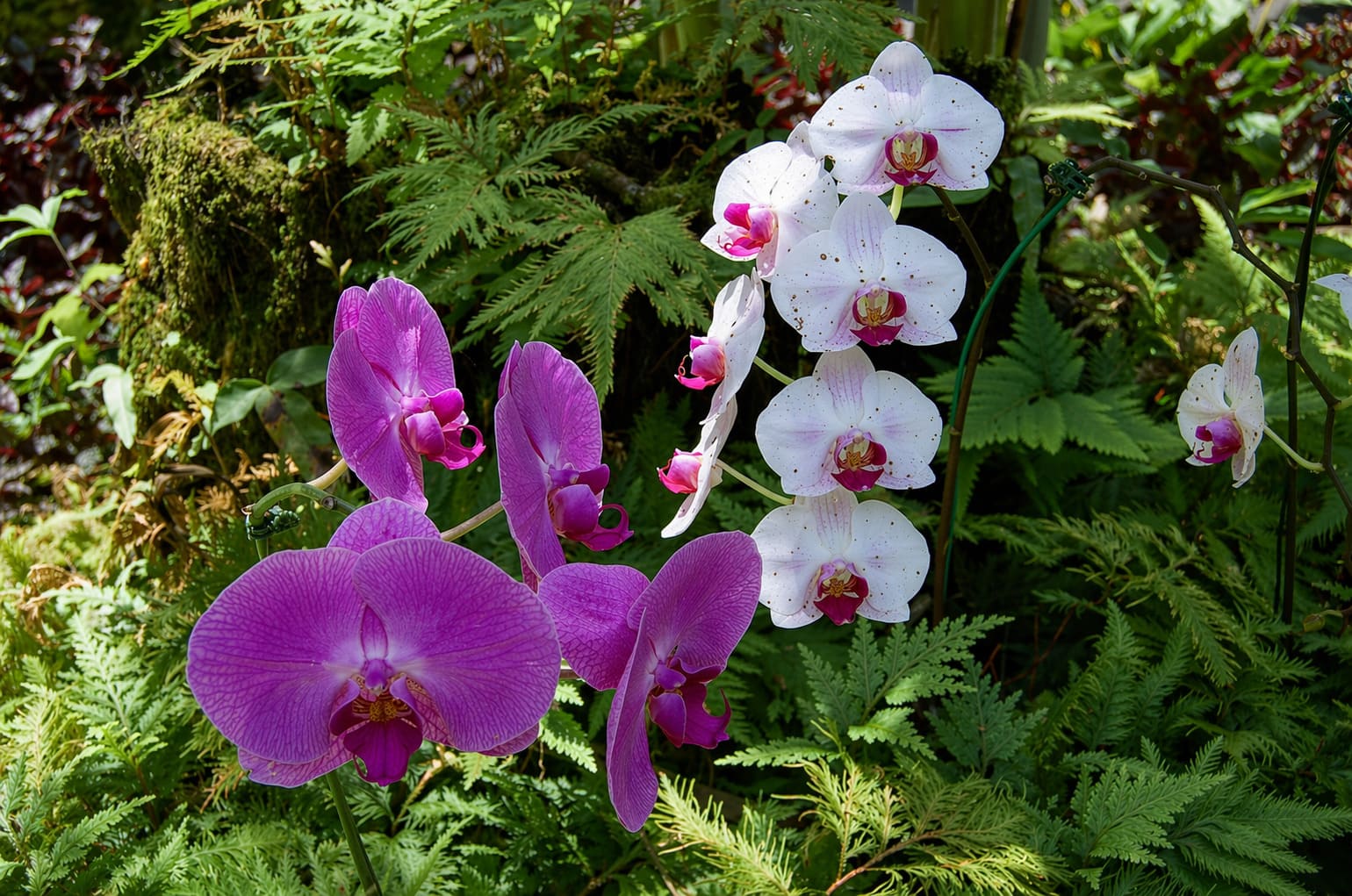
Flowers and plants in Hawaii
Hawaiian flora is colorful and diverse. A subtropical region, Hawaii has a year-round warm climate and soil heavy with volcanic ash - two elements that play a role in the healthy growing of many flowers, plants and trees. There are three categories of Hawaiian flora: endemic, native and introduced. Endemic refers to flowers, plants and trees found only in Hawaii. These are the flowering and non-flowering plants and trees that were brought to Hawaii by natural means, such as wind, tides and birds. Native refers to species occurring in the Hawaiian Islands, but found elsewhere in the world. The third category includes foreign or introduced plant species. These are plants brought to Hawaii by people.
Long before the human settlement of the Hawaiian island chain, the Islands were devoid of plant or animal life. Over thousands of years, seeds, insects and birds made their way to the Hawaiian archipelago. Populating the Islands this way was slow - it is estimated that only one plant every 90,000 years was added to the Hawaiian landscape.
The early Polynesian voyagers who arrived in Hawaii around AD 500-800 brought plants with them that they needed for food, such as breadfruit, taro, banana, sweet potato and sugarcane. Other plants they brought were needed as building materials, such as the ti plant to make clothing. Later settlers brought mangoes, papayas, pineapples, passion fruit and vegetables, as well as flowers, including plumeria, orchids, protea, heliconia, ginger, jasmine (pikake) and hibiscus.
The arrival of early settlers in Hawaii with their plants and animals affected the Hawaiian flora in two ways. On the one hand, it led to a more diverse Hawaiian flora. New plant species were introduced and grew on the Islands. On the other hand, it led to the disappearance of many endemic varieties. Some introduced plant species are fast growing and crowd out native and endemic species. These introduced species are also called invasive species. Unable to adapt to changes in the surroundings, many endemic plants gradually died and disappeared over time.
Today, Hawaii has approximately 1,400 native vascular plant taxa, including species, subspecies and varieties, and nearly 90 percent are found nowhere else in the world. Hawaii also contains a large share of the nation's endangered and threatened plant species, even though the Islands make up less than one percent of U.S. land mass. Habitat loss, invasive plants, grazing animals, pests, disease and climate change continue to threaten many native plants.
Hawaiian Trees
Trees grow in rich diversity in the Islands. Two endemic Hawaiian trees are koa and 'ohi'a. The koa tree (Acacia koa) is the oldest known tree in the Islands. It is one of the tallest trees in Hawaii, reaching heights of up to 70 feet (21 m) and measuring around 10 feet (3 m) in circumference. The tree has a very sturdy wood and has many uses. The Hawaiians used the trunk of the tree for boat- or canoe-building. Because koa is resistant to saltwater, it can also be used to make surfboards. Also known as Hawaiian mahogany, this tree is referred to as the king of the forest. Up until today, koa is considered a superb furniture wood. Hawaii used to be copiously populated with koa trees, but today they are mainly found in reserves. To protect the remaining koa trees in Hawaii, there are some koa plantations that are used for commercial purposes, including the making of souvenirs.
The 'ohi'a (Metrosideros polymorpha) is the most abundant endemic tree species in Hawaii. This tree species grows in a variety of sizes. The tallest ones can reach heights of up to 100 feet (30 m) and are typically found at the higher and cooler elevations. The main characteristic of the 'ohi'a tree is its orange-red flower, though it can also be yellow or white. According to an ancient Hawaiian legend about the fire goddess Pele, the 'ohi'a flower is sacred. Hawaiians used 'ohi'a wood to build canoes and dishes, such as poi bowls.


