
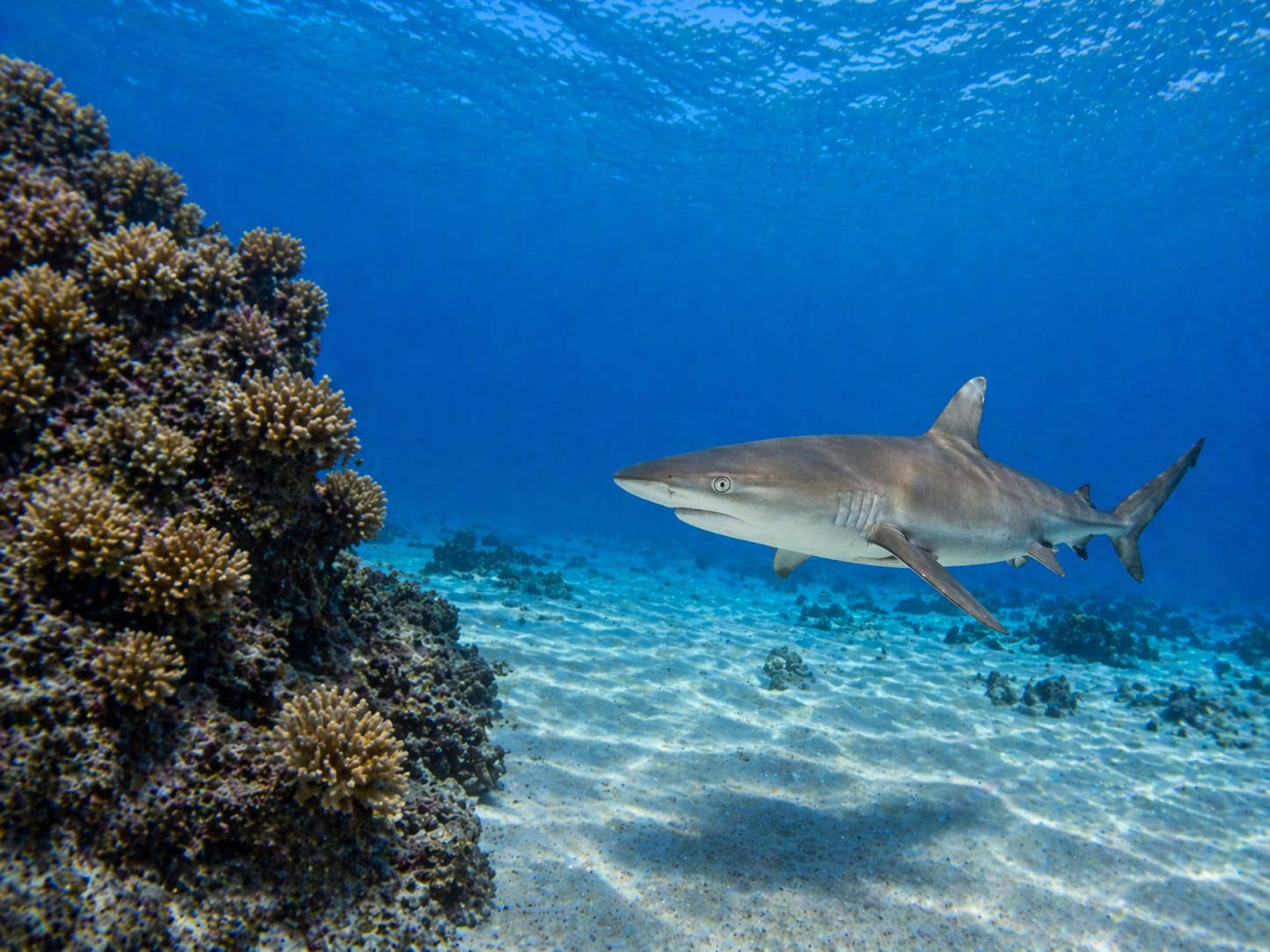

Many visitors to Hawaii wonder if there are sharks in Hawaii and how likely it is to get bitten or killed by one. Here is an overview about sharks in Hawaiian waters, Hawaii shark attack risk, common shark species and safety tips.
How common are shark attacks in Hawaii?
The chances of being attacked by a shark in Hawaii are very low. In fact, many water-related deaths in Hawaiian waters are not due to shark attacks, but due to drowning, currents, high surf, shorebreak and other ocean hazards.
People often underestimate the power of strong currents, rip currents, high waves and powerful shorebreaks. Swimming in the ocean is very different than swimming in a pool. Also, people sometimes walk too close to the edge of a sea cliff and get swept into the ocean by a sudden, unexpected wave or flash flood.
Compared with the many people who enter Hawaii's ocean each year, shark bites remain rare. However, any ocean activity carries risk. Visitors should stay alert, follow posted warnings, swim at lifeguarded beaches when possible and leave the water if a shark is seen nearby.
Why do sharks occasionally attack humans?
Sharks play an essential part in the world's oceans. They help balance fish populations and remove weak or injured marine animals. The most common shark attack on humans is the so-called "hit and run" attack. In other words, the shark bites the human, usually in the arm or leg, but quickly lets go because it realizes that the human is not the seal or turtle it may have mistaken them for.
From below, this is how humans can look to a shark, especially surfers on a surfboard. Even though most sharks have a well-developed sense of vision, they can confuse humans with other marine animals that are on their regular menu. Humans also often splash around while swimming, which can attract sharks because it resembles sick or injured marine life.
How many shark species can be found in Hawaiian waters?
There are about forty species of shark in Hawaii, of which eight can be observed near shore, including the reef whitetip, sandbar, scalloped hammerhead and tiger shark, according to the Hawaiian Lifeguard Association. Tiger sharks are the shark species that most often attack humans in Hawaiian waters.
What safety precautions can reduce shark risk?
The State of Hawaii Shark Task Force gives the following tips to reduce the risk of suffering a shark attack:
- Don't swim alone.
- Swim in guarded areas where lifeguards are present.
- Avoid swimming in the dark or twilight hours - this is when sharks are believed to be more active.
- Don't swim with bleeding wounds because sharks have a good sense of smell and are attracted to blood and body fluids.
- Avoid murky water, waters with runoff, harbor entrances and areas near fishing activity.
- Don't wear shiny jewelry or high-contrast colors.
- Don't splash around unnecessarily - this can attract sharks because it signals injured marine life to them.
- Don't swim if sharks are known to be present.
- Be alert if turtles and fish are fleeing the area.
What should you do after a shark attack?
Administer first aid. Get the victim out of the water. Apply direct pressure to the wound. Wrap a compressing towel, t-shirt or other available cloth around the injured area to help stop bleeding. Call 911 immediately. Stay with the victim and keep the victim calm and warm.
Sharks in Hawaiian culture
Sharks have always played a big role in Hawaiian culture. From one side, the animal provided the people with tools. Shark teeth, for example, were used as a knife and shark skins were used for hula drums. But sharks also played a role in Hawaiian spirituality. Some shark species were considered equal to Hawaiian ali'i (royalty).
Sometimes when a family member died, it was believed that the deceased could reincarnate in the form of a shark. This shark then was the family's 'aumakua, a guardian spirit and protector. Also, at least nine Hawaiian gods are associated with sharks: Kamohoali'i, Kua, Kuhaimoana, Kawelomahamahai'a, Kane'apua, Kaholia-Kane, Ka'ahupahau, Keali'ikau o Ka'u and Kaehuikimano o Pu'uloa.


