
Hawaii's Multicultural Identity
Hawaii Ethnicity
Hawaii ethnicity is a true island mixed plate, shaped by Native Hawaiian roots, plantation-era immigration, Asian and Pacific Islander communities and multiracial families.
Hawaii - an Ethnically Mixed Plate
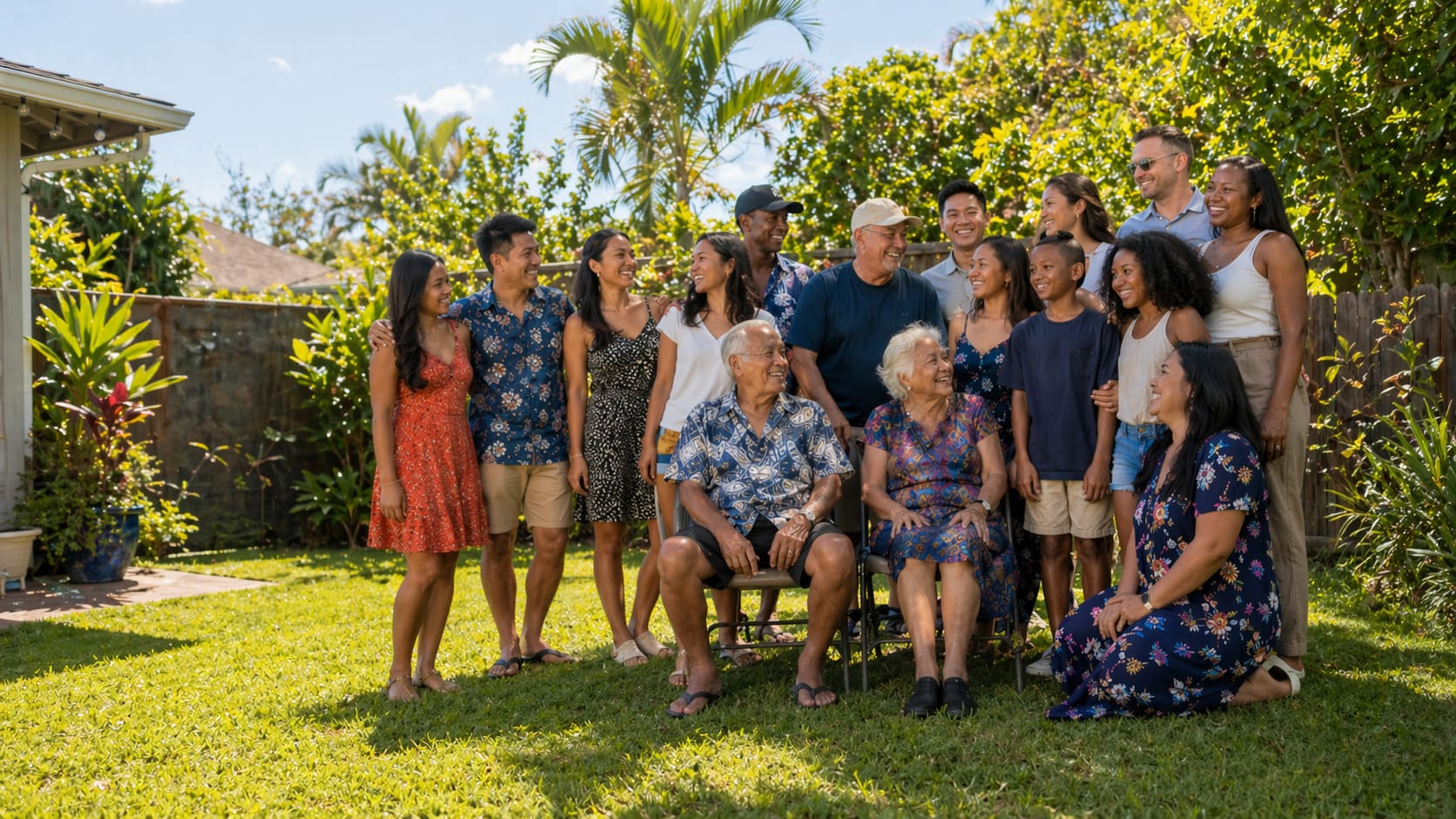
Hawaii is one of the most racially diverse places in the United States, and there is no single racial majority. You will find a "mixed plate" of ethnic groups in Hawaii. Current Census QuickFacts data shows Hawaii's population as 37.4% Asian alone, 25.1% White alone, 10.4% Native Hawaiian and Other Pacific Islander alone, 24.5% Two or More Races, 10.2% Hispanic or Latino, 2.2% Black or African American alone, and 0.4% American Indian and Alaska Native alone. Hispanic or Latino residents may be of any race, so that category can overlap with the race categories.
As Hawaii has become home to many different ethnic groups over the last 200 years, each ethnic group has added elements of its own culture to local life. Hawaii's variety of cultures can be traced back to the old "plantation days" in the Islands, when various ethnic groups migrated to Hawaii to earn a living and support their growing families. Today, contemporary culture in Hawaii is a mix of the different cultures and ethnic groups that make up its population.
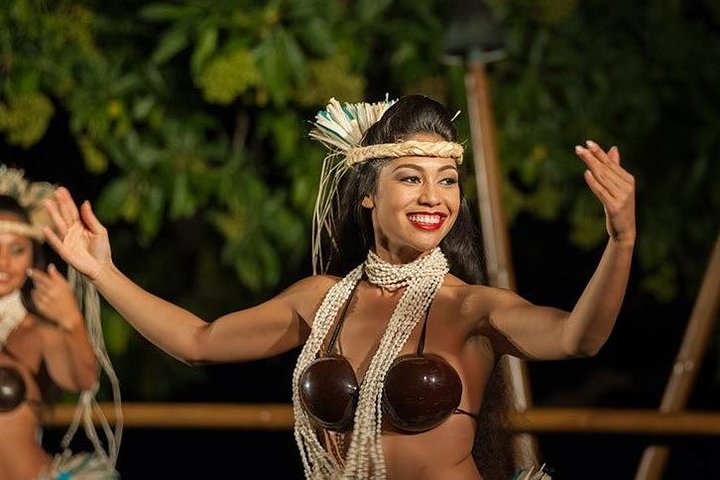
There are also many options to connect with Hawaiian culture throughout the Islands, for example by taking a hula or Hawaiian language class, visiting a museum such as the Bishop Museum, or going to a musical event such as the annual Merrie Monarch Festival, Ukulele Festival or Hawaiian Slack Key Festival.
Native Hawaiian Population
In 1778, when English explorer Captain James Cook arrived in Hawaii, there were, according to historic estimates, between 300,000 and 400,000 Native Hawaiians (kanaka maoli) living in the Islands. However, over the following century, the Native Hawaiian population declined by 80 to 90% due to introduced diseases, including smallpox, measles, influenza and whooping cough.
A century later, in 1878, the native population had dropped to an estimated 40,000 to 50,000 people. At that time, Native Hawaiians still comprised about 75% of Hawaii's total population. However, over the last 120 years, the Native Hawaiian population with only Hawaiian ancestry has continued to decline. The number of people who identify as part-Hawaiian has increased steadily over the last century.
According to the 2020 Census, the Native Hawaiian alone or in any combination population in the United States grew from 527,077 in 2010 to 680,442 in 2020. Native Hawaiian remained the largest detailed Native Hawaiian and Other Pacific Islander group in the country. In Hawaii, Native Hawaiian and Other Pacific Islander identity remains an important part of the state's population, culture, family history and community life.
From the 2000 Census to the 2010 Census, the Native Hawaiian and Other Pacific Islander alone population increased more than three times faster than the total U.S. population, growing by 35% from 399,000 to 540,000 people. The NHPI alone-or-in-combination population experienced even more growth, growing by 40% from 874,000 in 2000 to 1.2 million in 2010, making it one of the fastest-growing race groups in the country during that period.


Frequently Asked Questions
Is Hawaii one of the most ethnically diverse states?
Yes. Hawaii is one of the most ethnically diverse states in the U.S., with no single racial majority and a large multiracial population.
What are the largest race and ethnicity groups in Hawaii?
Major groups include Asian residents, White residents, people of two or more races, Native Hawaiian and Other Pacific Islander residents, and Hispanic or Latino residents.
Who are Native Hawaiians?
Native Hawaiians, or Kanaka Maoli, are the Indigenous people of Hawaii whose ancestors settled the Islands through Polynesian voyaging.
Why did Hawaii's Native Hawaiian population decline after Western contact?
Introduced diseases such as smallpox, measles, influenza and whooping cough caused devastating population loss among Native Hawaiians in the 19th century.
What does NHPI mean?
NHPI stands for Native Hawaiian and Other Pacific Islander. It includes Native Hawaiians and other Pacific Islander groups such as Samoan, Tongan, Chamorro and others.
How did Hawaii become so ethnically diverse?
Hawaii became diverse through Native Hawaiian settlement, Western contact and plantation-era immigration from China, Japan, Portugal, Korea, the Philippines, Puerto Rico and other places.
Why are so many people in Hawaii multiracial?
Generations of intermarriage among Native Hawaiian, Asian, Pacific Islander, White, Latino and other communities created one of the nation's largest multiracial populations.
How does Hawaii's ethnic diversity influence local culture?
Hawaii's diversity shapes local food, music, language, holidays, family traditions, religion, festivals and everyday island customs.