
Hawaiian Pidgin

Local Island Talk

Hawaiian Pidgin

Hawaiian Pidgin grew from plantation-era Hawaii into a local way of speaking that carries humor, identity, rhythm and everyday island life.

Pidgin - Hawaii's Third Language

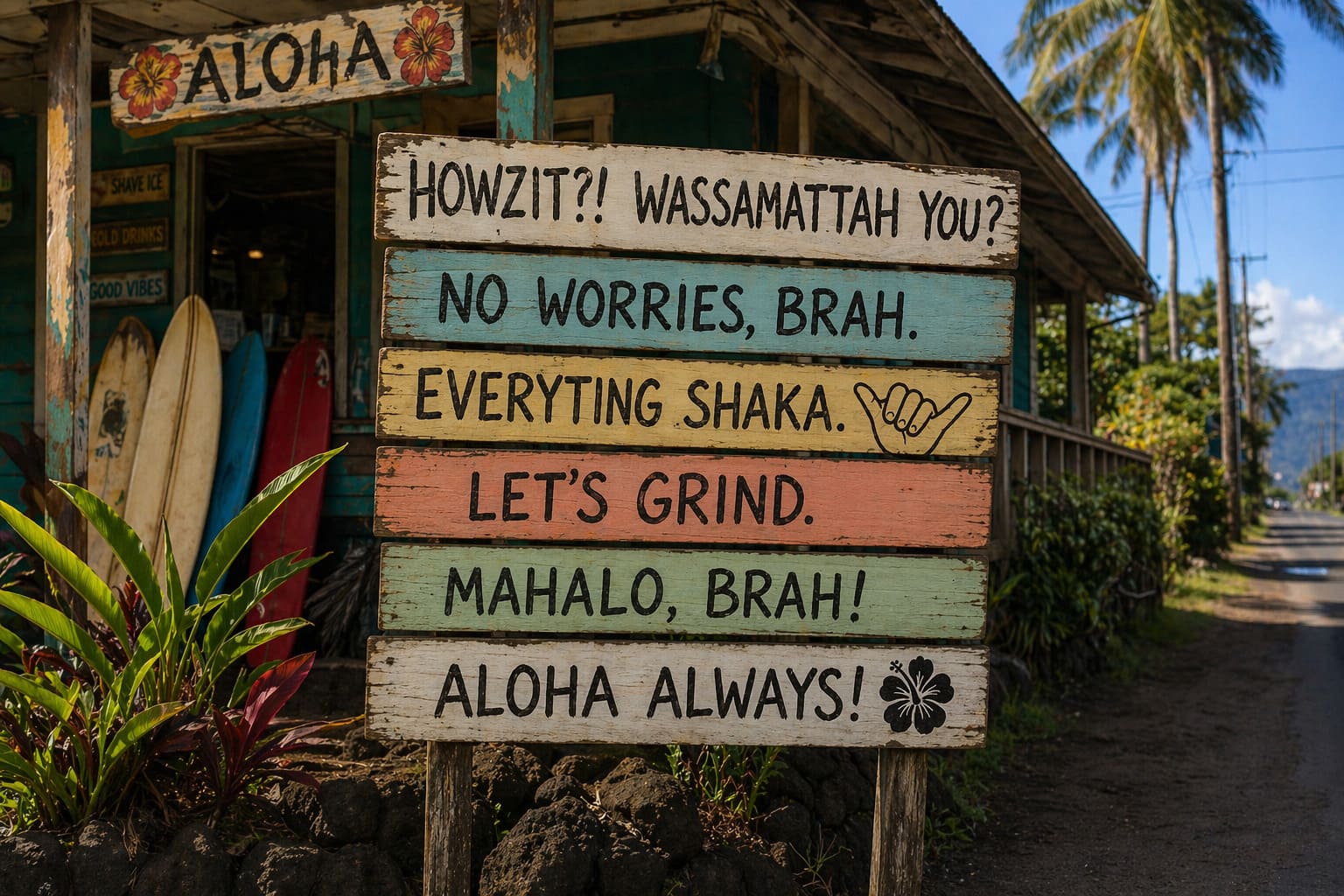
Pidgin is Hawaii-style English and it sounds like that - Eh, howzit? Wassamattah you? Cannah talk da kine? (Hey, how's it going? What's the matter? Can't you speak Pidgin?). You won't hear this type of talk anywhere else in the world but in Hawaii. That's why Pidgin is also considered a local attraction, so to say. If you are a native English speaker you will still get the meaning, but if you're not it may be difficult to understand.

Since many tourists find Pidgin attractive, local travel companies like to hire Pidgin speakers as customer service agents because they talk with this accent on the phone and tourists like that, thus they are more likely to buy.

In fact, Pidgin has its own vocabulary and grammar. In the bookstores you can even find and buy a Pidgin dictionary and a Bible called "Da Jesus Book," which is fully written in Pidgin.

Pidgin originated from the plantation workers, who came to Hawaii in the 19th century. Pidgin has some Chinese, Japanese, Portuguese and other influences.

Some Common Pidgin Words and Phrases

  • Brah / bruddah: brother or pal. Most men refer to each other this way.
  • Broke da mout: delicious
  • Bumbucha: very big
  • Chicken skin: goose bumps
  • Fo' what: why
  • Fo' real: really
  • Garans: guaranteed
  • Grind: to eat
  • Hana hou: one more time
  • Hele on: let's go, get moving
  • Howzit: How are you?
  • Huhu: mad, angry
  • Keiki: child
  • Kokua: care, help
  • Like beef?: want to fight?
  • Lolo: dumb, crazy
  • Lua: bathroom
  • Moke: big, tough local
  • Nevah: never
  • Opake: ghost
  • Opu: belly
  • Okole: buttocks
  • Ono: delicious
  • Pau: finished, done
  • Pupus: appetizers
  • Spahk: check it out
  • Stink Eye: a very dirty look
  • Talk stink: badmouth someone
  • Tita: a very tough girl
  • Tutu: grandmother
  • Tutu kane: grandfather
  • Whaddsdascoops: What's going on?

Frequently Asked Questions

What is Hawaiian Pidgin?

Hawaiian Pidgin, also called Hawaii Creole English, is a local creole language that developed in Hawaii during the plantation era and blends influences from several languages.

Is Hawaiian Pidgin the same as the Hawaiian language?

No. Hawaiian Pidgin is an English-based creole language, while Olelo Hawaii is the Indigenous Hawaiian language. They have different histories, structures and cultural roles.

Where did Hawaiian Pidgin come from?

Pidgin developed as plantation workers from many backgrounds needed a shared way to communicate. It includes influences from Hawaiian, English, Portuguese, Japanese, Chinese, Filipino and other languages.

Is Pidgin a real language?

Yes. Linguists recognize Hawaii Creole English as a real creole language with its own grammar, vocabulary, rhythm and pronunciation patterns.

What does “da kine” mean?

“Da kine” is a flexible Pidgin expression that can refer to almost anything, depending on the situation. Context usually makes the meaning clear.

What are some common Pidgin phrases?

Common phrases include “howzit” for what's up, “ono” for delicious, “pau” for finished, “talk stink” for badmouth and “broke da mout” for extremely delicious.

Do people still speak Pidgin in Hawaii?

Yes. Many Hawaii residents use Pidgin in casual conversation, comedy, music, storytelling, literature and everyday local life.

Should visitors try to speak Pidgin?

Visitors can learn common words and phrases, but they should avoid mocking or exaggerating the accent. Pidgin is part of local identity and should be treated with respect.