
Coconut Tree Overview
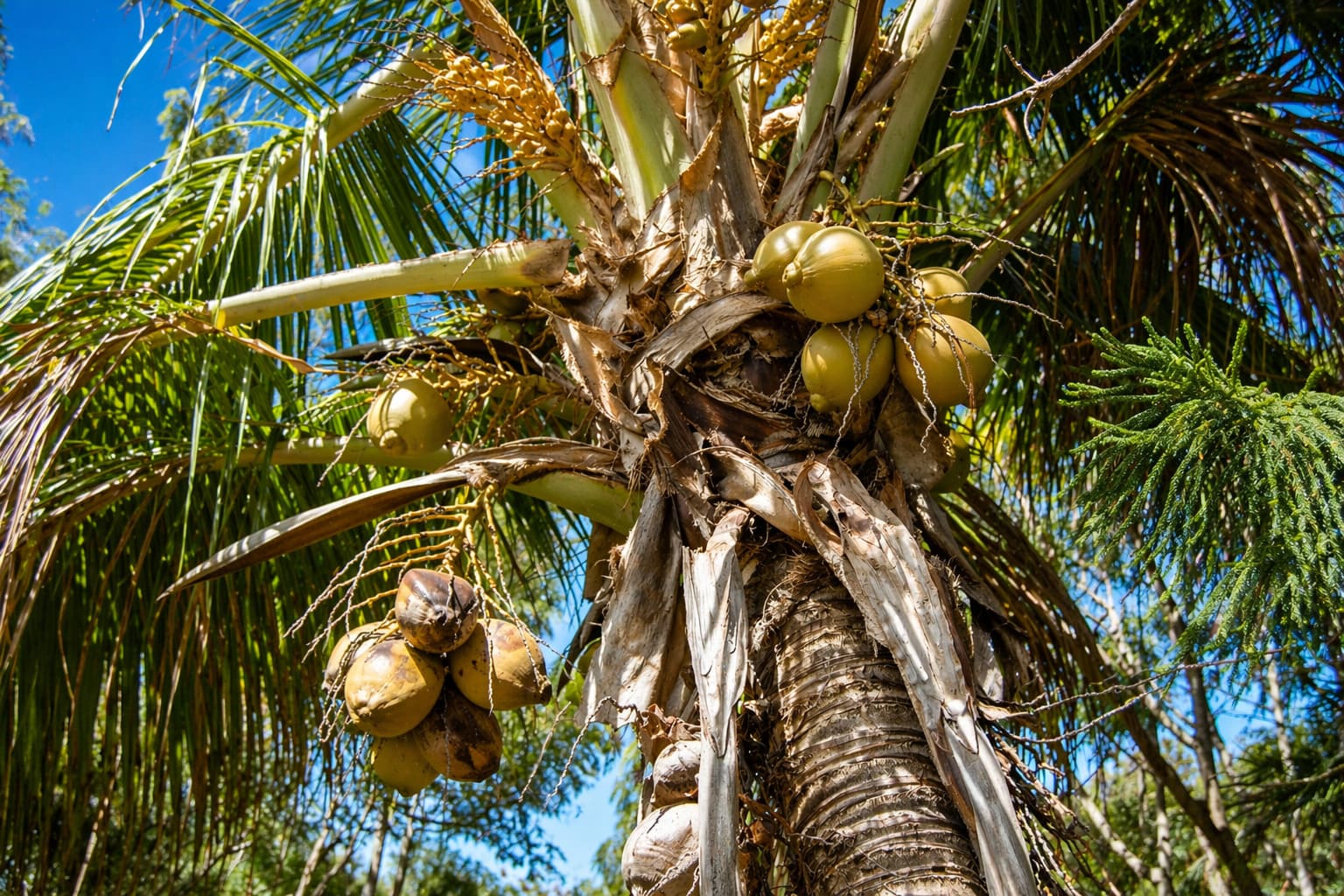
The coconut tree is one of the most useful palms in the world and one of the easiest trees to connect with island life. In Hawaii, coconut palms are often seen near beaches, parks, gardens and older coastal areas, where their tall trunks and feather-like fronds instantly stand out against the sky.
Although coconut palms feel closely tied to Hawaii, they are not native to the Islands. Polynesian voyagers brought coconuts across the Pacific by canoe because the tree could serve many needs at once. In that way, coconut belongs with other important canoe plants such as breadfruit, banana, noni and taro.
Food, Fiber and Everyday Uses
The coconut fruit holds water that can be drunk, white flesh that can be eaten and pulp that can be pressed for oil. Coconut oil has been used for cooking, skin care, hair care and lamp fuel. The husk provides tough fiber, while the shell can be shaped into bowls, cups and other useful items.
Coconut leaves also had practical value. They could be woven into mats, baskets and thatching, while the trunk could be used for building or other sturdy needs. Few plants offer so many uses from one tree, which explains why voyagers carried it with such care.
Coconut Palms in Hawaii
Some coconut palms can grow up to about 100 feet tall. Their large seeds can float in the ocean for months and still sprout after reaching land. That ability helped coconuts move around tropical coastlines, though in Hawaii people also played a major role in spreading them.
Compared with native trees such as koa or huge shade trees such as the banyan tree, coconut palms have a lean, coastal look. They bring shade, food, materials and a strong sense of place, but falling coconuts can be dangerous, so maintained trees in public areas are often trimmed for safety.


