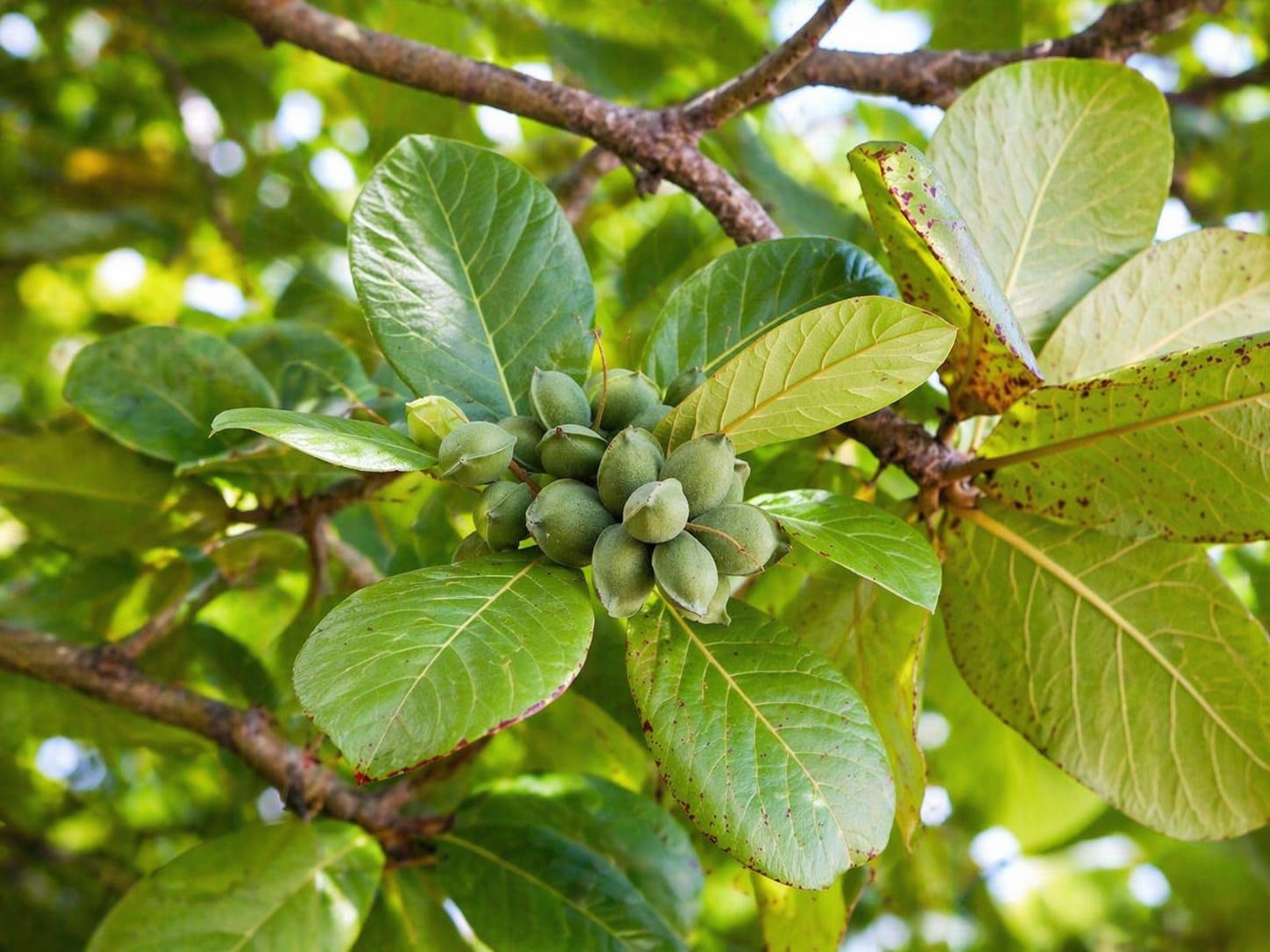
Almond Tree Overview
The almond tree is a small, graceful tree best recognized for its pale spring flowers and edible seeds. It can grow up to about 33 feet tall, with a trunk around 12 inches in diameter. Young twigs begin green, turn purple after sun exposure and later mature to grey as the wood ages.
Almond flowers usually appear in early spring before the fruit develops. The blossoms are white to light pink, giving the tree a soft look during bloom season. After flowering, the fruit slowly matures over the next seven to eight months. Although people commonly call almonds nuts, they are actually seeds inside a hard shell, surrounded by an outer hull.
Growth, Fruit and Origin
The almond tree, Prunus dulcis, is native to South Asia and the Middle East. It belongs to the same broader plant family as peaches, cherries and plums. A healthy almond tree generally reaches full maturity after five to six years, though growth and fruiting depend on climate, care and location.
In Hawaii, almond trees are not native and are not as closely tied to island agriculture as macadamia trees, papaya trees or coconut trees. Still, they may grow in sunny areas with good drainage, especially where conditions stay warm but not overly wet. Too much humidity or poorly drained soil can make the tree less productive.
Almond Trees in Hawaii Gardens
As a garden tree, almond stands out for its flowers, narrow leaves and seasonal fruit. It is more of a specialty tree in Hawaii than a common landscape plant, but it can interest gardeners who enjoy unusual fruiting trees. Compared with dramatic shade trees such as the banyan tree or colorful ornamentals like the royal poinciana tree, almond has a quieter look.
The almond tree fits into Hawaii's broader collection of useful and ornamental trees. It may not carry the same cultural role as koa or hala, but its flowers, fruit and long history of cultivation make it a worthwhile tree to know.