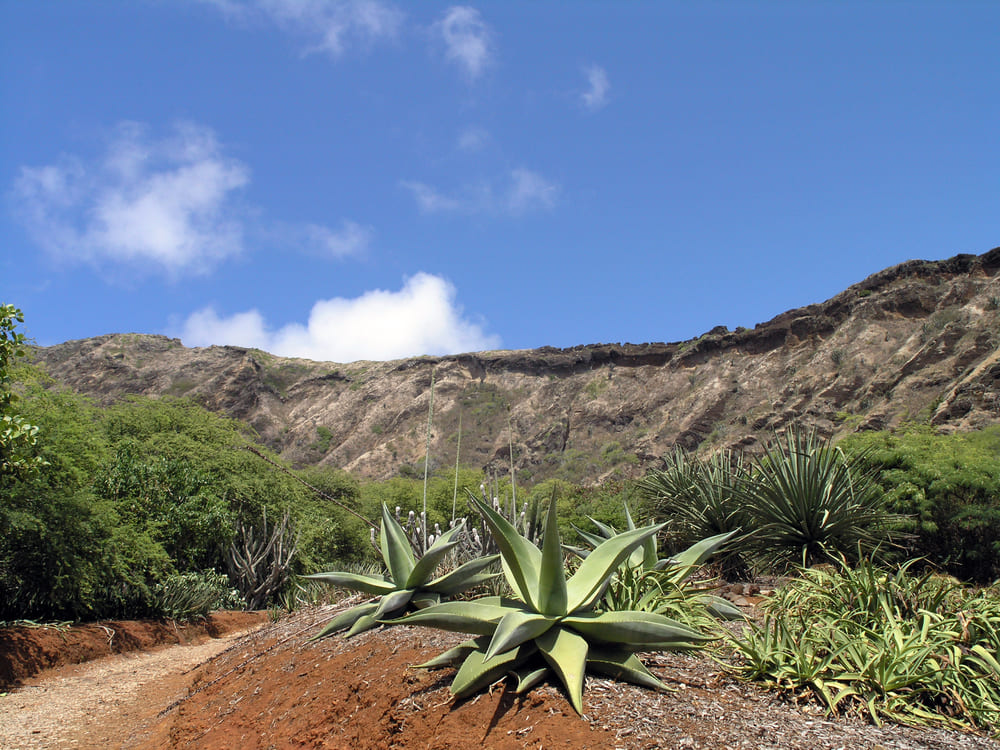
Koko Crater Botanical Garden, Oahu
Part of the Honolulu Botanical Gardens first established in 1958, this 60-acre botanical garden is located in Oahu's Koko Crater. The area's dry, hot climate provides good growing conditions for a wide range of dryland plants from Hawaii and elsewhere. Many of these are rare and endangered species.
The Koko Crater Botanical Garden specializes in cacti, aloes, dryland palms, plumeria cultivars, sansevieria, euphorbias, bougainvillea, alluaudias, baobabs and adeniums. In addition to native and naturalized Hawaiian plants, the garden features species from Madagascar, Africa and the Americas.
A 2-mile (3.2 km) loop trail takes visitors on a 1 ½ hour self-guided walk through the garden. But the gardens aren't the only attraction here. You'll also get to experience the natural landscape of Koko Crater, which features many Hawaiian tree species, including the kiawe, wiliwili and koa haole. The wiliwili tree is particularly noteworthy and is one of the species listed under Hawaii's Exceptional Tree Act 105.
Services are limited at Koko Crater, so come prepared and pay attention to plant and trail hazards. Restrooms, drinking fountains and visitor accommodations are currently unavailable. Due to Koko Crater's dry, hot climate bring potable water, sunglasses, sunscreen and a hat. Sturdy walking shoes or hiking boots are also recommended, as the trail can be rocky and unstable in parts. Picking any plants in the garden is strictly forbidden. Visitors should also avoid touching, eating or smelling any unfamiliar plants, as many contain allergens that can cause skin irritations, sneezing, inflammation and other discomforts.
Key Features
Reviews
Reviews and Ratings
Visitor Reviews
Rated 3.0 out of 5 based on 2 rated visitor reviews.
Been Here? Add your Review
Karen
Wed Mar 09, 2022
Suzanne
Thu May 10, 2012
Map
Location, Parking and Directions
Koko Crater Botanical Garden is located at 7491 Kokonani Street in East Honolulu, inside Koko Crater near the Hawaii Kai and Koko Head area. The garden sits away from Waikiki's resort district, so allow drive time across East Honolulu and follow current navigation to Kokonani Street.
Photos
Koko Crater Botanical Garden Photos
Photos of Koko Crater Botanical Garden show dryland plant collections, cactus, plumeria, volcanic crater scenery, rugged walking paths and East Honolulu views.