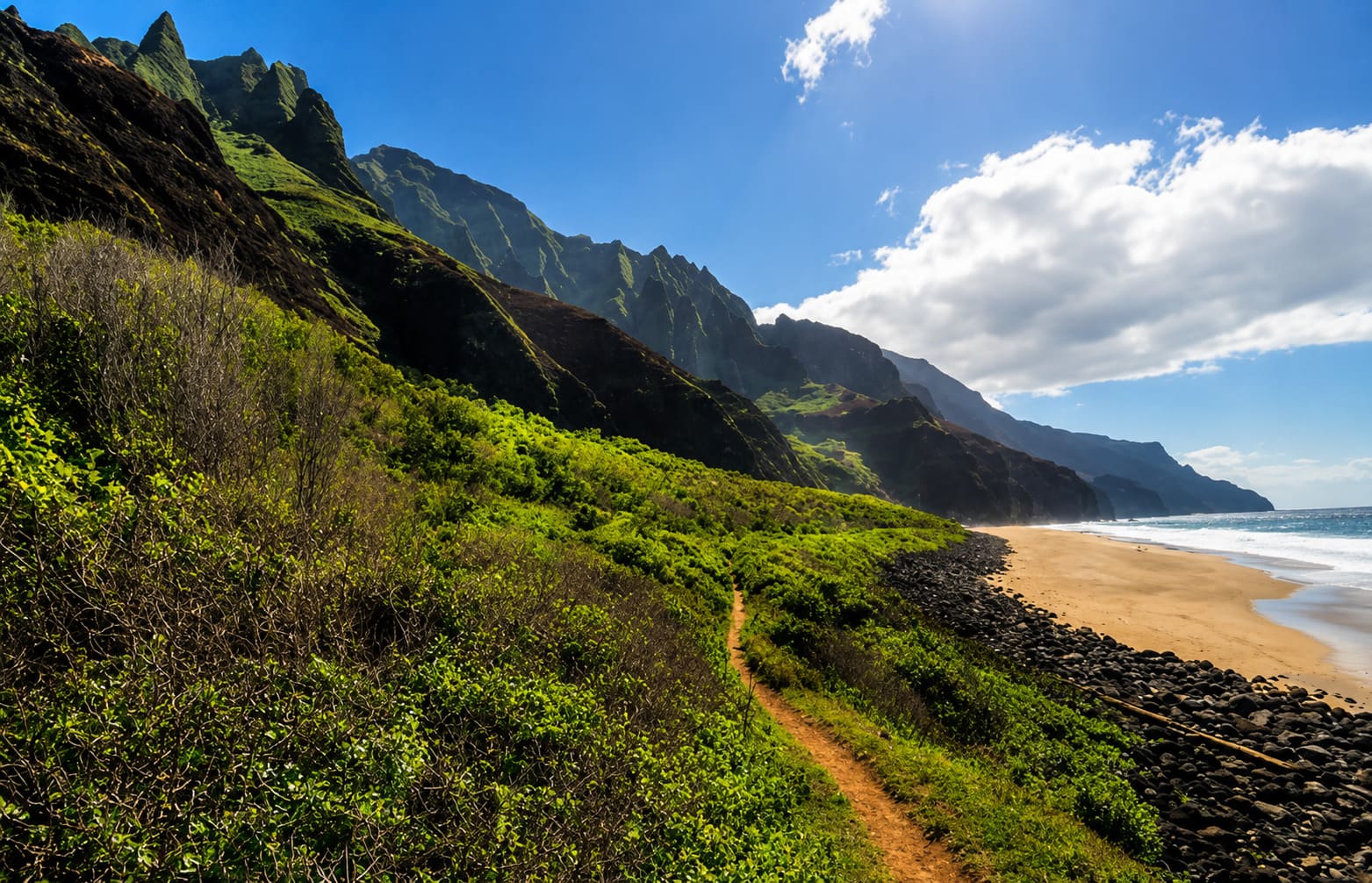
Kalalau Beach, Kauai
Kalalau Beach lies at the end of the 11-mile (17.7 km) Kalalau Trail on Kauai's north shore. The trail is one of the most difficult in the Hawaiian Islands, which limits visitors to the beach. This remote wilderness area is normally reached on foot by the Kalalau Trail. Commercial boat drop-off or pick-up at Kalalau is not legal. The trail begins right after Ke'e Beach and has extreme inclines and declines and narrow footpaths, especially between the dreaded 6.5 to 8 miles (10.5 to 12.9 km) into it. Not only is the trail narrow in some places, but it can also be slippery because of loose rocks or if it has recently rained. So if you're afraid of heights, you may not like this trail, especially around the middle of it.
Kalalau Beach is about 1 mile (1.6 km) long. From here, trails lead through the rest of the valley. Camping is allowed on the beach, but permits are required. Since the trail is quite long, most people who visit Kalalau Beach plan to stay overnight. There are no facilities on the beach, except for composting toilets. You need to bring all food and equipment with you. A waterfall at the western end of the beach (Ho'ole'a Falls) provides freshwater, but before drinking it, the water must be purified (bring a water filter or water treatment tablets) due to the threat of leptospirosis, a bacterial disease.
Swimming is possible on Kalalau Beach, but not without dangers. Because the beach lacks a protective offshore reef to block incoming waves, high surf is common, especially during the winter months. Also, there are strong rip and alongshore currents, which may be difficult to spot, even if the ocean appears calm. The sandbar is quite shallow here and in some spots the ocean bottom drops off quickly to overhead depths. There are no lifeguards here, and the ocean can be dangerous because of shorebreak, currents and sudden depth changes. Avoid swimming when surf, current or visibility is questionable.
For some people who come to Kalalau Beach, the long and difficult trail is not adventurous enough. Equipped with fins, they enter the water at Kalalau and swim over to the even more isolated Honopu Beach, which can only be accessed this way.
The trailhead is inside Ha'ena State Park, and day entry, parking and shuttle reservations are controlled through GoHaena. A valid Na Pali Coast camping permit is required for anyone hiking beyond Hanakapi'ai Valley.
Camping at Kalalau Beach
Camping permits are required to hike beyond Hanakapi'ai Valley, even for a day hike. Camping along the Kalalau Trail is allowed only at Hanakoa, 6 miles in, and Kalalau, 11 miles in. Na Pali Coast camping permits are available 90 days in advance, and the maximum stay is 5 consecutive nights. Current state rates are $25 per person per night for Hawaii residents and $35 per person per night for non-residents. Permits must be purchased through the official Hawaii camping reservation system.
Camping permits are only available online through this website: https://camping.ehawaii.gov/camping/all,details,1692.html
Limited overnight parking for campers is only available at the trailhead at Ha'ena State Park and with a valid camping permit AND an overnight parking permit. Overnight parking must be purchased at gohaena.com AFTER securing your camping permits.
Key Features
Beach Activities
Activities
Beach Facilities
Facilities
Reviews
Reviews and Ratings
Share the first review
Have you visited Kalalau Beach? A few thoughtful details can help another traveler.
Been here? Share your experience
Map
Location, Parking and Directions
Kalalau Beach is located at the end of the 11-mile Kalalau Trail on Kauai's Na Pali Coast. The trail begins at Ke'e Beach inside Ha'ena State Park, and hiking beyond Hanakapi'ai Valley requires a valid Na Pali Coast camping permit.
Photos
Kalalau Beach Photos
Photos of Kalalau Beach show the remote Na Pali Coast shoreline, sea cliffs, valley backdrop, Kalalau Trail setting, beach camping area, waterfall views and open ocean.