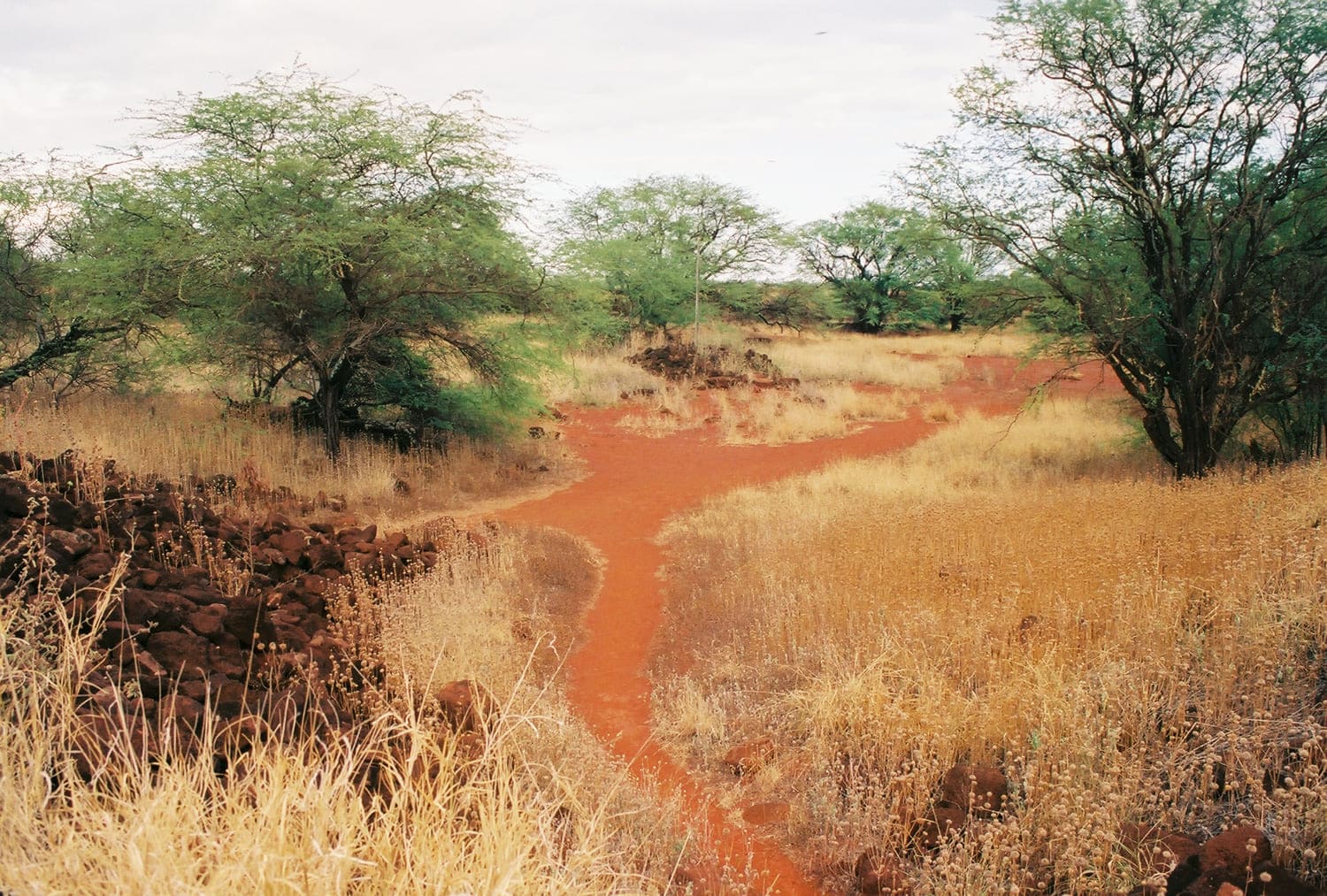
Pa'ula'ula State Historic Site, Kauai
The only site with remains of a Russian fort in Hawaii, Pa'ula'ula State Historic Site is located on the eastern bank of the Waimea River mouth on Kauai. The fort, formerly known as Russian Fort Elizabeth State Historical Park and also called Pa'ula'ula o Hipo, was built by a Hawaiian workforce using a Russian design. It came from an alliance between Kauai's High Chief Kaumualii and the Russian-American Company, represented by German physician Georg Anton Schaffer.
Kaumualii believed Russian support might help him claim rule over all of Hawaii. The Russians were seeking compensation for lost trade goods. After the fort was completed in 1817, however, Schaffer did not have the support of Russian Tsar Alexander I. He was forced to leave Hawaii, and Captain Alexander Adams, a Scotsman who served in the navy of the Kingdom of Hawaii, raised the new Kingdom of Hawaii flag over the fort in October 1817.
The fort originally had walls 20 feet (6 m) high and was built in an irregular octagon shape. It housed a small Russian Orthodox chapel. Today, parts of the ruins remain, including a clearly visible old staircase. Some of the original stone walls also remain, showing a mix of Russian and Hawaiian building styles.
Key Features
Reviews
Reviews and Ratings
Visitor Reviews
Be the first to review Pa'ula'ula State Historic Site.
Been Here? Add your Review
Map
Location, Parking and Directions
Pa'ula'ula State Historic Site is near Waimea on Kauai's west side, close to the mouth of the Waimea River. It is a short drive from Waimea town and is often visited before or after west Kauai history stops, beaches or Waimea Canyon.
Photos
Pa'ula'ula State Historic Site Photos
Photos of Pa'ula'ula State Historic Site show stone wall remnants, open grounds, interpretive signs, Waimea River area views and the west Kauai historic landscape.