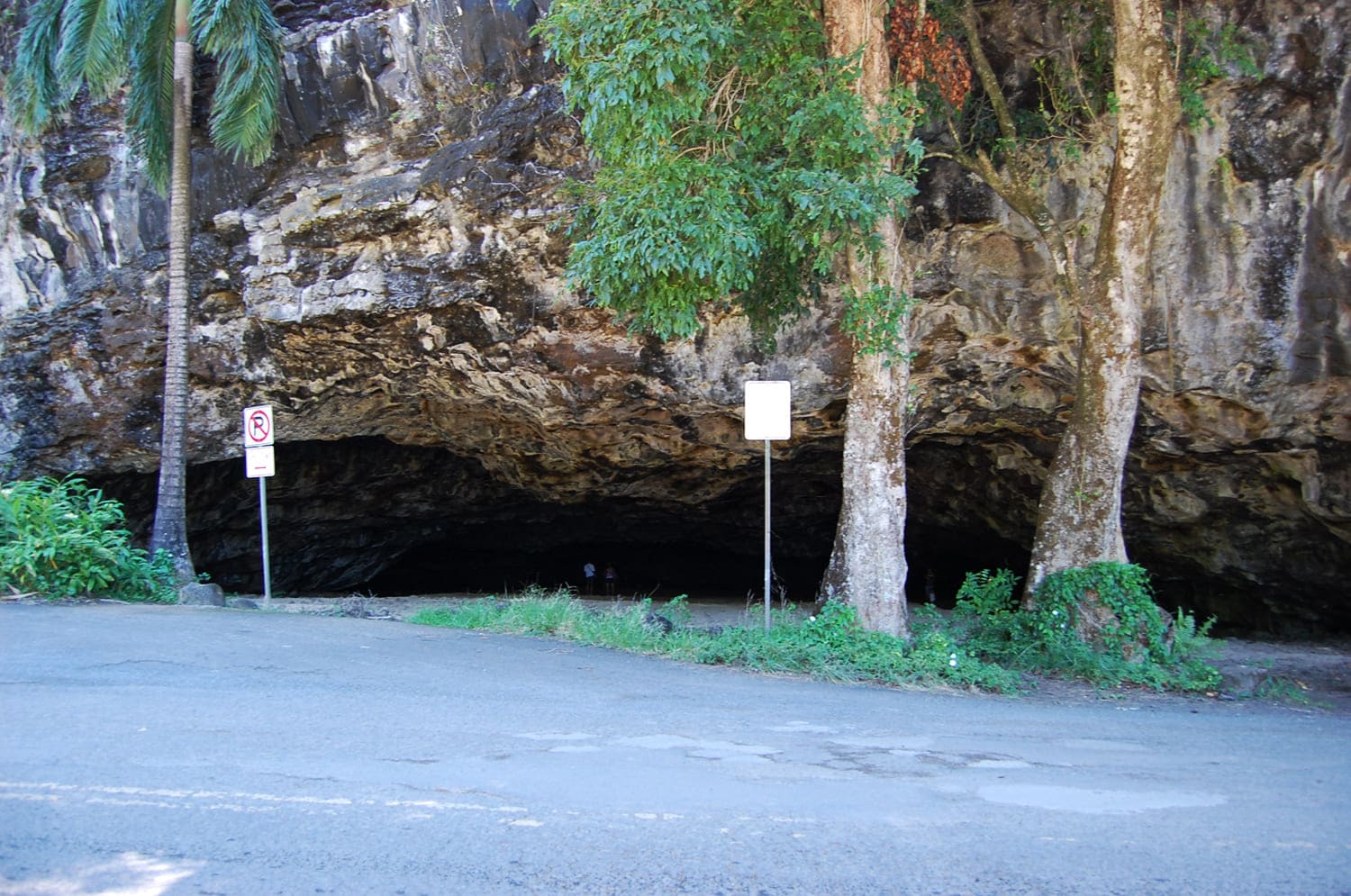
Maniniholo Dry Cave, Kauai
Located across from Ha'ena Beach Park on Kauai's north shore, this dry cave is easily accessible as it is located right on the main highway. It is at the bottom of a steep cliff and is about 300 yards (274 m) deep. Its high roof lowers as you walk further to the back of it, where you'll also see a small opening. The interior of the cave used to be larger in the past, but when a tsunami hit the island in 1957, the waves carried sand into the cave and partially filled it.
The cave is named after Maniniholo, the legendary head fisherman of the menehune, Kauai's mythical little people. The menehune fishermen used to catch many fish at Ha'ena. They left some of their catch right here under the cliff and the rest they carried to the menehune in the island's interior. However, when they returned, they noticed that an akua (evil spirit) took the fish they had left there. So to catch the akua, they started digging the cave that you see today.
If you don't believe in legends, there is an alternative explanation about how the cave was formed. In the past, the ocean used to be higher and the cave was formed from thousands of years of wave action eroding the cliff at its base.
Key Features
Reviews
Reviews and Ratings
Visitor comments
Read what visitors shared. Unrated comments are not included in a star average.
Been here? Share your experience
Visitor experiences
Newest firstFina
Mon Apr 08, 2013
Map
Location, Parking and Directions
Maniniholo Dry Cave is located along Kuhio Highway on Kauai's north shore, directly across from Ha'ena Beach Park near mile marker 9. The entrance is at the base of the cliff, close to the road and beach park parking area.
Photos
Maniniholo Dry Cave Photos
Photos of Maniniholo Dry Cave show the wide cliffside entrance, sandy interior, Ha'ena Beach Park setting and Kauai north shore scenery.