Pineapples are one of Hawaii's most recognizable symbols, even though the fruit did not originate in the Islands. For much of the 20th century, pineapple fields, canneries and plantation communities played a major role in Hawaii's agricultural economy.
Today, large-scale production is much smaller than it once was. However, locally grown pineapple remains part of Hawaii's food culture, especially on Maui.
Hawaii Pineapple History
The Pineapple's Island Name and Origins
Pineapple was once called "anana," a word tied to the fruit's earlier history in the Americas. In Hawaii, the fruit became known as halakahiki, often translated as "foreign fruit." That name makes sense because pineapple is not native to Hawaii.
The fruit is believed to have originated in South America, commonly linked to areas around Paraguay and Brazil. Trade and exploration later carried it to other parts of the world, including Asia, Europe, Mexico and the Pacific. By the time it became strongly associated with Hawaii, it had already traveled widely.
How Pineapple Became Linked with Hawaii
Hawaii became famous for pineapple because the Islands had a good climate for growing the fruit and a strategic location for shipping it to mainland markets. Over time, farming became closely tied to plantation life, immigrant labor and the rise of large agricultural companies.
Canning technology also changed the industry. Because canned fruit could travel farther and last longer, Hawaii-grown pineapple became a household product across the United States and beyond.
John Kidwell and James Dole
Captain John Kidwell is often credited as one of the early figures who helped develop Hawaii's commercial pineapple industry. He tested different varieties in the late 1800s and helped identify Smooth Cayenne as a variety suited for commercial production.
James Dole later became the best-known name in Hawaii pineapple history. He arrived in Hawaii in 1899 and founded the Hawaiian Pineapple Company in Wahiawa on Oahu. His company expanded quickly, and canning helped transform the fruit into a major export crop.
Lanai and the Pineapple Plantation Era
In 1922, James Dole purchased much of Lanai and developed it into one of the world's largest pineapple plantation areas. The island became so closely linked with the crop that it was widely known as the "Pineapple Island."
Plantation life reshaped Lanai and other parts of Hawaii. Workers from the Philippines, Japan, China, Korea, Portugal, Puerto Rico and other places came to Hawaii for plantation labor. As a result, their communities helped shape modern Hawaii's culture, food traditions and local identity.
Life on the Plantations
Plantation work was difficult and physically demanding. Workers spent long hours in the fields, often wearing heavy protective clothing because pineapple leaves are sharp and rough.
Although plantation jobs sometimes provided housing, wages were low and conditions were challenging. The plantation era remains an important part of Hawaii history because it shaped the Islands' economy, labor movement, immigration patterns and multicultural communities.
How Pineapples Are Grown
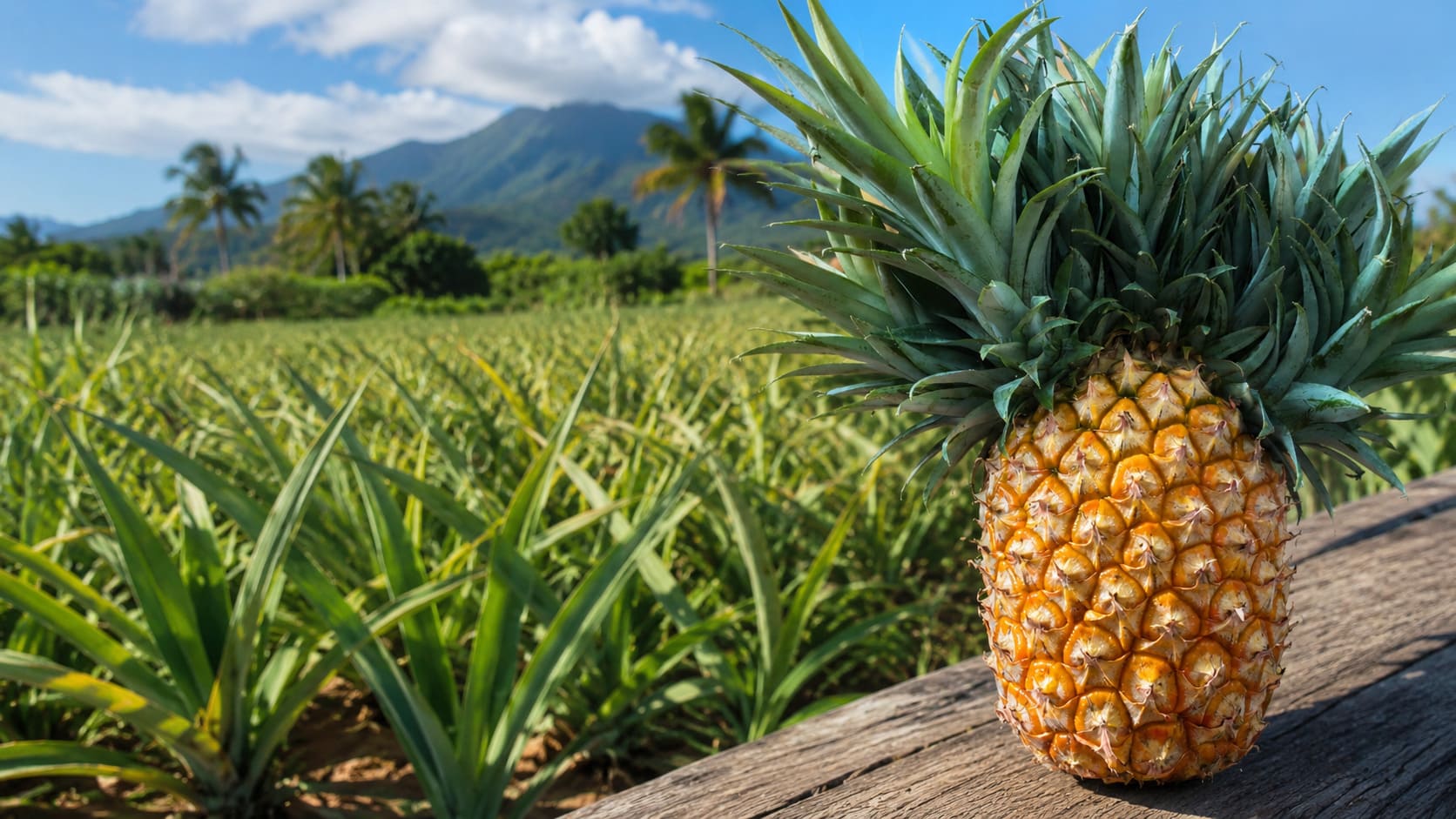
Pineapples grow low to the ground from a central plant, not on trees. Each plant produces one main fruit at a time.
In commercial fields, planting has traditionally required careful field preparation, irrigation, fertilization and hand labor. The growing cycle is long, since a plant can take about 18 to 20 months to produce its first fruit.
A second fruit, called a ratoon crop, may grow after the first harvest. However, growers usually replant the field after a limited production cycle.
Why Pineapples Need Careful Harvesting
Pineapples do not continue to become sweeter after they are picked. Therefore, timing matters. Fruit harvested too early will not improve the way some other fruits do.
A ripe pineapple usually feels firm and heavy for its size and has fresh-looking green leaves. However, outside color is not always the best guide because some fruit may still look green while tasting sweet inside. Once purchased, fresh pineapple is best eaten soon or kept in the refrigerator for a few days.
Pineapple Production in Hawaii Today
Hawaii's pineapple industry is much smaller today than it was during its peak. The Islands no longer dominate global production, and the old plantation and cannery system has largely disappeared.
Still, Hawaii-grown pineapple has not vanished. Maui remains especially connected to the crop through Maui Gold, which grows sweet, low-acid fruit on the slopes of Haleakala. Visitors can also learn about pineapple history through farm tours and historic places such as Dole Plantation on Oahu.
Maui Pineapple and Local Agriculture
Maui pineapple is known for sweetness, low acidity and bright tropical flavor. Warm days, cooler upland evenings, volcanic soil and farming history all help explain why the island remains closely linked with the fruit.
For travelers interested in food, farming and island history, pineapple is more than a snack. It connects to plantation towns, agricultural landscapes, local markets and the larger story of how Hawaii changed during the 19th and 20th centuries. For more background, see Hawaiian agriculture and Hawaiian food.
Fun Facts About Pineapples
Pineapples are both flavorful and useful in the kitchen. They can be eaten fresh, grilled, added to desserts, blended into drinks or used in marinades.
- Pineapples are naturally fat free and cholesterol free.
- They are a good source of vitamin C.
- Fresh pineapple contains bromelain, an enzyme that breaks down protein.
- Bromelain can help tenderize meat in marinades.
- Fresh pineapple can affect dairy-based recipes if mixed too early.
Planning a Pineapple-Themed Hawaii Visit
Travelers who want to include pineapple in their Hawaii trip can visit farm stands, farmers markets, food shops and pineapple-related attractions. On Oahu, Dole Plantation is one of the best-known visitor stops connected to this agricultural history. On Maui, farm experiences offer a closer look at how the fruit is grown today.
To build a broader island itinerary, browse Hawaii activities for farm tours, cultural stops and sightseeing ideas. If you are still choosing where to stay, compare Hawaii vacation rentals by island and location so your food, farm and sightseeing plans fit together more easily.
Pineapple is no longer the giant industry it once was in Hawaii, but its legacy remains visible. It shaped plantation towns, brought immigrant communities together, influenced local food culture and became one of the most familiar symbols of the Islands.