
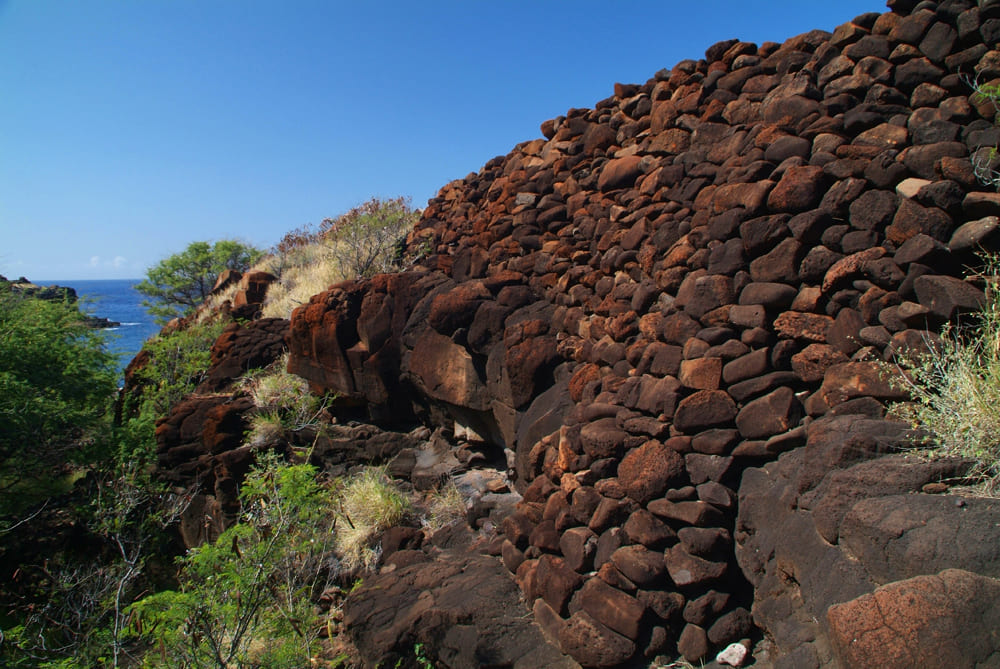
Halulu Heiau, Lanai
Halulu Heiau is one of the most impressive archaeological sites on Lanai. Take a nature walk amidst ancient stone walls and bask in the pristine beauty of a well-preserved Hawaiian place of worship. The heiau makes a stunning presence with its stark color and intricate construction, set against the peaceful backdrop of the ancient seaside village of Kaunolu on Lanai's south shore. Halulu Heiau was one of the last few to be erected, which is why it is still mostly intact. It was in use up to circa 1819.
The heiau once served as a place of refuge, built by King Kamehameha to challenge those who broke the law. In order to be forgiven, outlaws had to make it to the temple before getting caught. The location for the heiau was strategically chosen, and it was almost impossible to reach it, making it difficult for lawbreakers to attain forgiveness. Even today, you'll have to drive up around 3 miles (4.8 km) of rough, rocky road to reach it. During the dry season, Halulu Heiau can only be accessed with a four-wheel drive vehicle. If it's wet, you can't drive here at all but will have to walk.
Left of Halulu is Kahekili’s Leap, also known as Warriors Leap. From this natural platform, Kamehameha's elite warriors would prove themselves by leaping 80 feet (24 m) into the ocean below. Visitors to the heiau should keep in mind that it is disrespectful to walk on the rock walls or enter a heiau anywhere in Hawaii, including Halulu Heiau. It is also not allowed to move or take any of the stones.


