

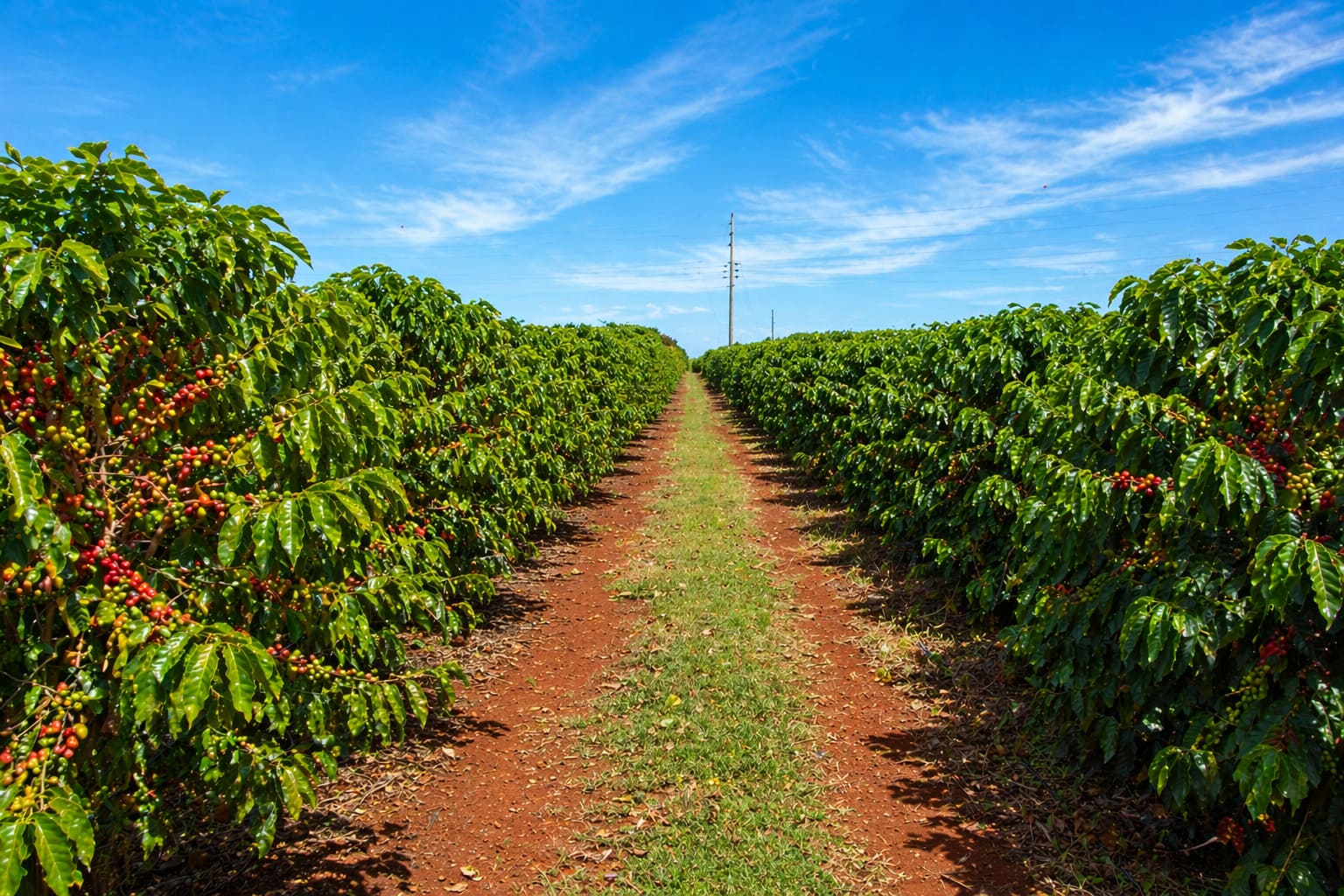
Island-Grown Beans
Hawaiian Coffee
Hawaii coffee grows in volcanic soil across several islands, from world-famous Kona farms to Kauai, Maui, Molokai, Oahu and other Big Island regions.
Hawaii is the only state in the United States that grows coffee. Gourmet Kona coffee is what first comes to mind when thinking about Hawaii and coffee, but there are many other varieties that have made names of their own in recent years.
The first coffee plant was introduced to Hawaii through King Kamehameha the First's Spanish advisor, Don Francisco de Paula Marin, in 1817. However, the coffee he planted didn't succeed. In 1825, the governor of Oahu, Chief Boki, brought coffee plants from Brazil and successfully planted them in Oahu's Manoa Valley. From that time on people started planting coffee in different regions in the Islands.
In 1828, missionary Samuel Ruggles planted the first coffee tree in Kona on the Big Island of Hawaii. The first commercial coffee operation started in Koloa, Kauai, in 1836. Today, Hawaii is grown on five Hawaiian islands (Kauai, Oahu, Maui, Molokai and the Big Island), and there are more than 700 small coffee farms in the state, the majority of them being small family businesses.
Agriculture used to be the main industry in Hawaii, and many foreign workers from countries including China, the Philippines, Japan, Korea and Portugal were brought here to work on the sugarcane and pineapple fields, which were the predominant crops that were grown in Hawaii in the past. At one point in time Hawaii produced 75 percent of the world's pineapple. But in the long run as land prices and the standard of living increased rapidly in the Islands after Hawaii became the 50th state, many crops produced in Hawaii could no longer compete on the world market.
Since coffee can be grown cheaper in many other places in the world, coffee farmers in Hawaii focus on producing high quality, gourmet coffee with distinctive flavors. Today, coffee farms in Hawaii encompass more than 8,200 acres, and more farms grow coffee than any other crop in the state.
Many coffee varieties are grown throughout Hawaii, but the six most common ones are:
Catuai: Sweet aroma with earthy notes.
Caturra: Silky texture with fruity, berry aromas.
Kauai Blue Mountain: Chocolaty flavor with hints of caramel.
Mokka: Cocoa and fruity flavors with hints of wood and black cherry.
Mundo Novo: Spicy aroma with hints of clove.
Typica: Chocolaty as well as spicy flavors with hints of caramel, wood and nuts.
When it comes to the final product, many different varieties and blends are available on the market. Some coffees are purely from a single farm or region, others are a blend of different Hawaii regions, and others contain coffee from around with world with a certain percentage of Hawaii-grown coffee mixed in.
In Hawaii, one can find many blends in stores that contain 10 percent Kona coffee and the rest is imported coffee from elsewhere. Since Kona coffee is pricey, a Kona coffee blend captures the unique Kona flavor while making the final product more affordable.
Many coffee farms in Hawaii offer tours and coffee tastings.


Frequently Asked Questions
Is Hawaii the only U.S. state that grows coffee?
Yes. Hawaii is the only U.S. state with significant commercial coffee production. Puerto Rico, a U.S. territory, also has a long coffee-growing tradition.
What makes Kona coffee special?
Kona coffee grows on the Big Island's Kona slopes, where volcanic soil, elevation, sunny mornings and afternoon cloud cover create favorable conditions for specialty coffee.
What does 100% Kona coffee mean?
100% Kona coffee means the coffee was grown entirely in the Kona region of the Big Island. It should not be mixed with coffee from other regions.
What is a Kona blend?
A Kona blend contains Kona coffee mixed with coffee from other origins. Read the label carefully to see how much Kona coffee is actually included.
Which Hawaiian islands grow coffee?
Coffee is grown on the Big Island, Kauai, Maui, Molokai and Oahu. Kona, Ka'u, Hamakua, Puna, Kauai and Maui are among the known growing regions.
Can visitors tour coffee farms in Hawaii?
Yes. Many Hawaii coffee farms offer tours and tastings where visitors can learn about growing, harvesting, processing, roasting and brewing coffee.
Why is Hawaii coffee expensive?
Hawaii coffee costs more because land, labor and production costs are high, many farms are small, and famous regions such as Kona have limited supply and strong demand.
What coffee varieties grow in Hawaii?
Hawaii coffee varieties include Typica, Catuai, Caturra, Mokka, Mundo Novo and Blue Mountain-type coffees, among others.