
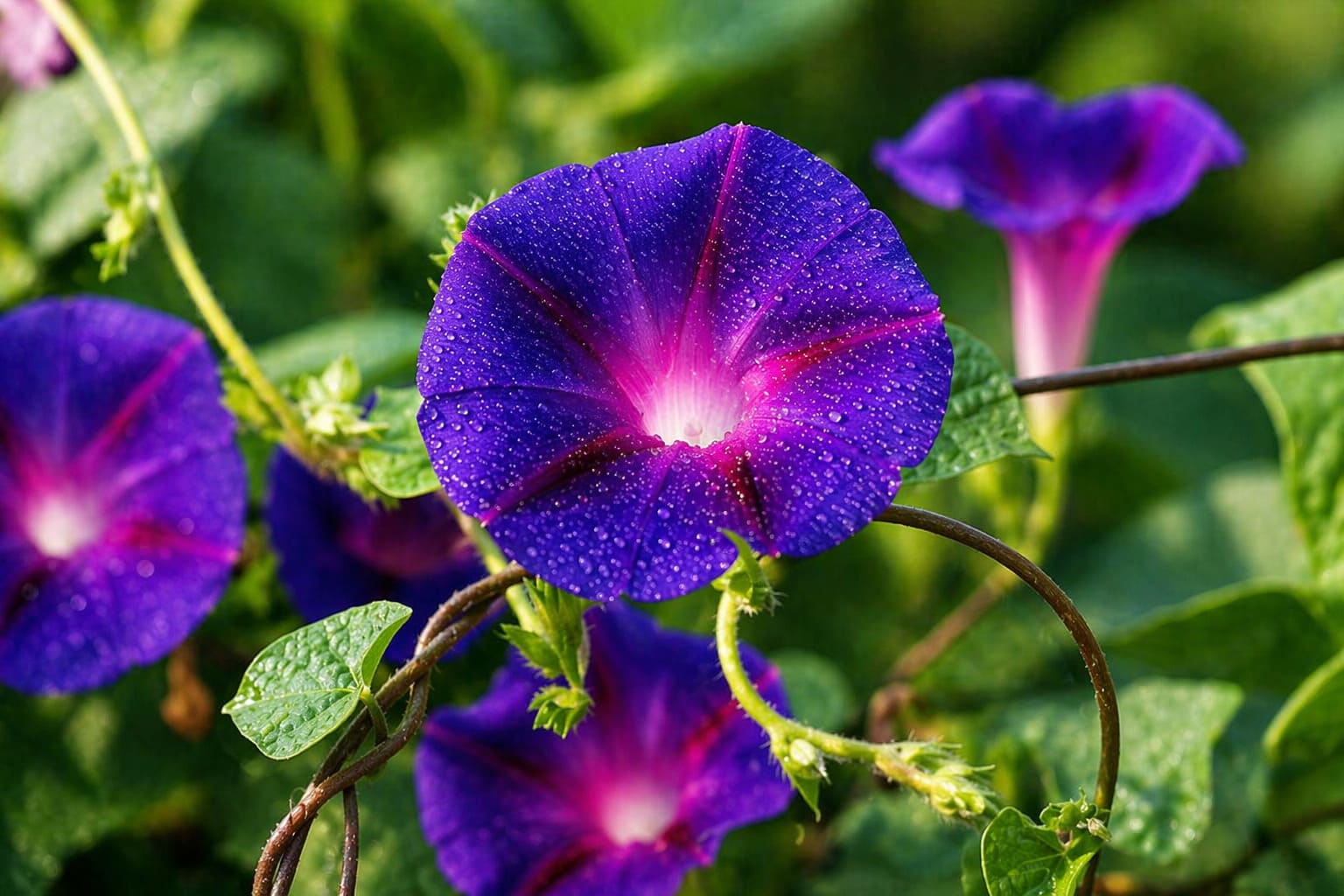
Morning Glory Overview
Morning glory belongs to the Ipomoea group, which includes about 500 individual species. In Hawaii, 14 species are native. This makes morning glory more than one garden flower. It is part of a large group of vines and related plants found in coastal areas, gardens and food traditions.
One familiar Hawaii species is beach morning glory, known scientifically as Ipomoea pes-caprae. It is an indigenous shoreline plant and can be seen on many Hawaiian beaches, where it trails across sandy coastal areas.
Native Vines, Food Plants and Hawaii Uses
Morning glory also connects to food plants. Chinese immigrants brought edible Ipomoea aquatica, also called ung-choi in Asian cuisines, to Hawaii in the 19th century. Sweet potato, or Ipomoea batatas, was a staple food among ancient Hawaiians.
These connections make morning glory especially interesting because the same plant group includes beach vines, edible greens and an important traditional crop. Some types are valued for flowers, while others matter more for food, groundcover or coastal growth.
In Hawaii, morning glory is best understood as a broad plant family with many roles. Related Hawaii flower and food plant pages include beach naupaka, lilikoi, taro and sugarcane.


